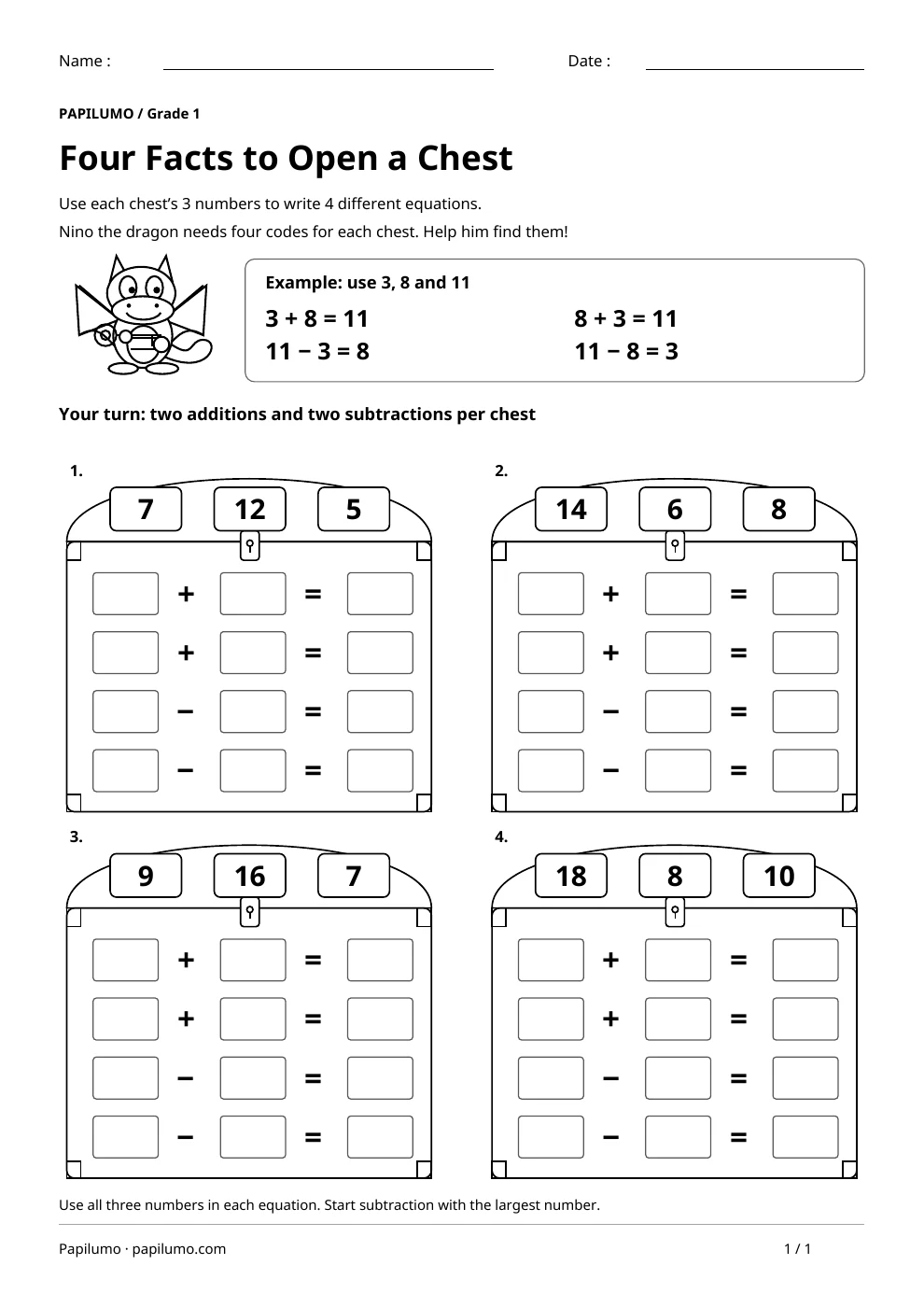
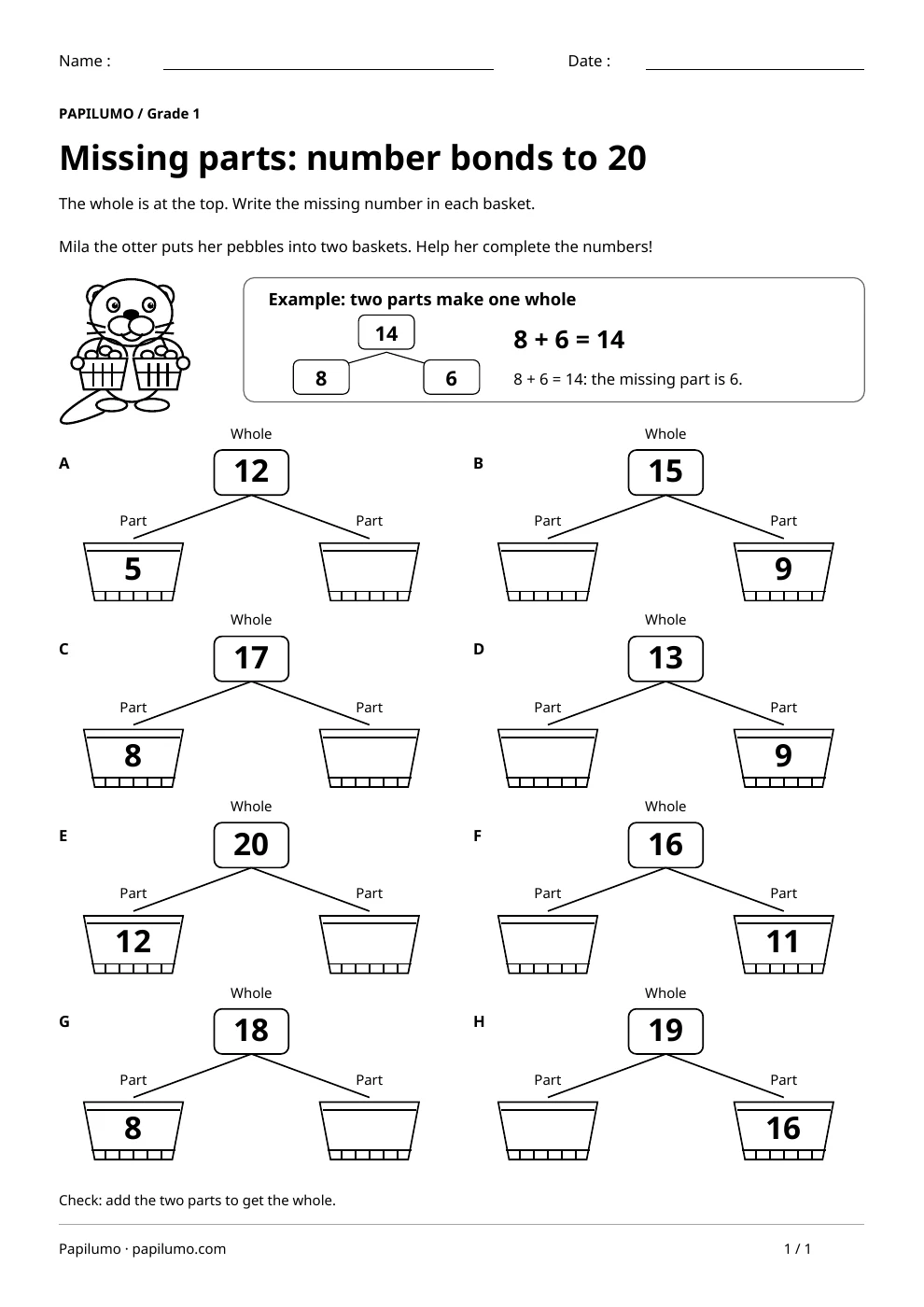
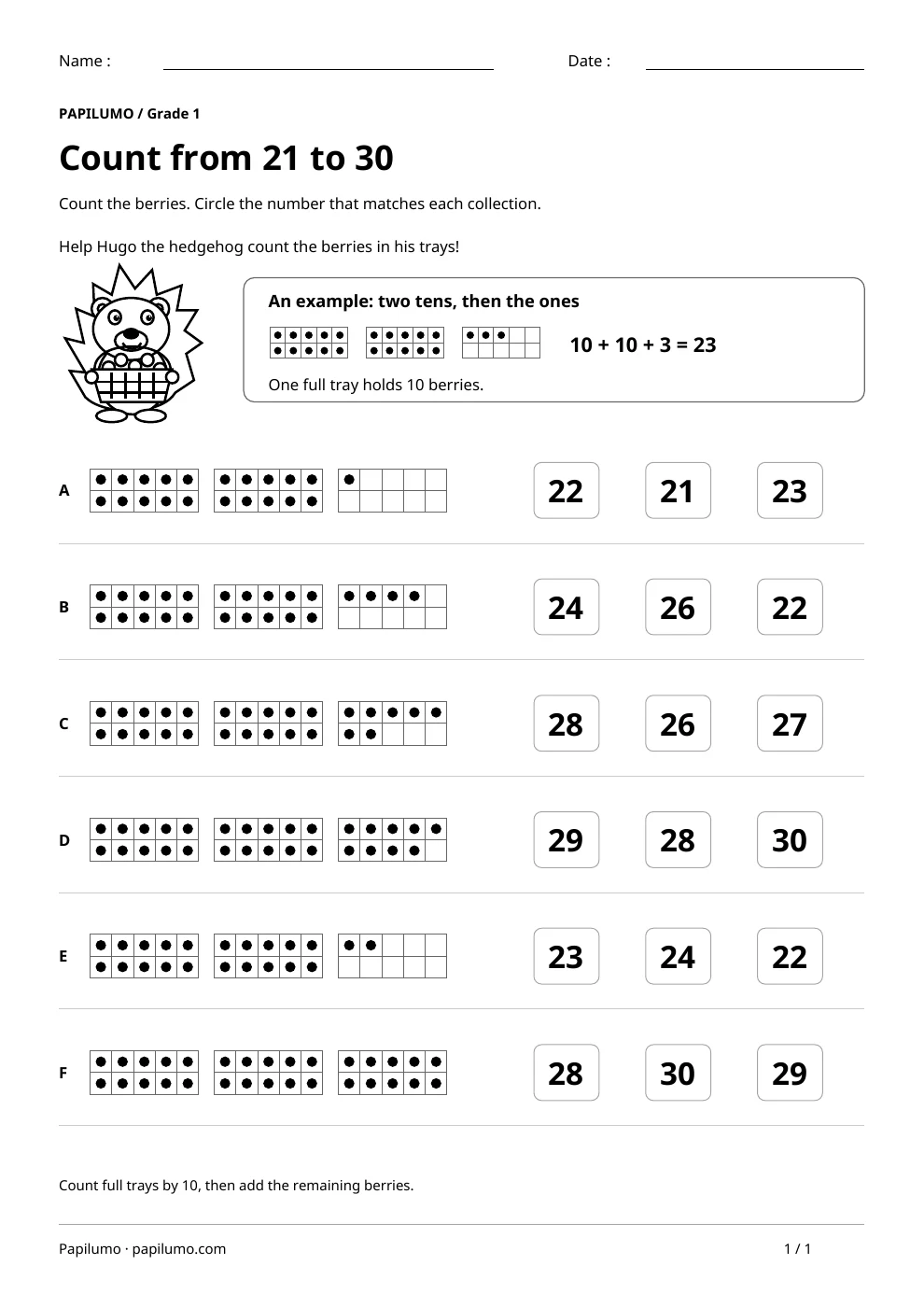
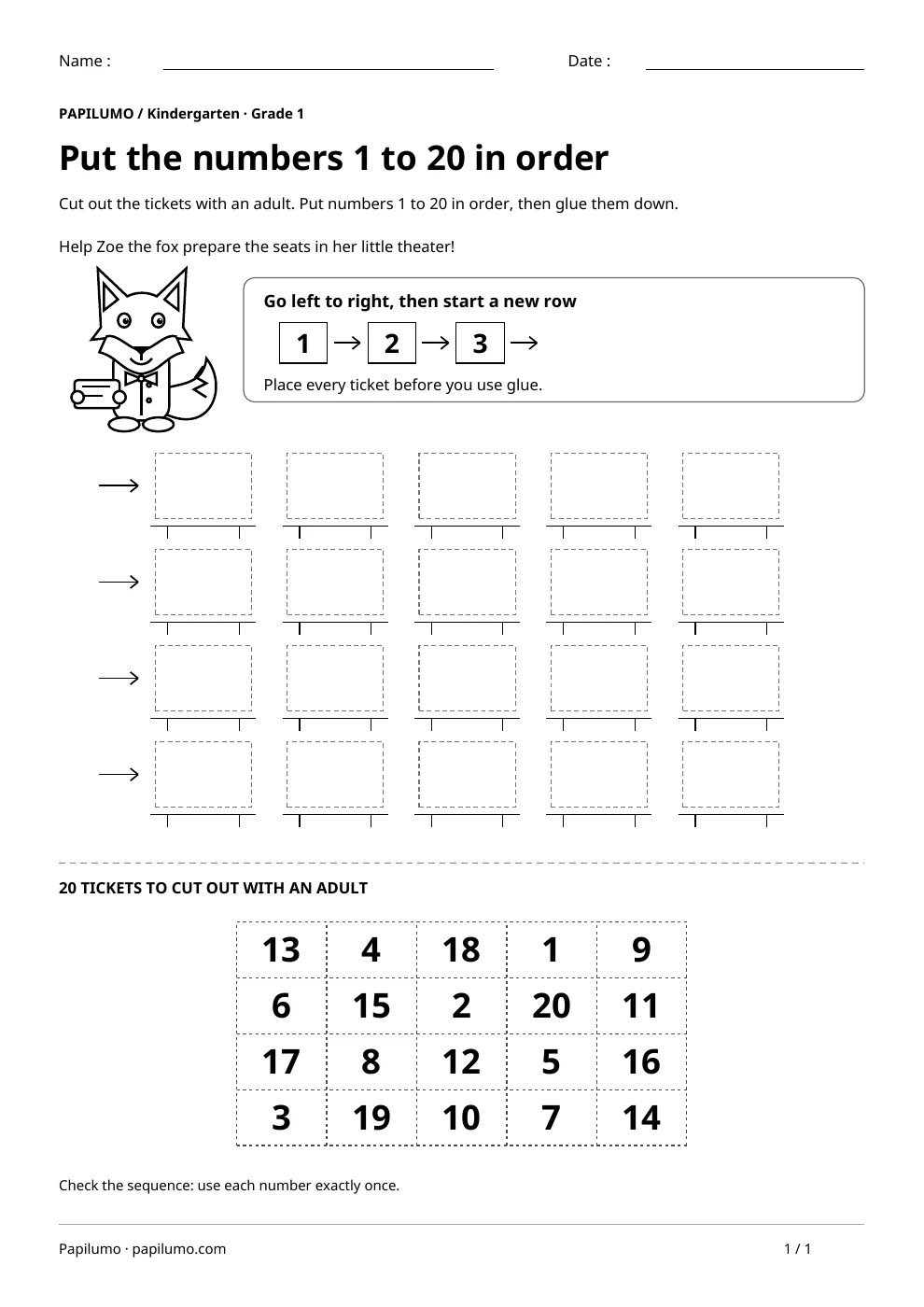
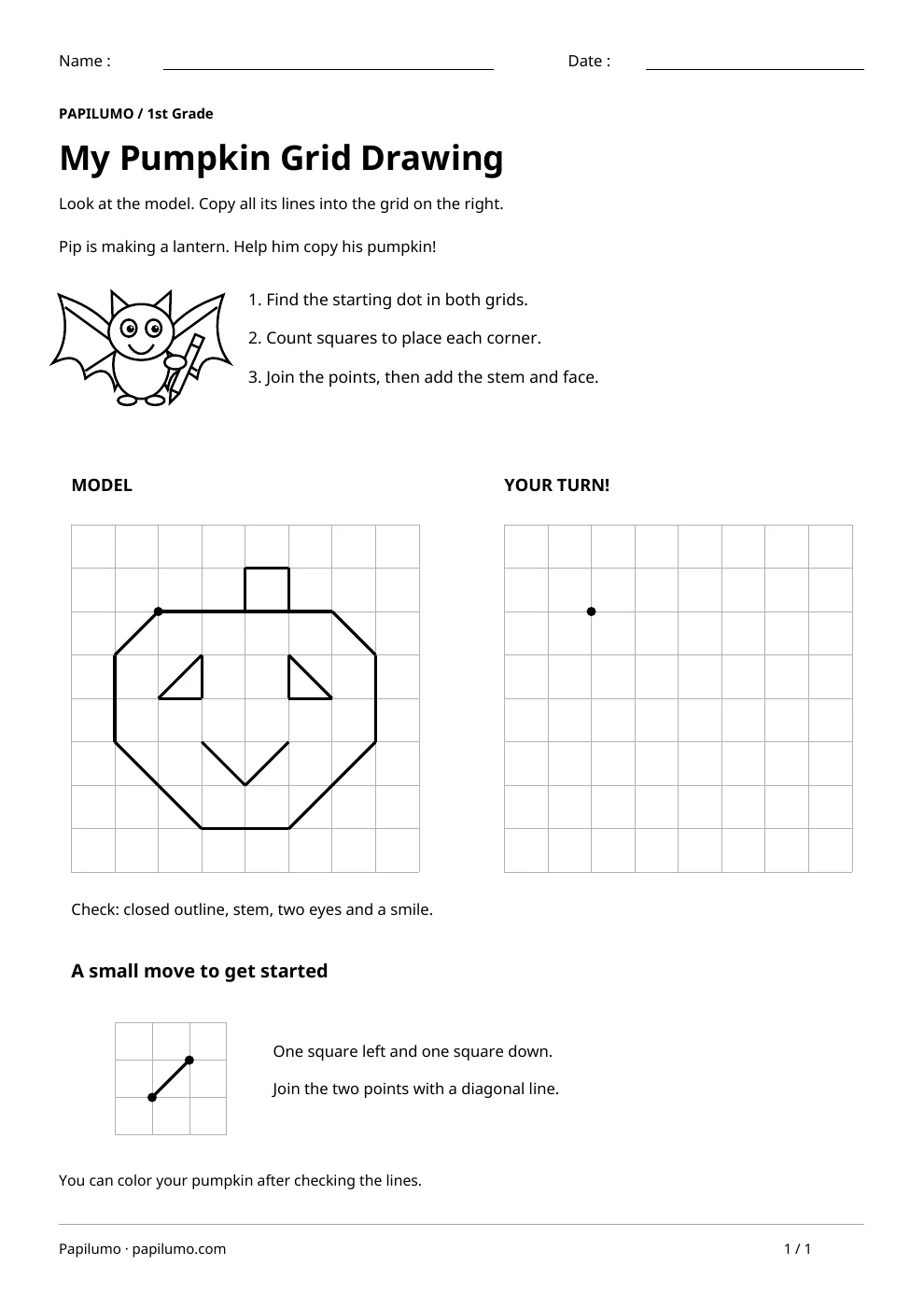
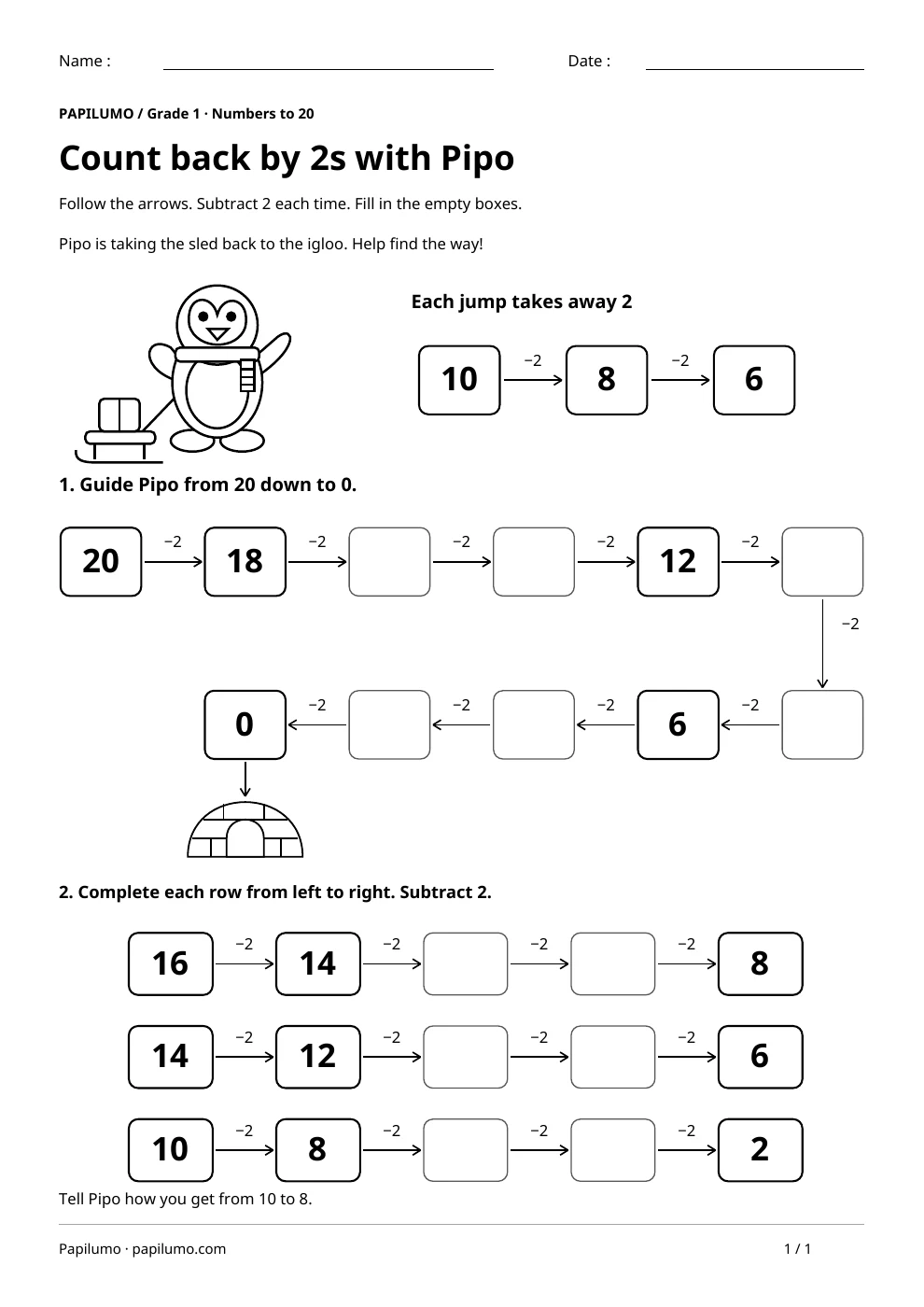
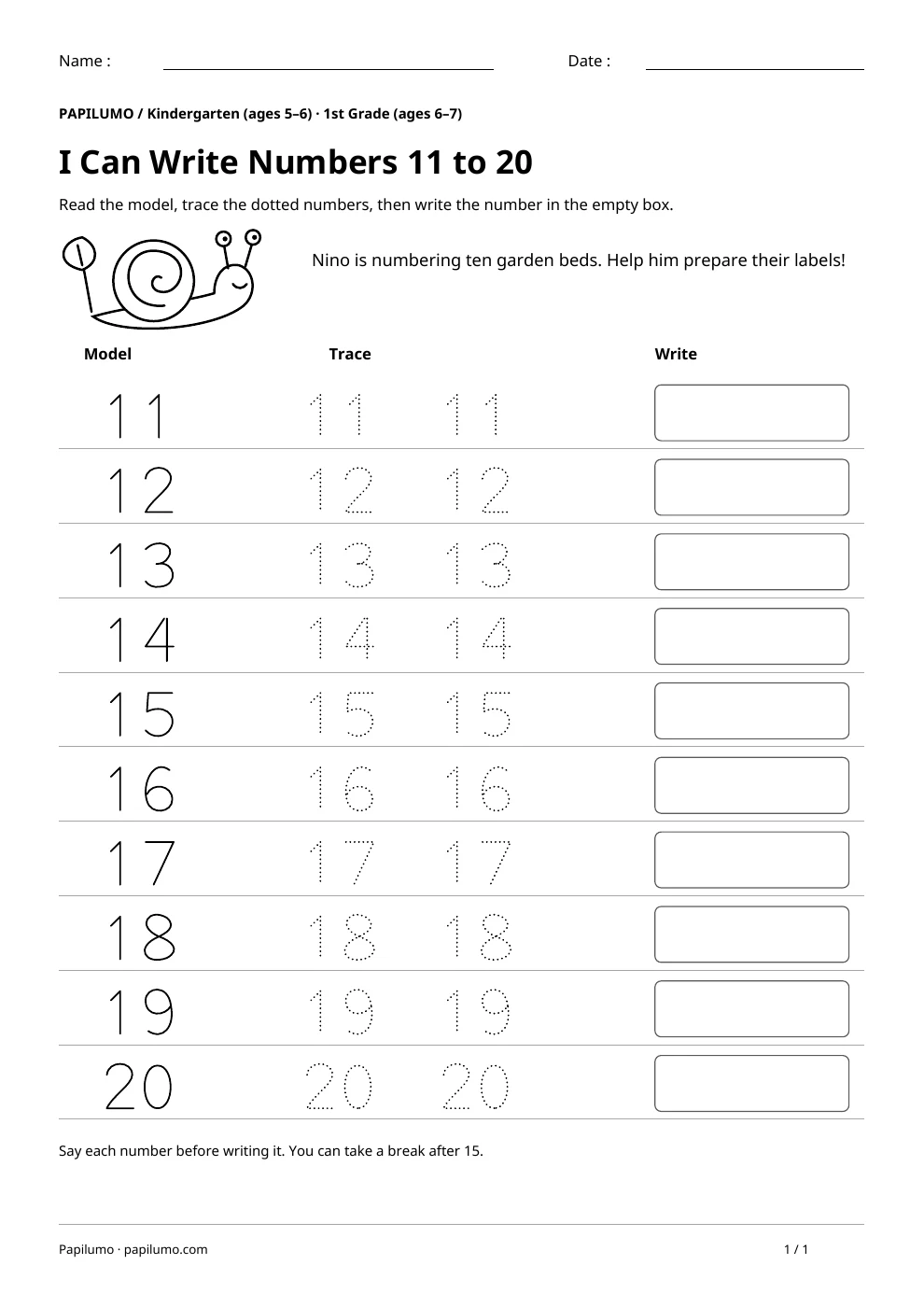
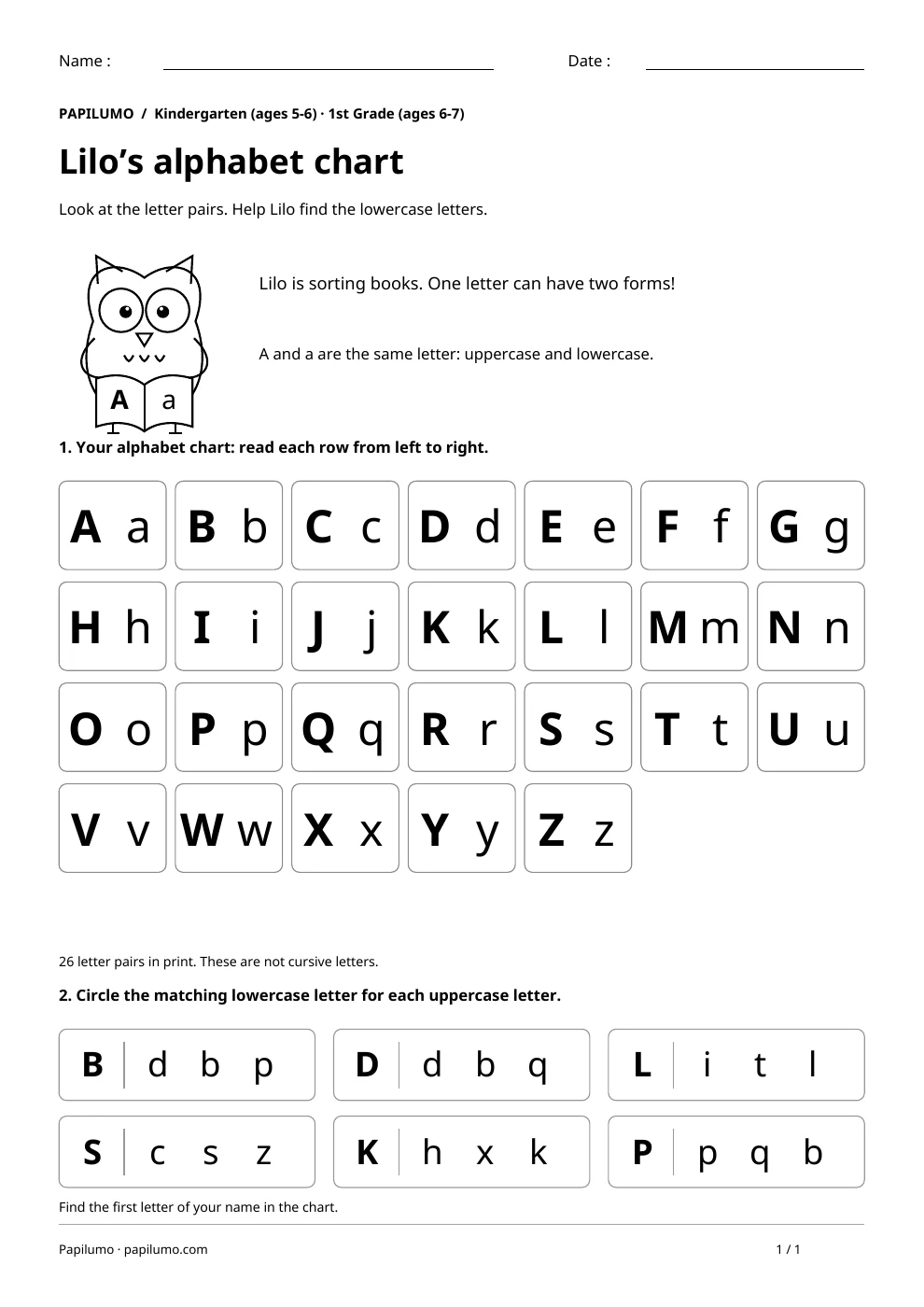
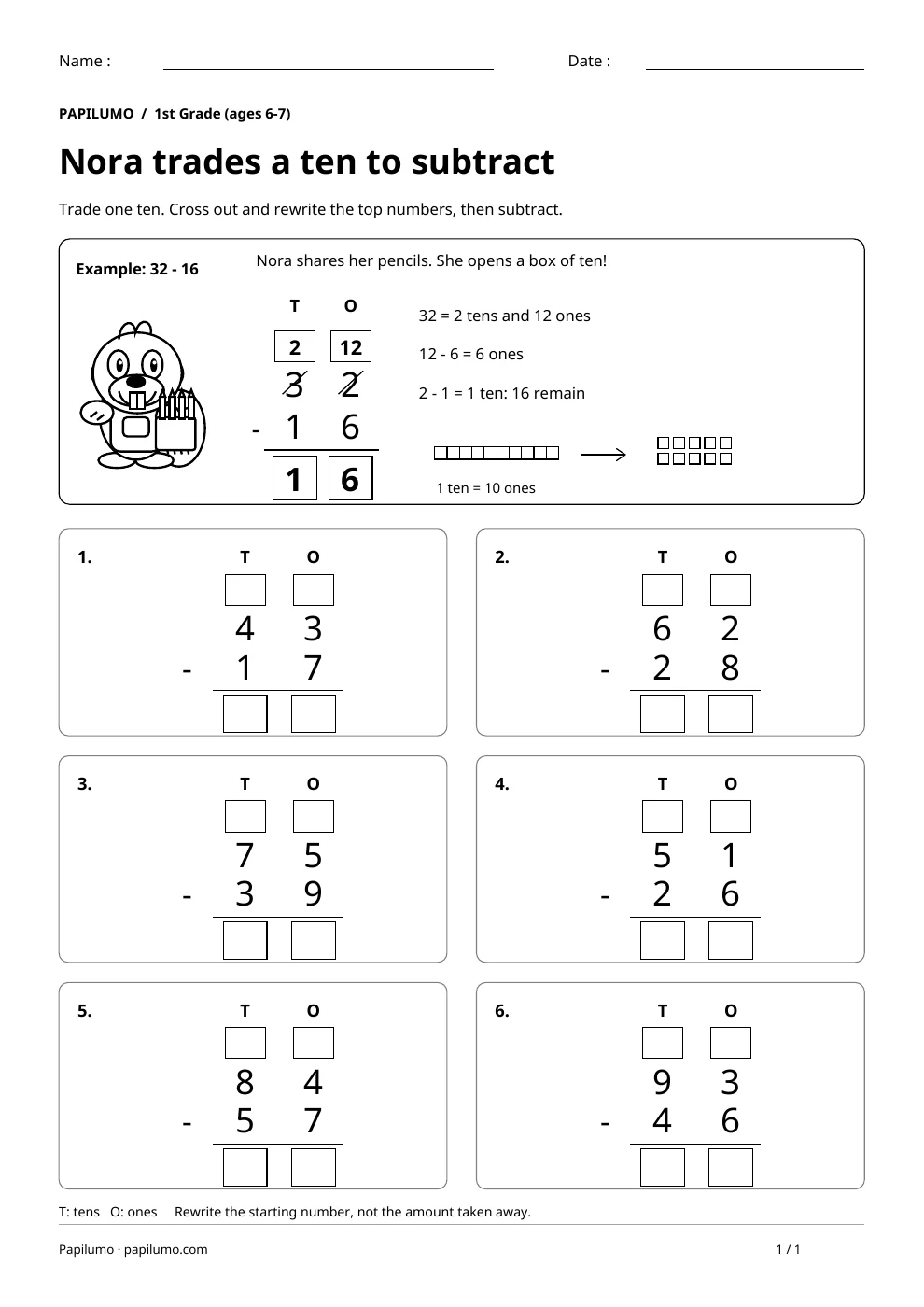
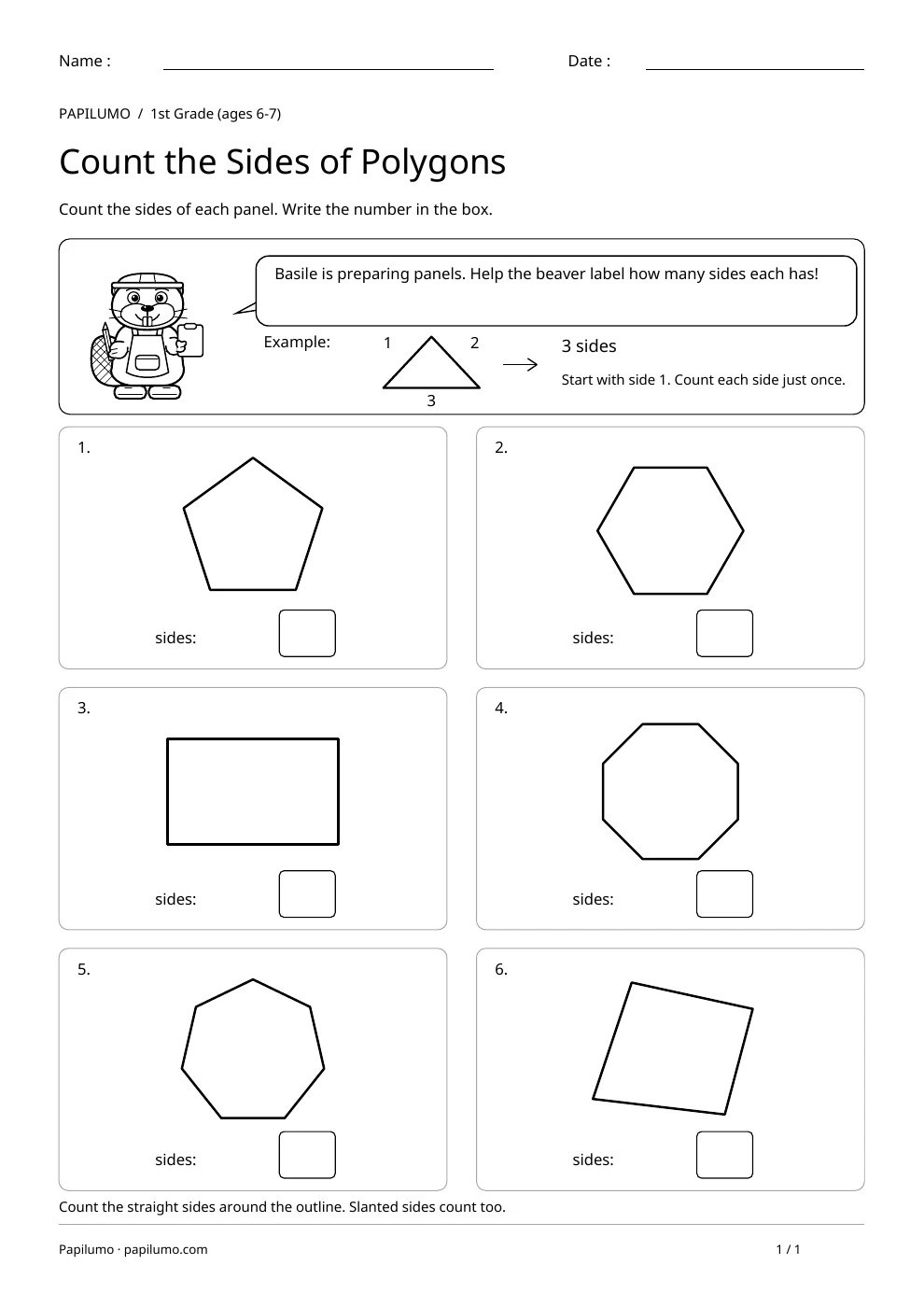
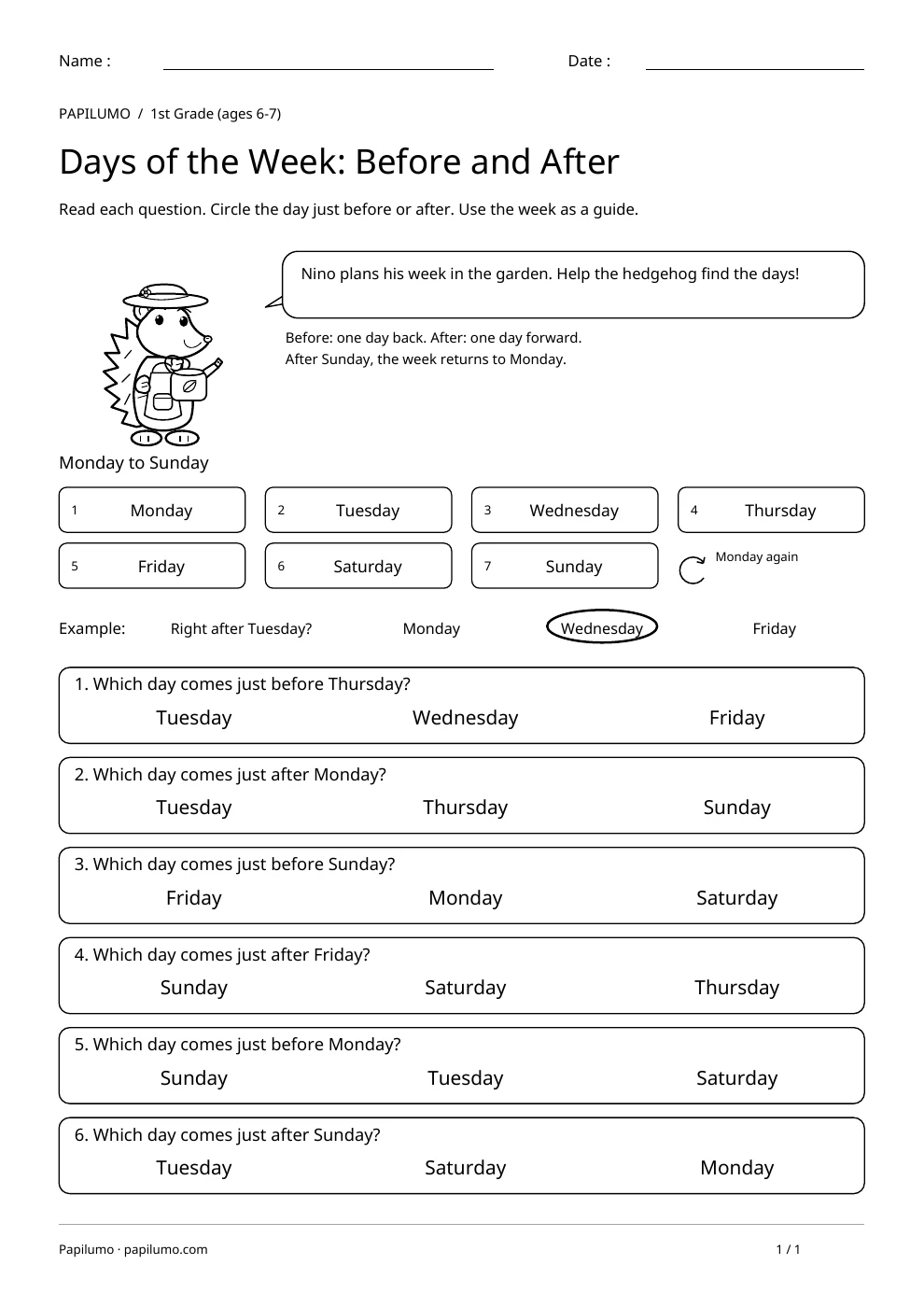
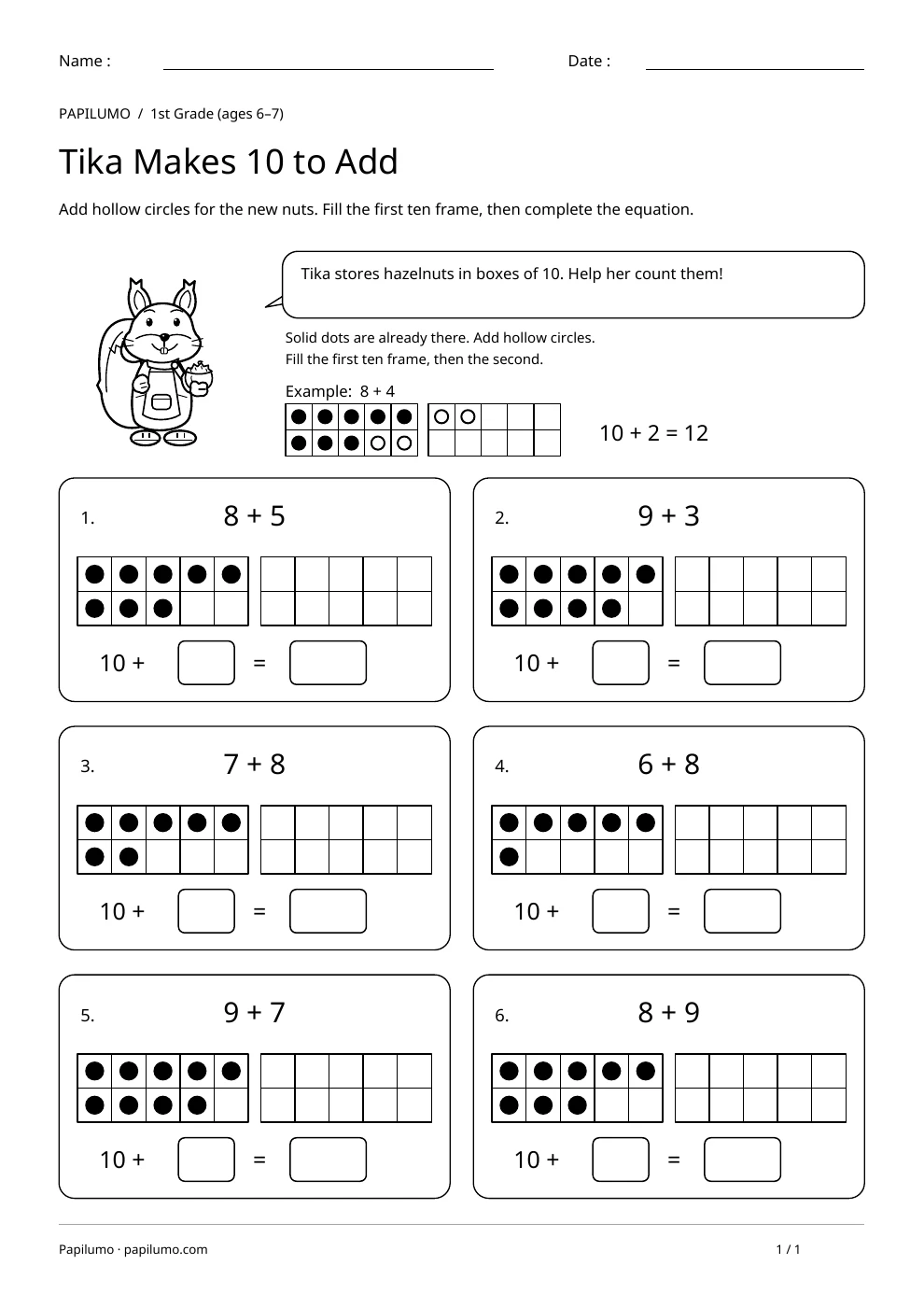
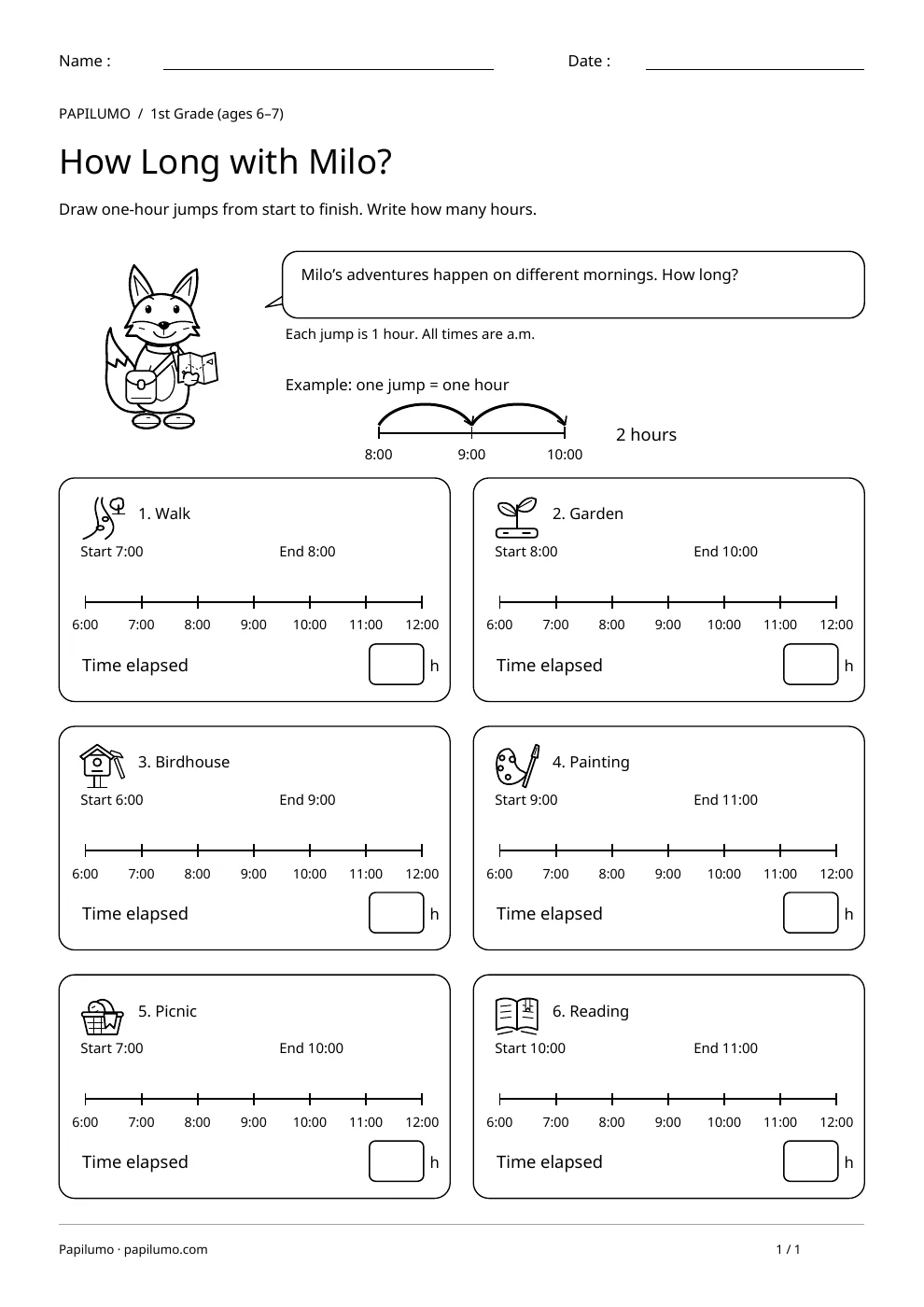
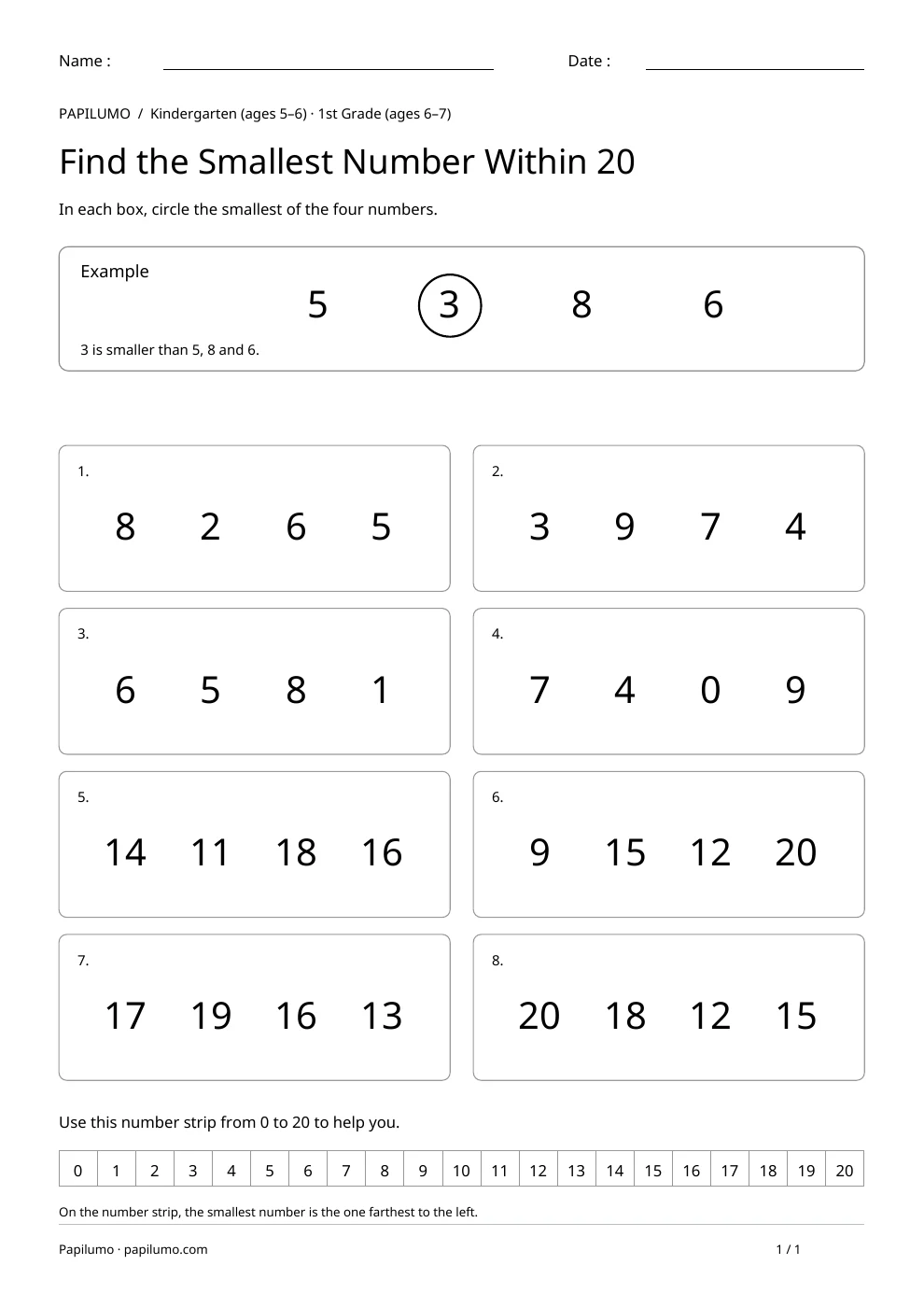
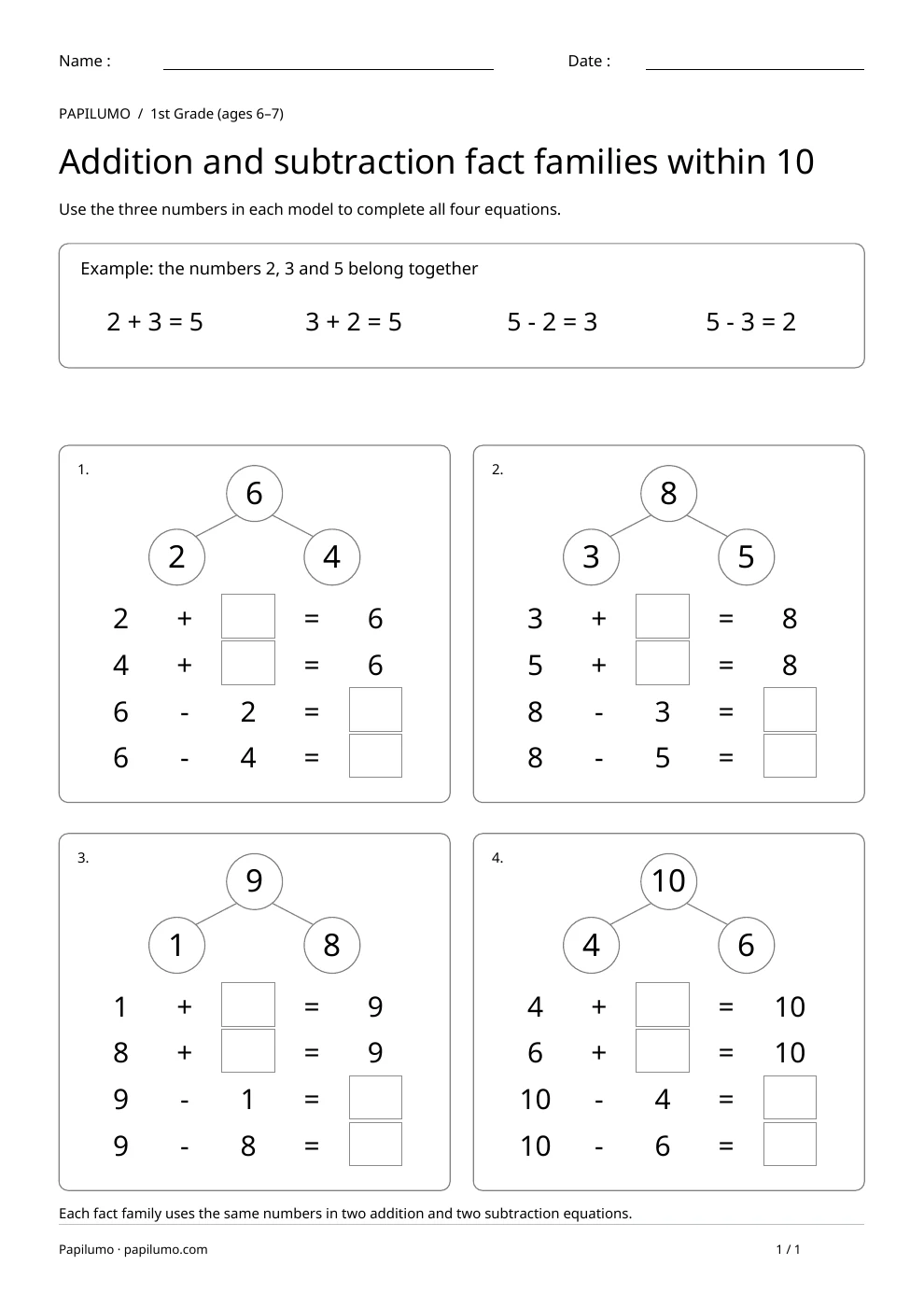
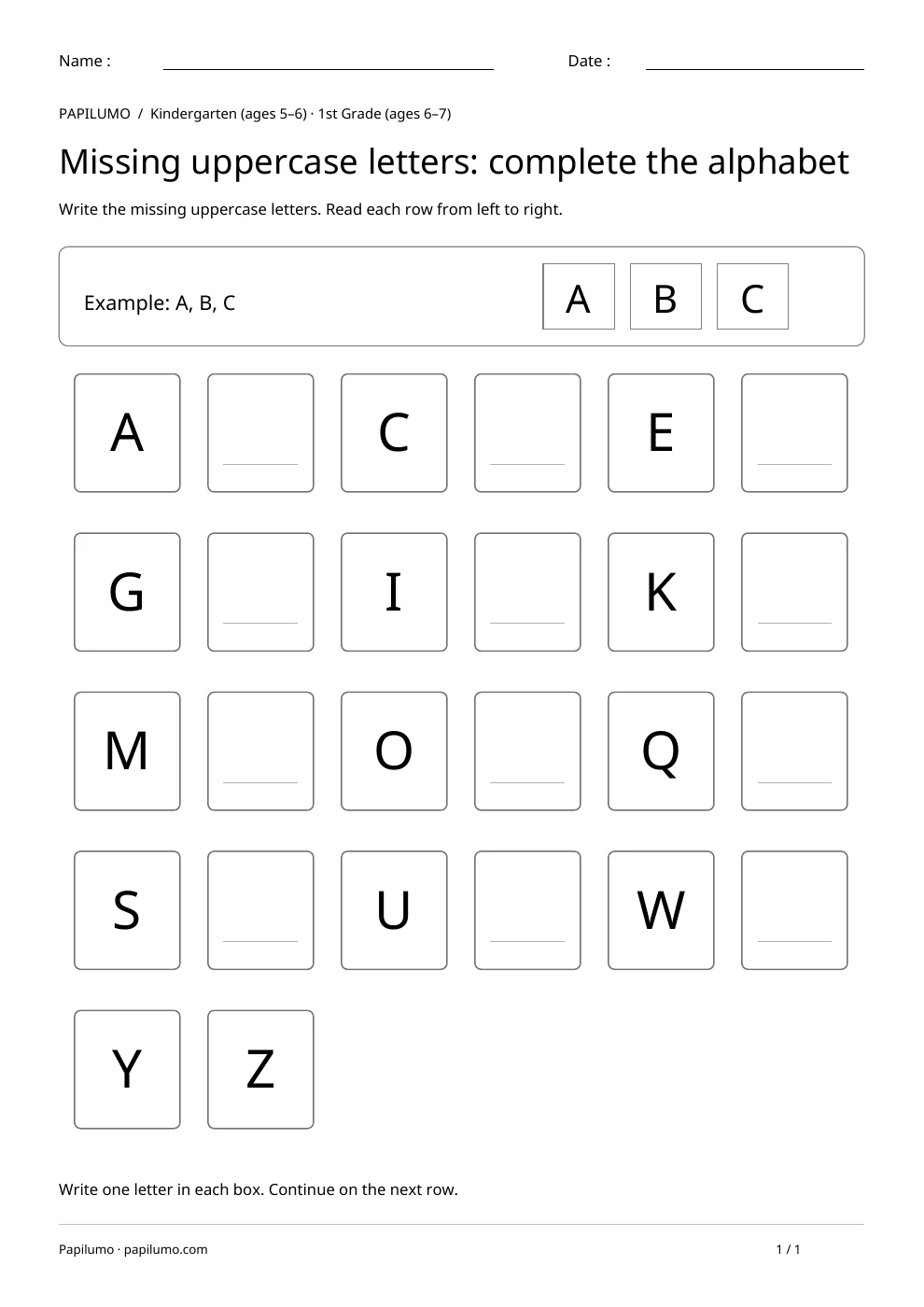
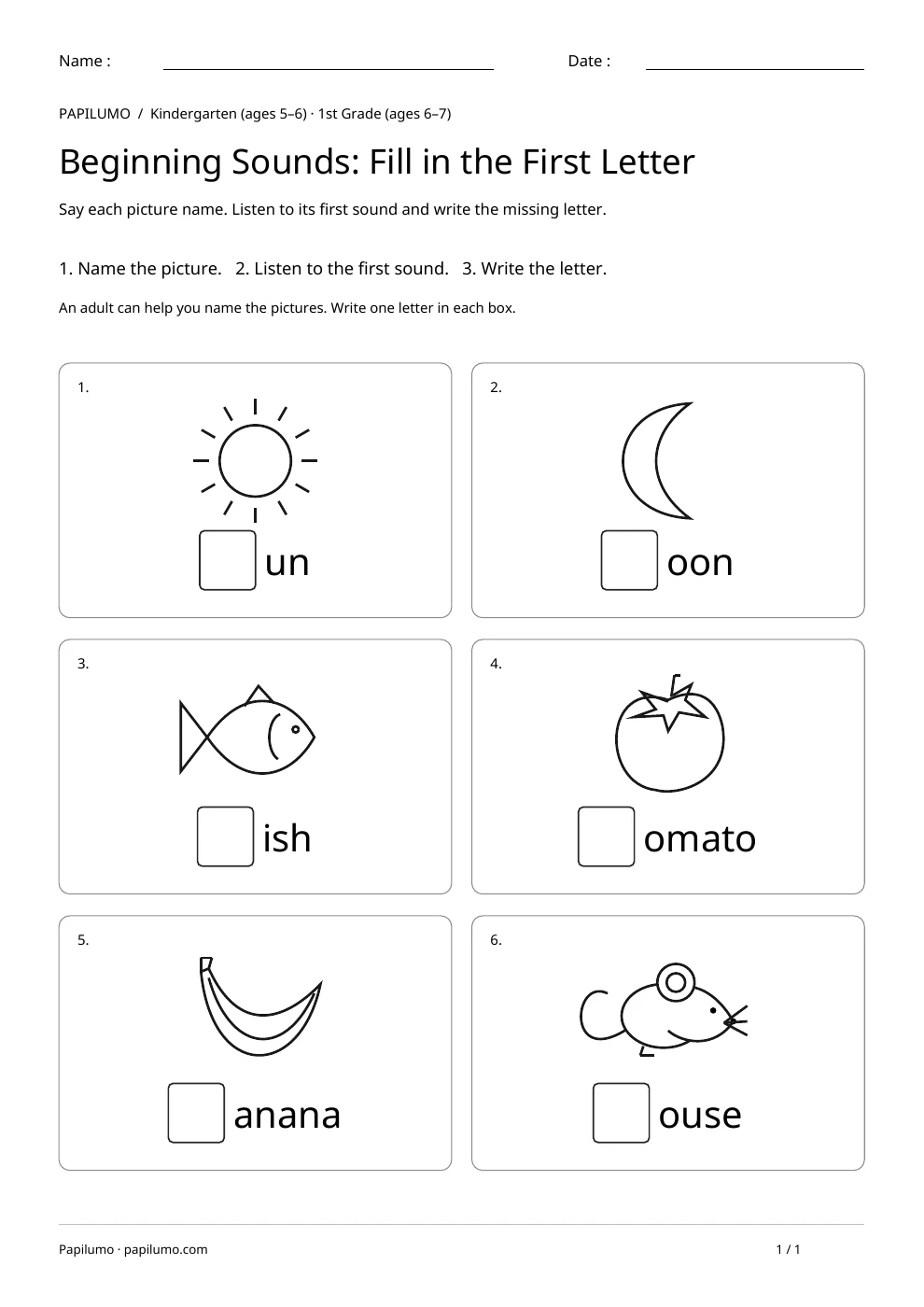
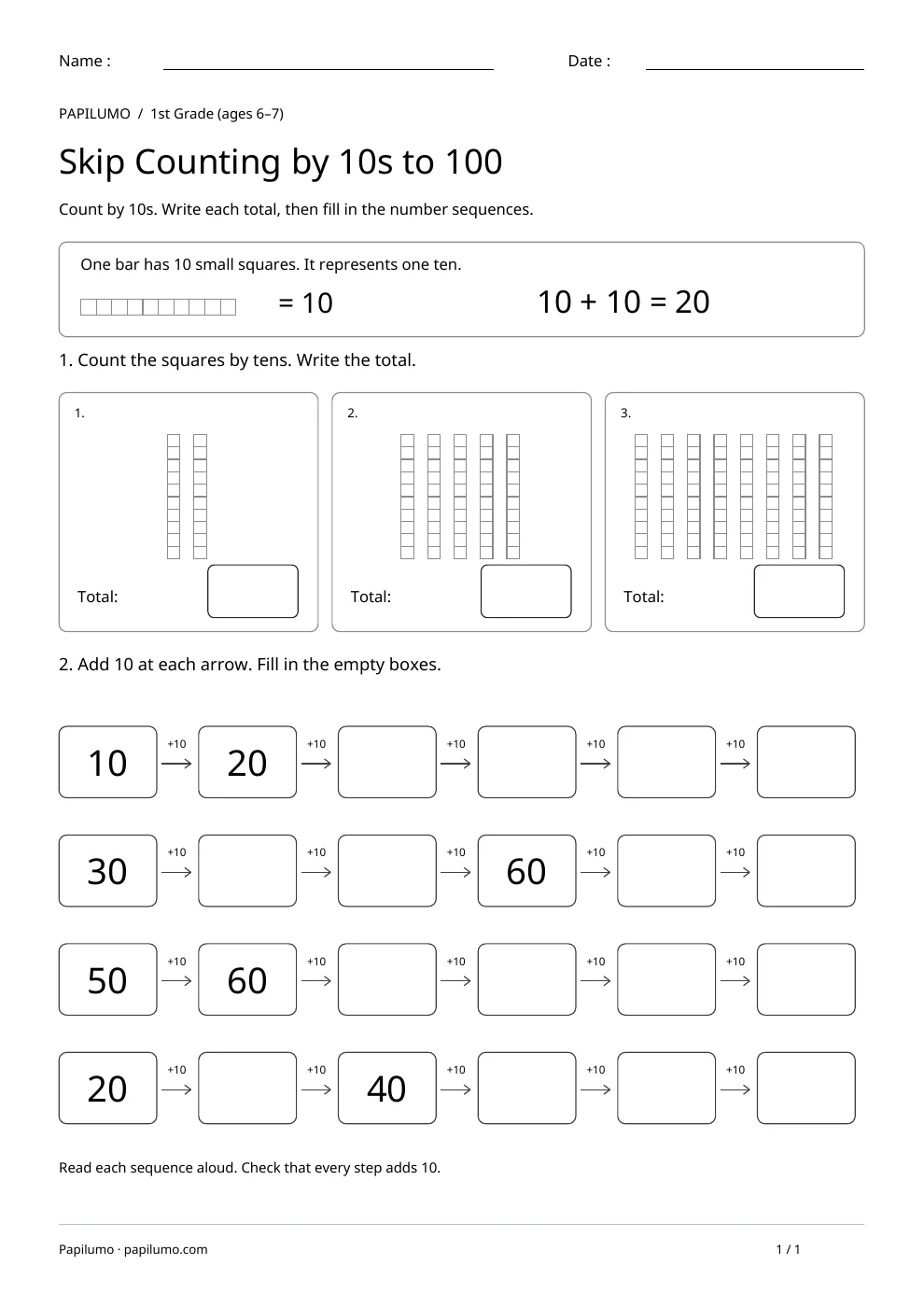
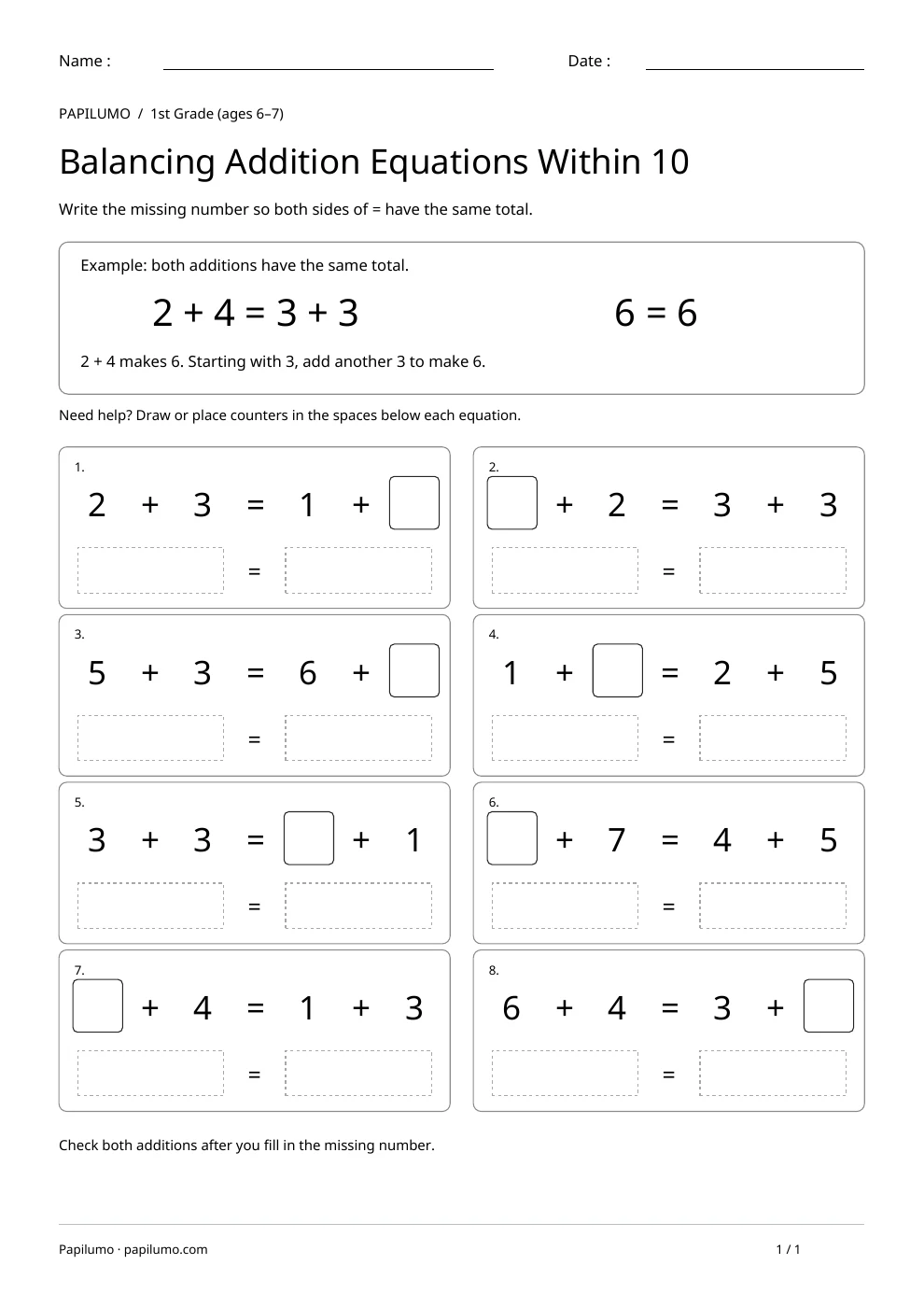
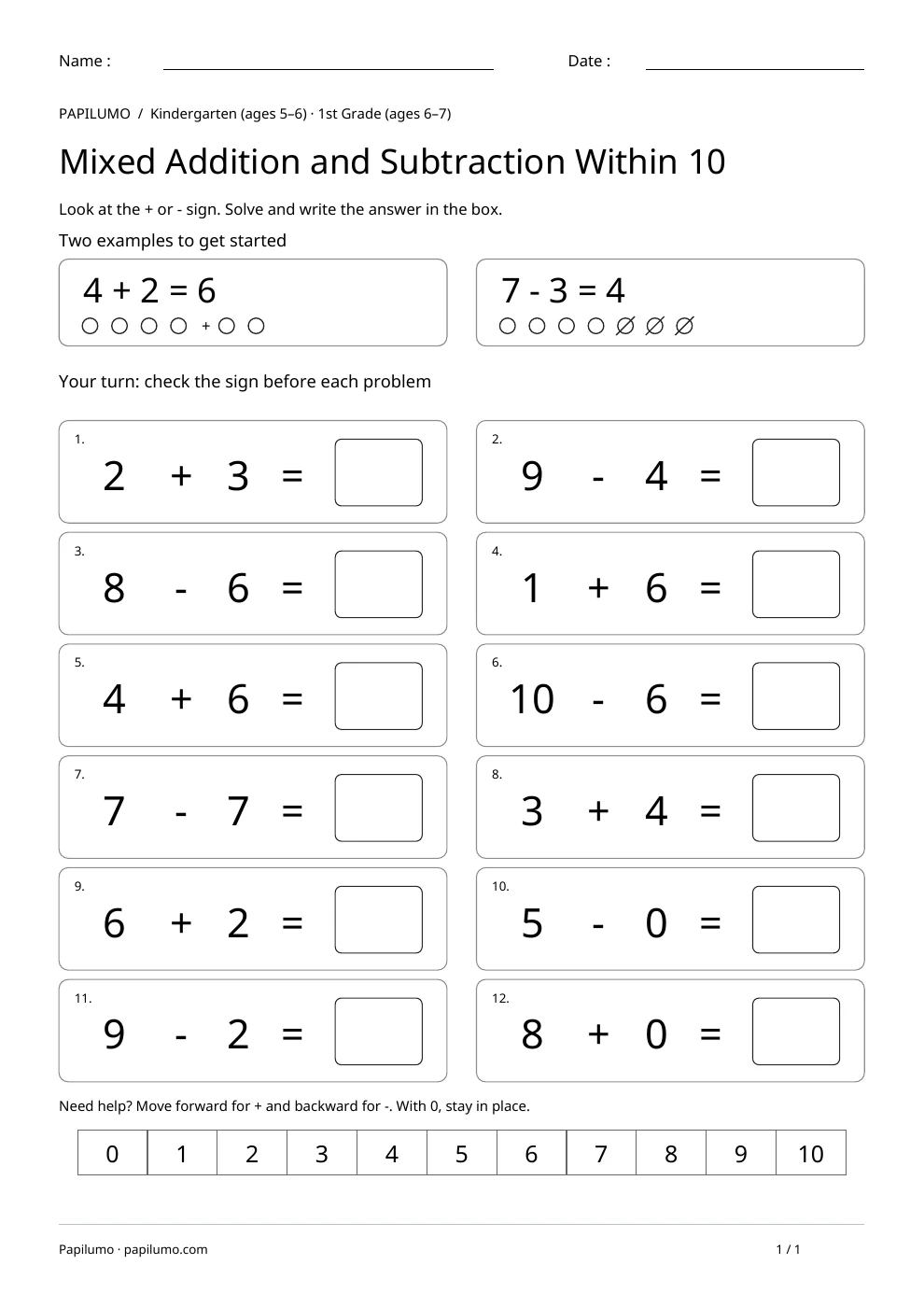
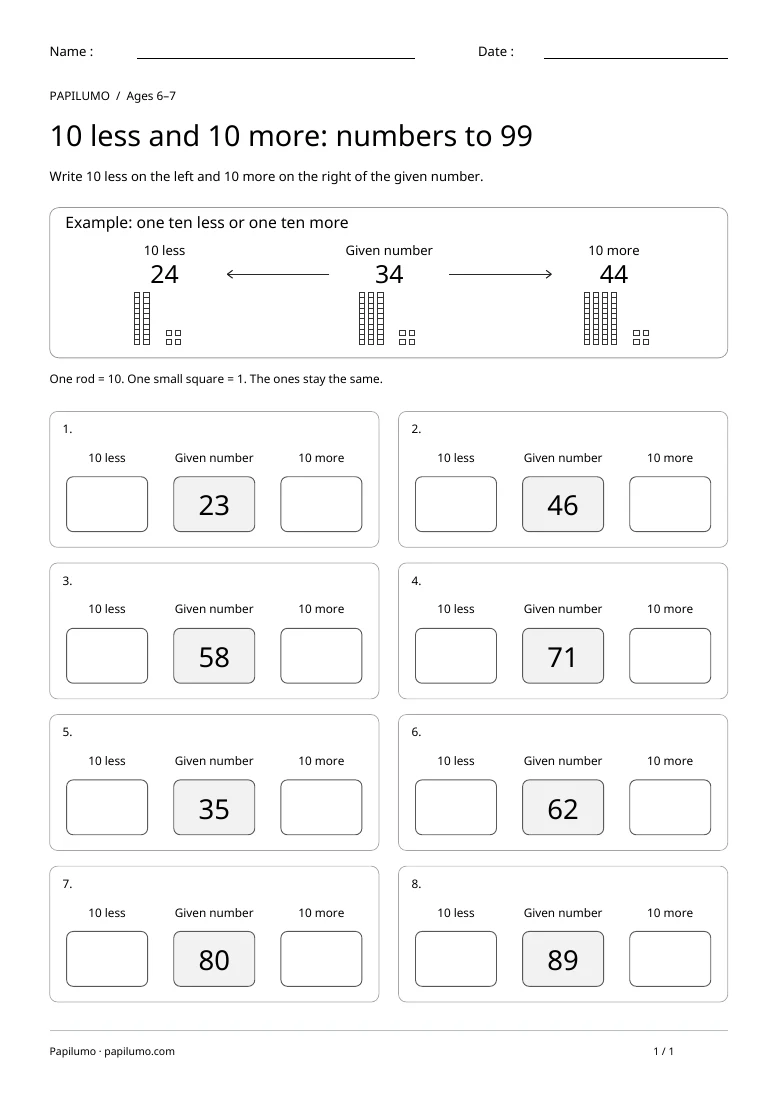
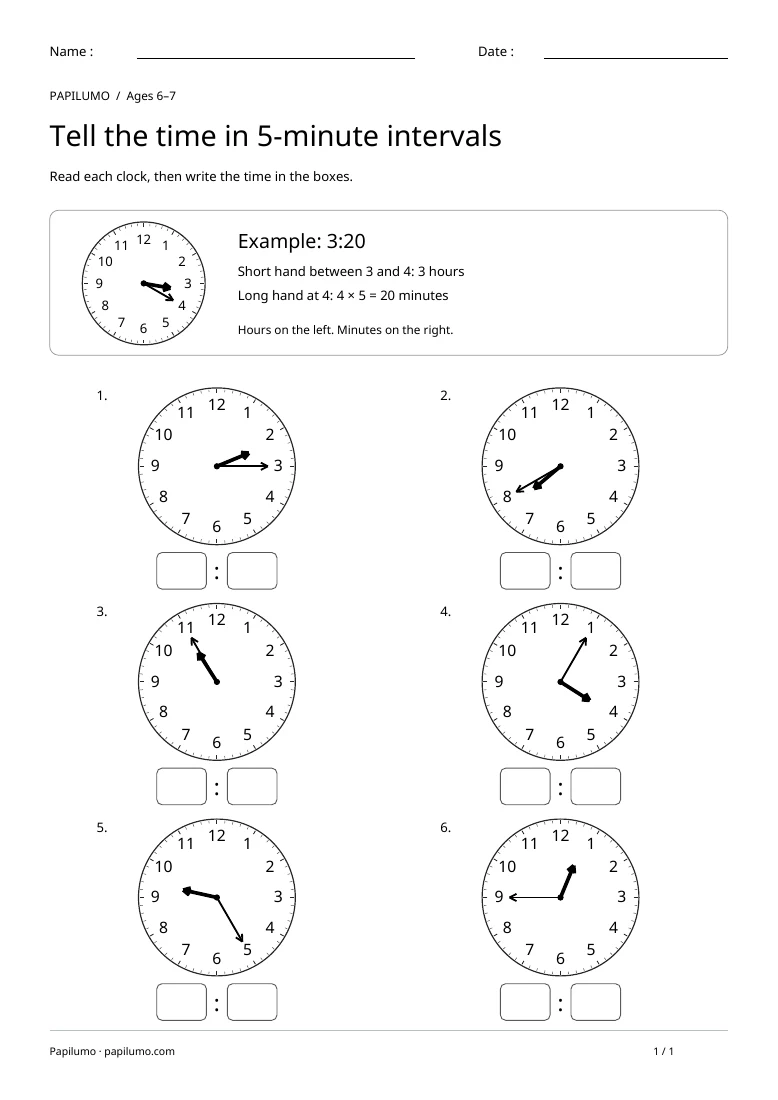
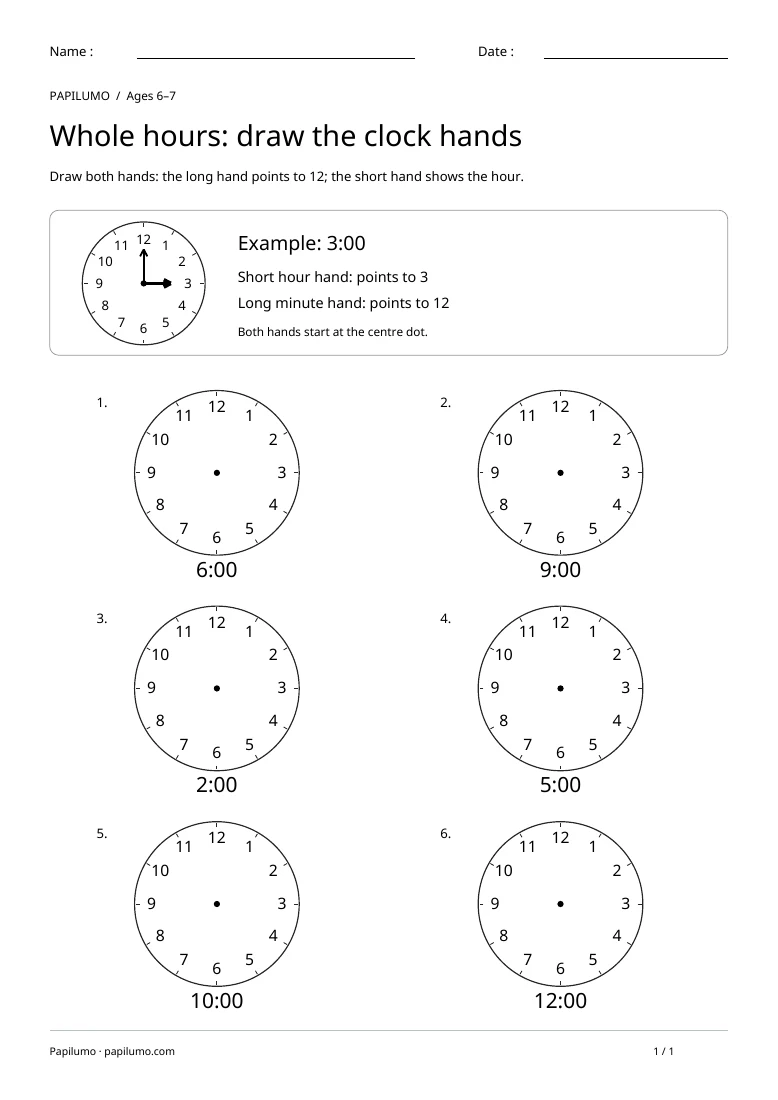
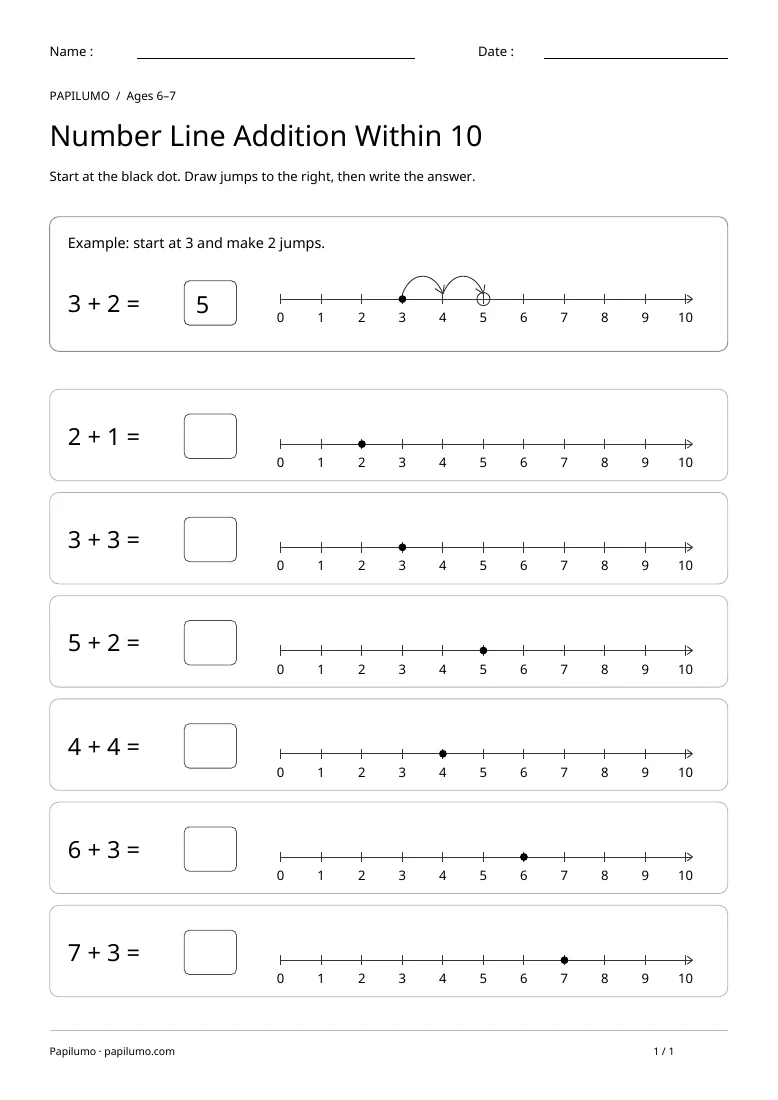
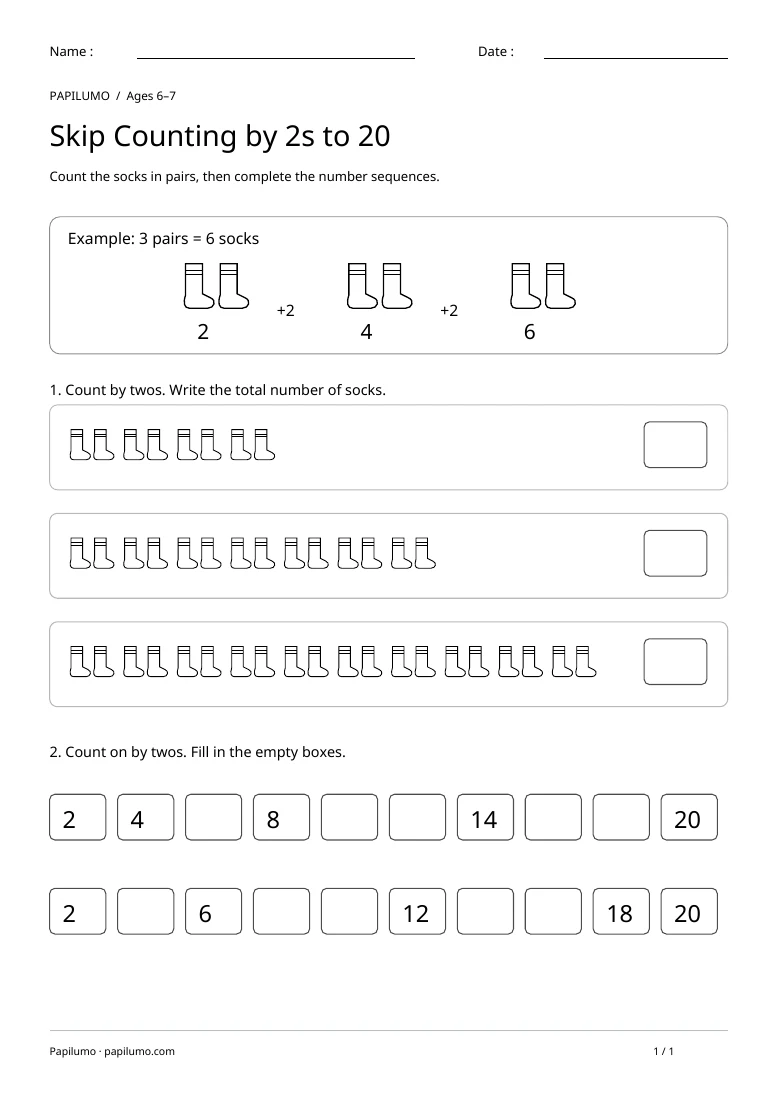
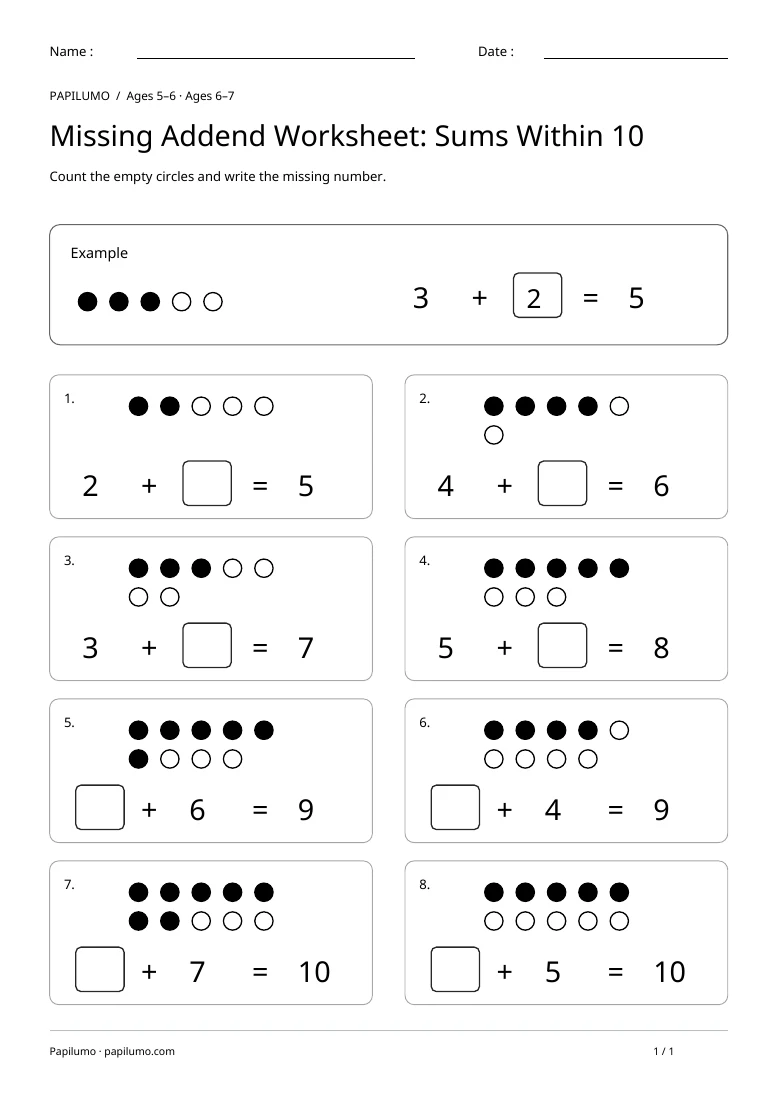
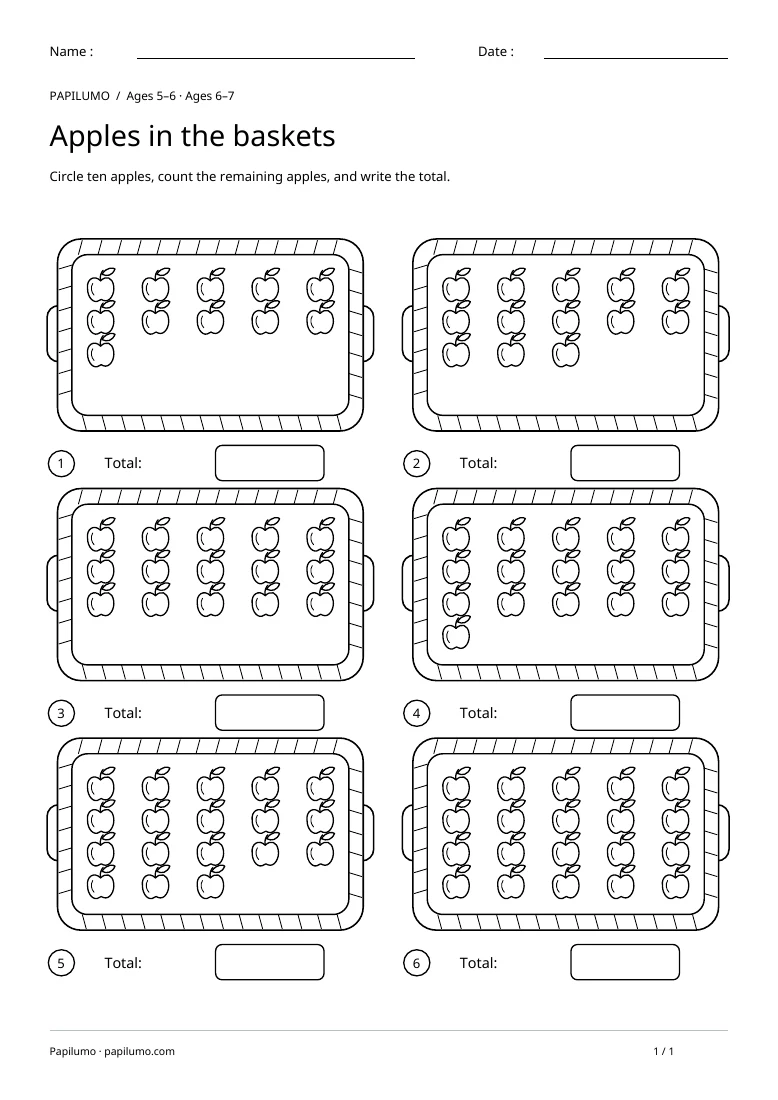
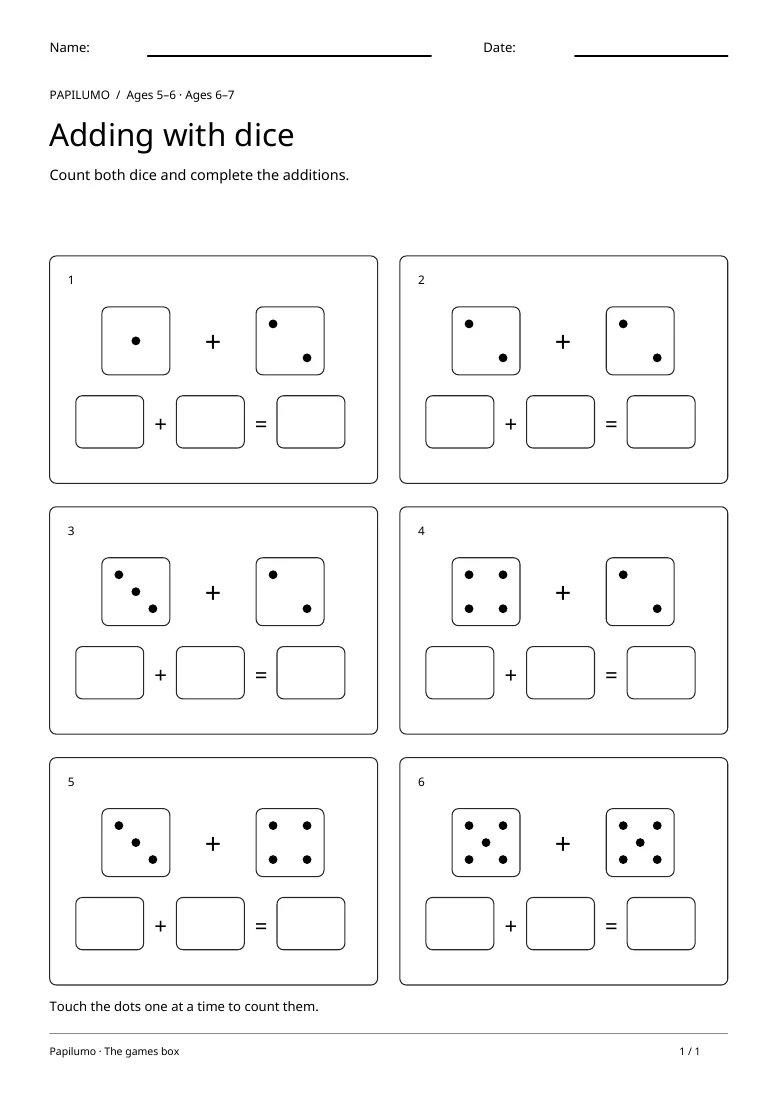
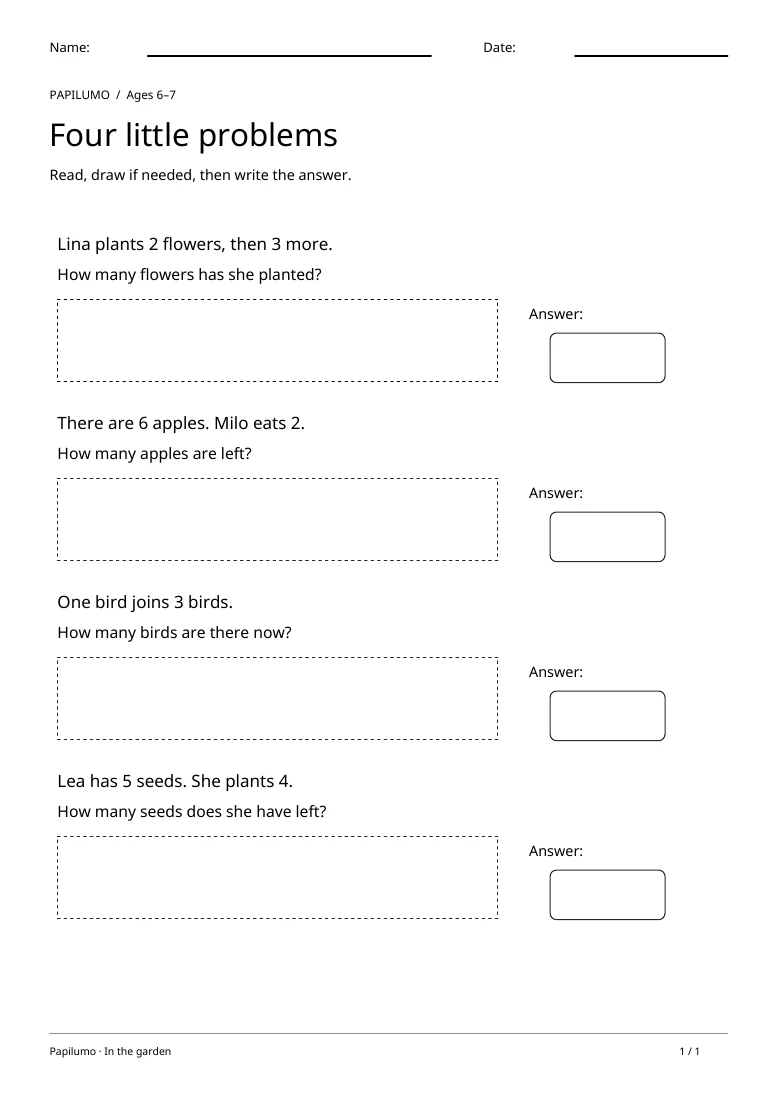
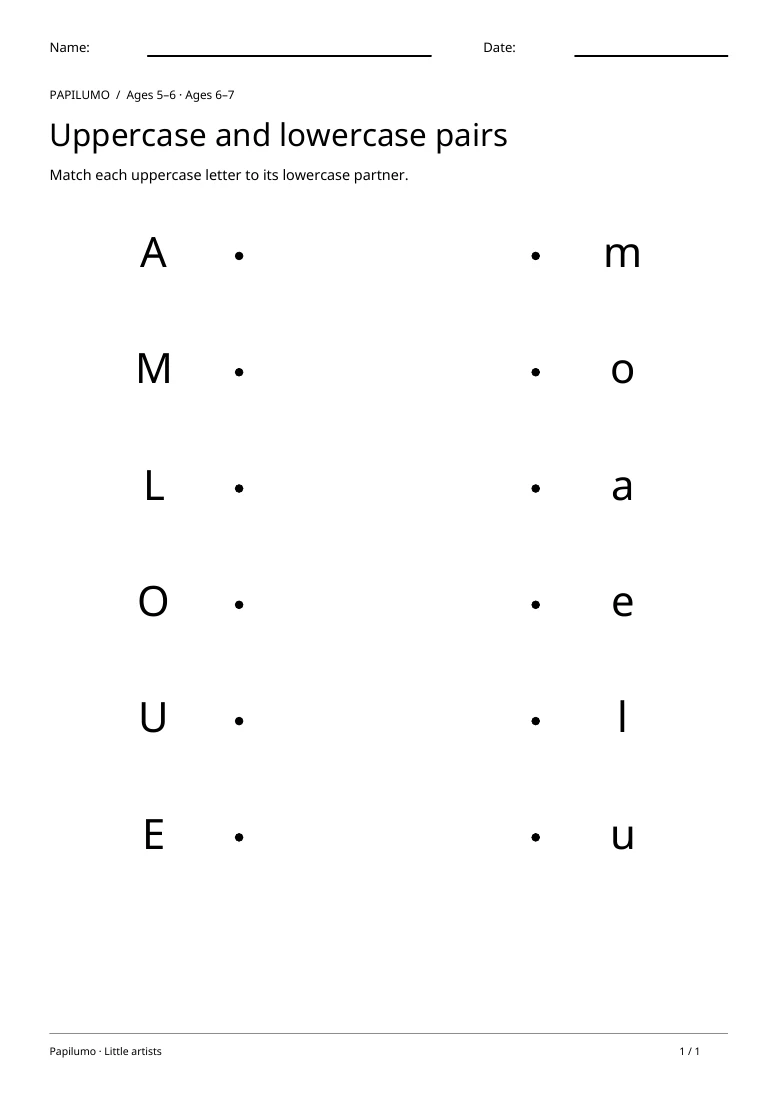
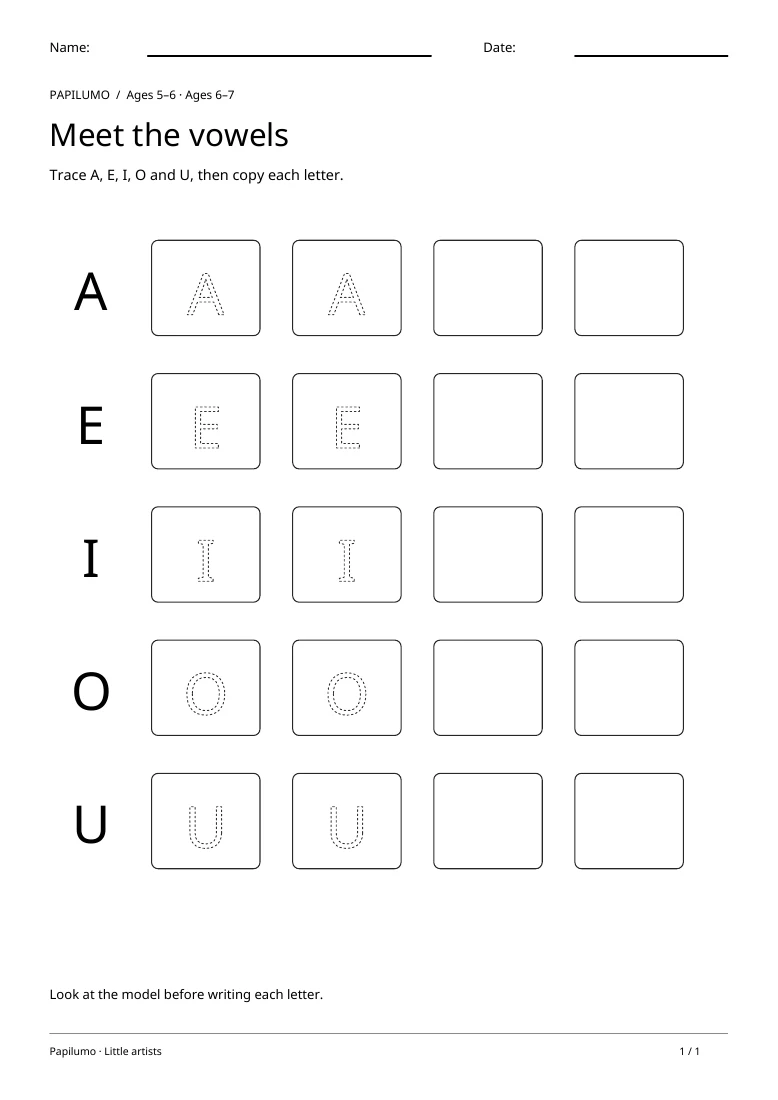
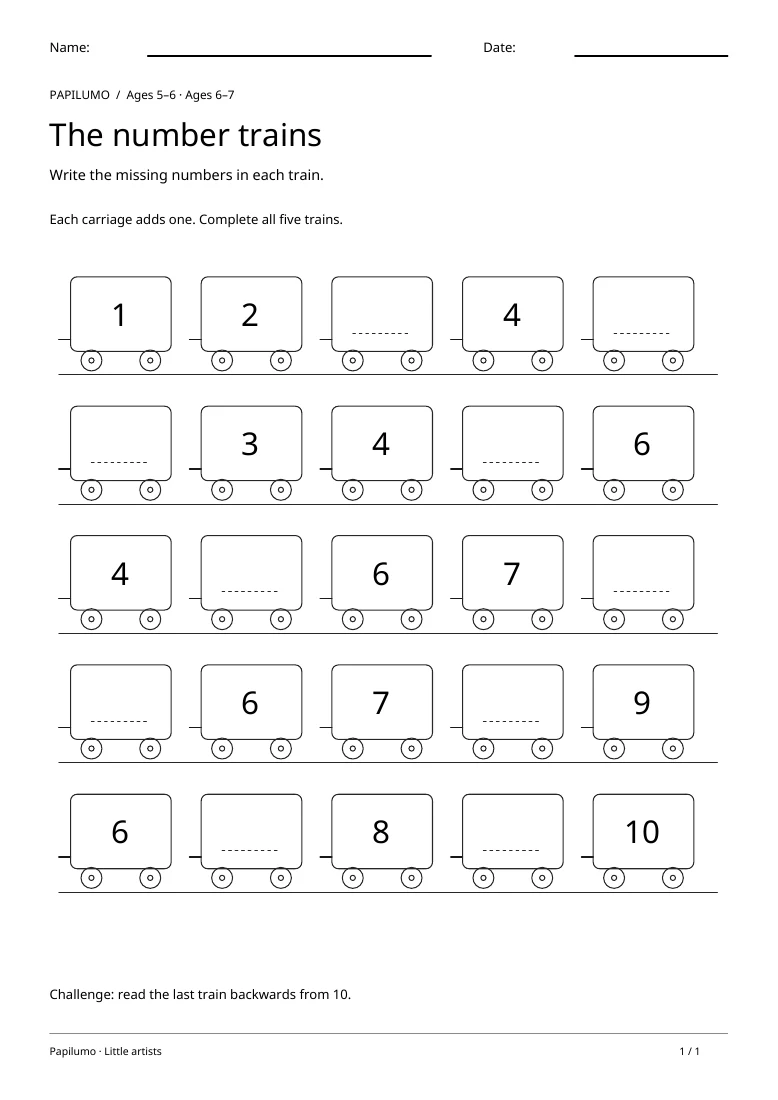
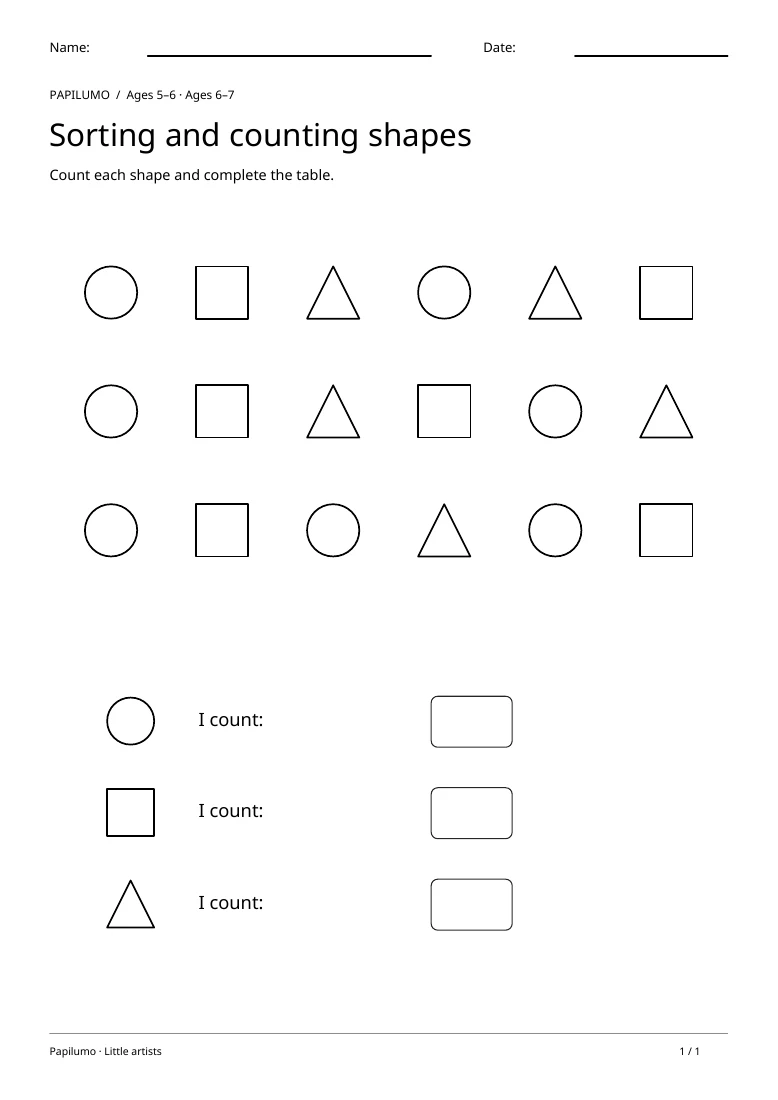
These 1st grade worksheets bring together beginning reading, addition, subtraction, number order and clock practice. Choose a specific skill rather than a full curriculum. Each student activity is a free one-page PDF; many include a separate answer key and suggestions for easier practice.
A child may understand a calculation while needing help reading its instruction. Reading a math prompt aloud can keep the focus on quantities and reasoning. During a reading activity, note which words the child reads independently and where an adult supplies support.
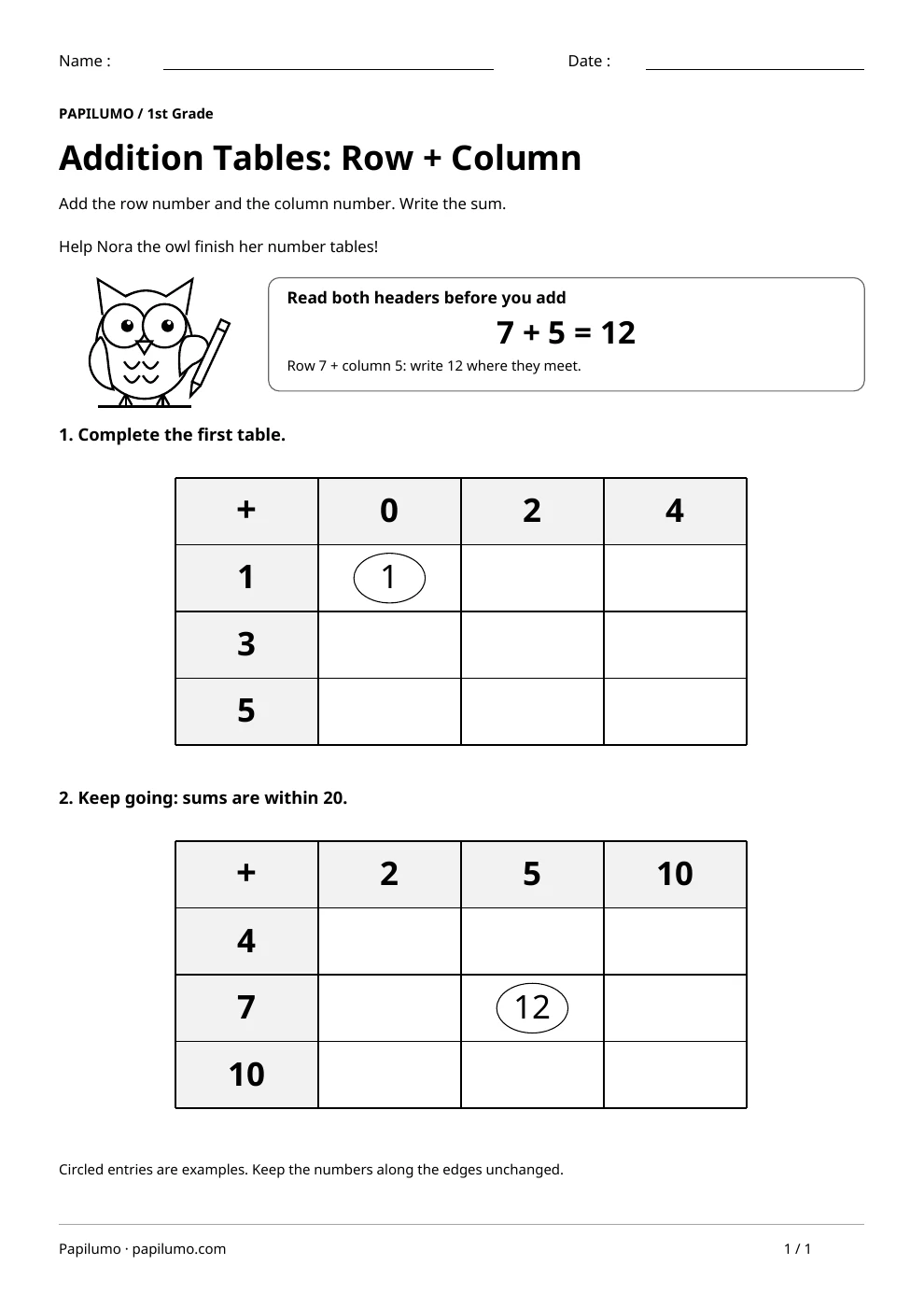
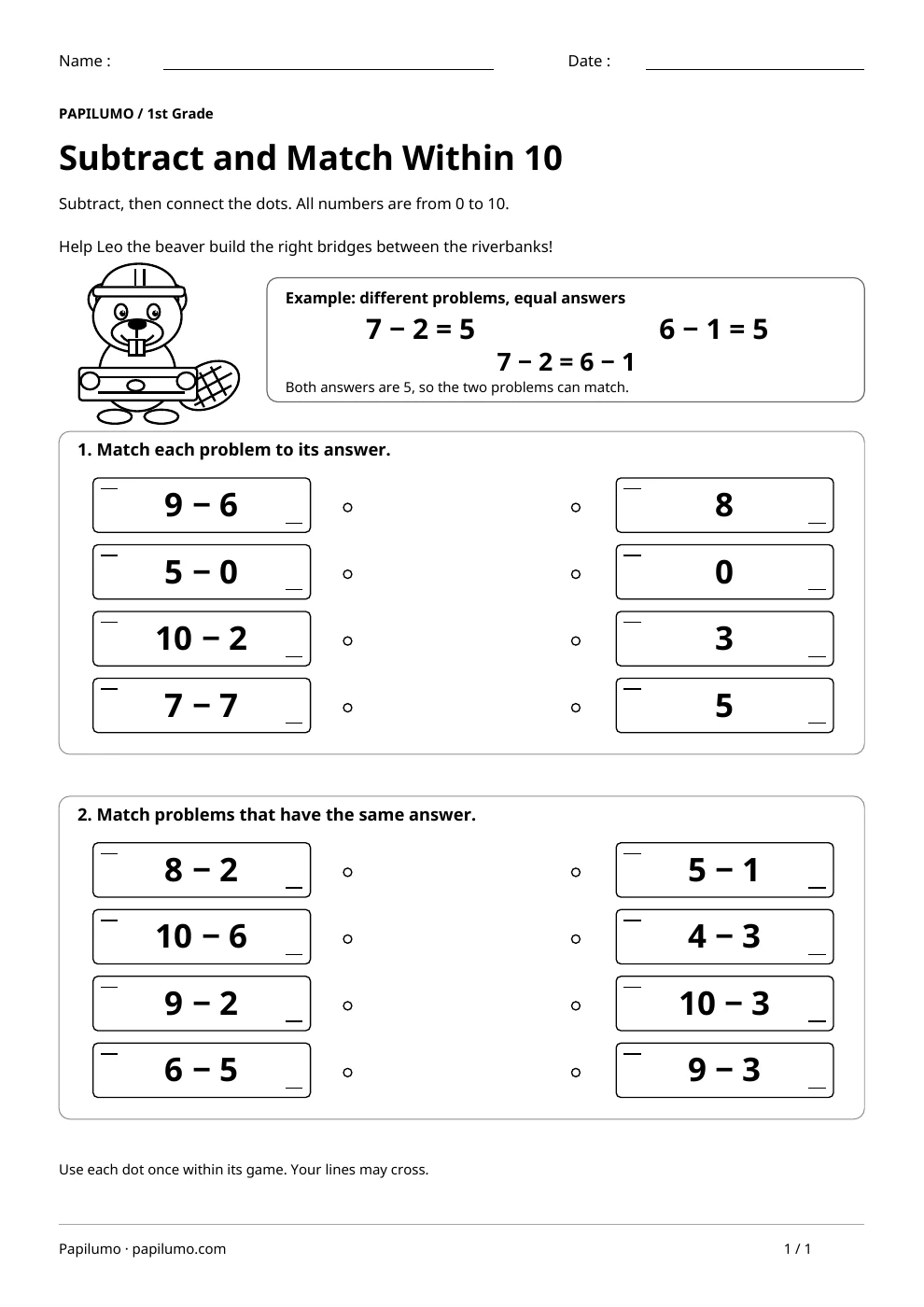
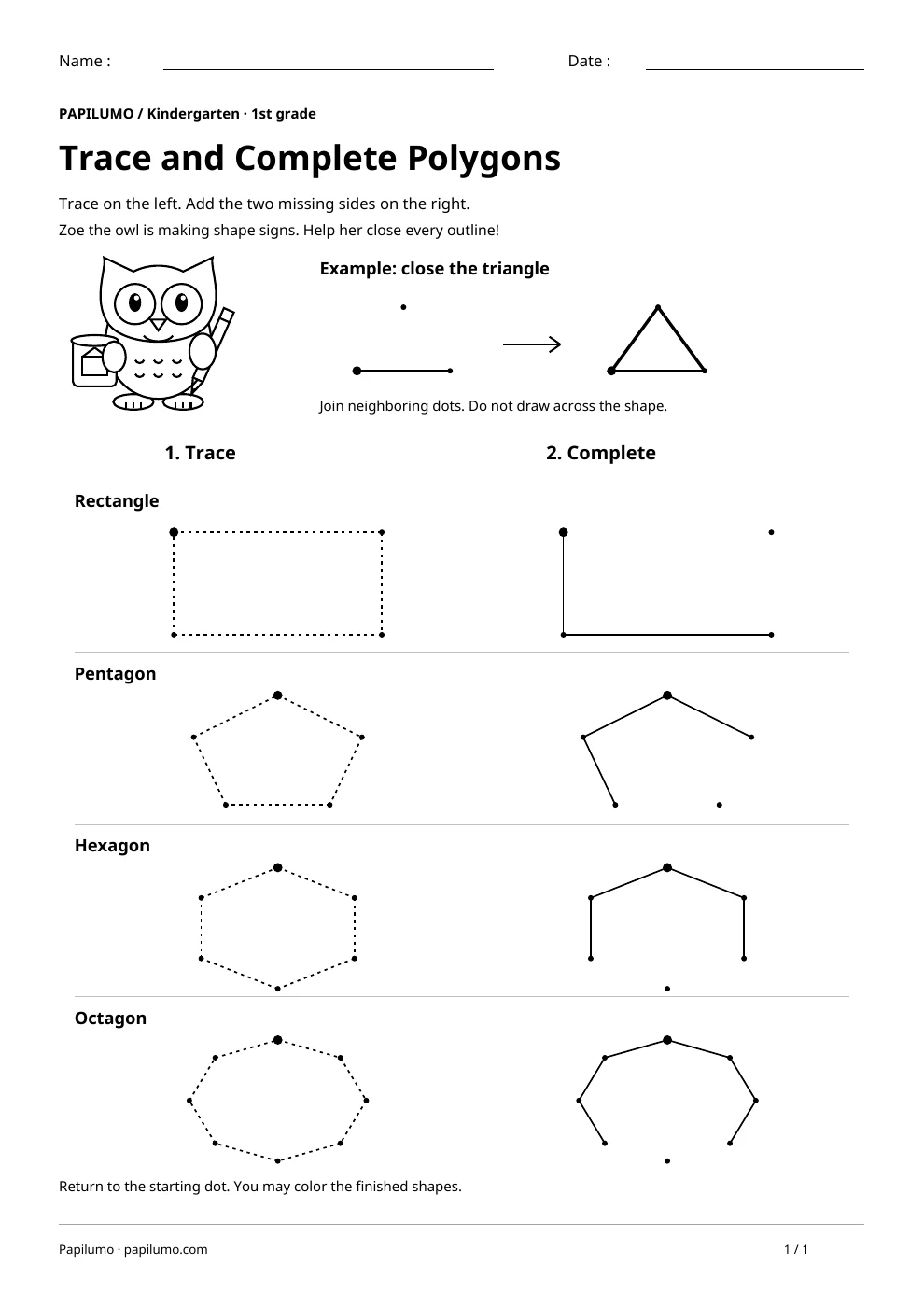
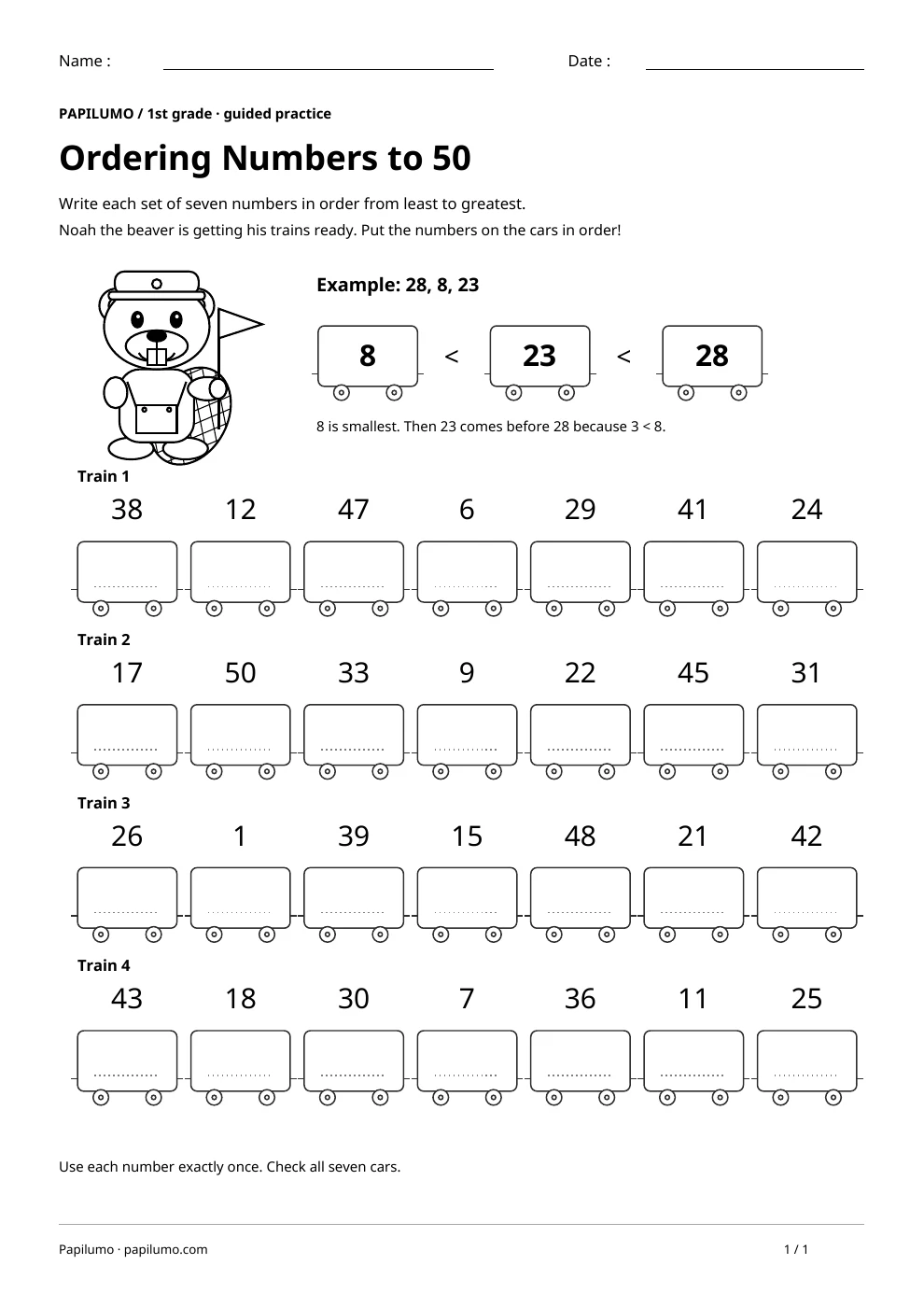
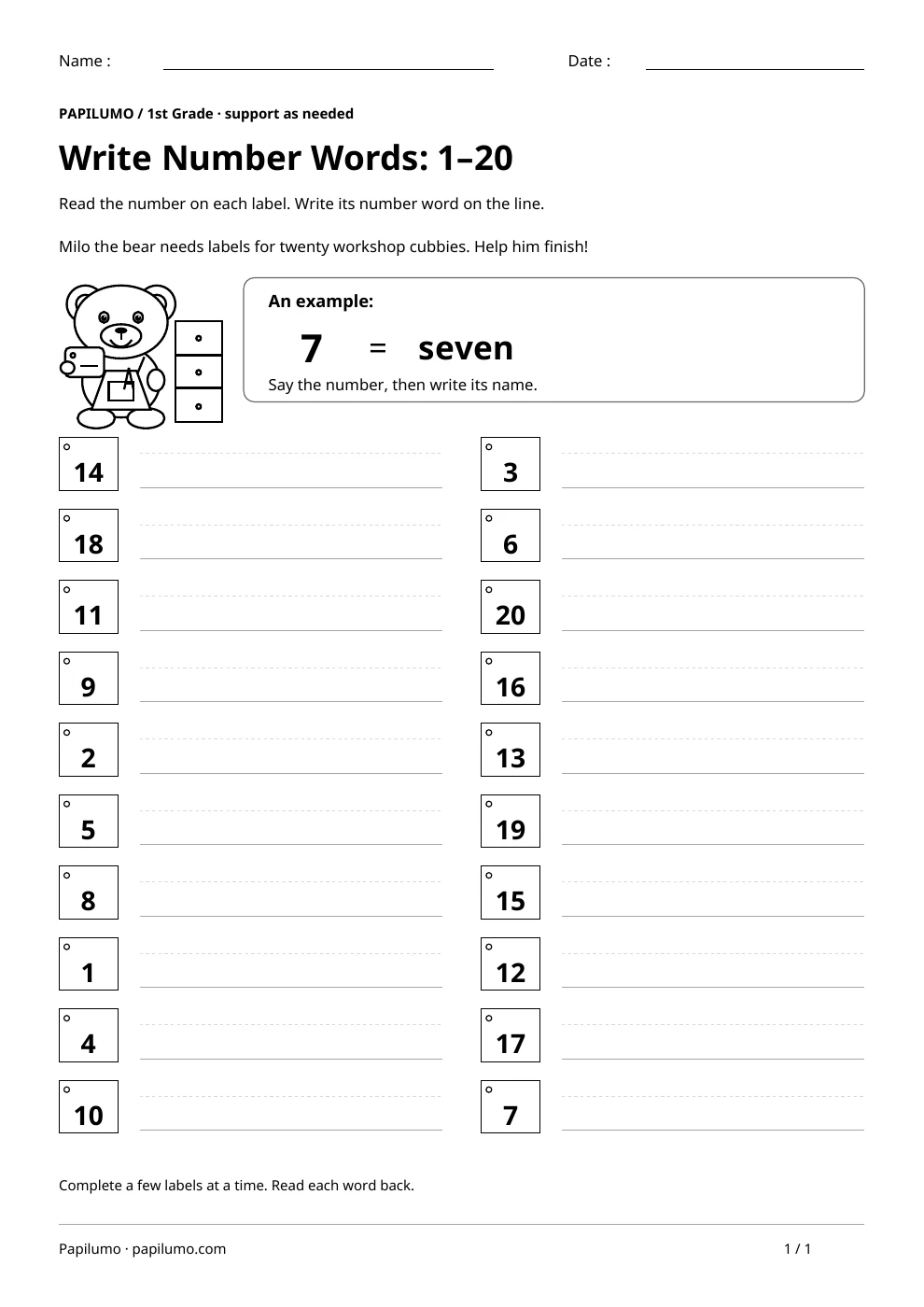
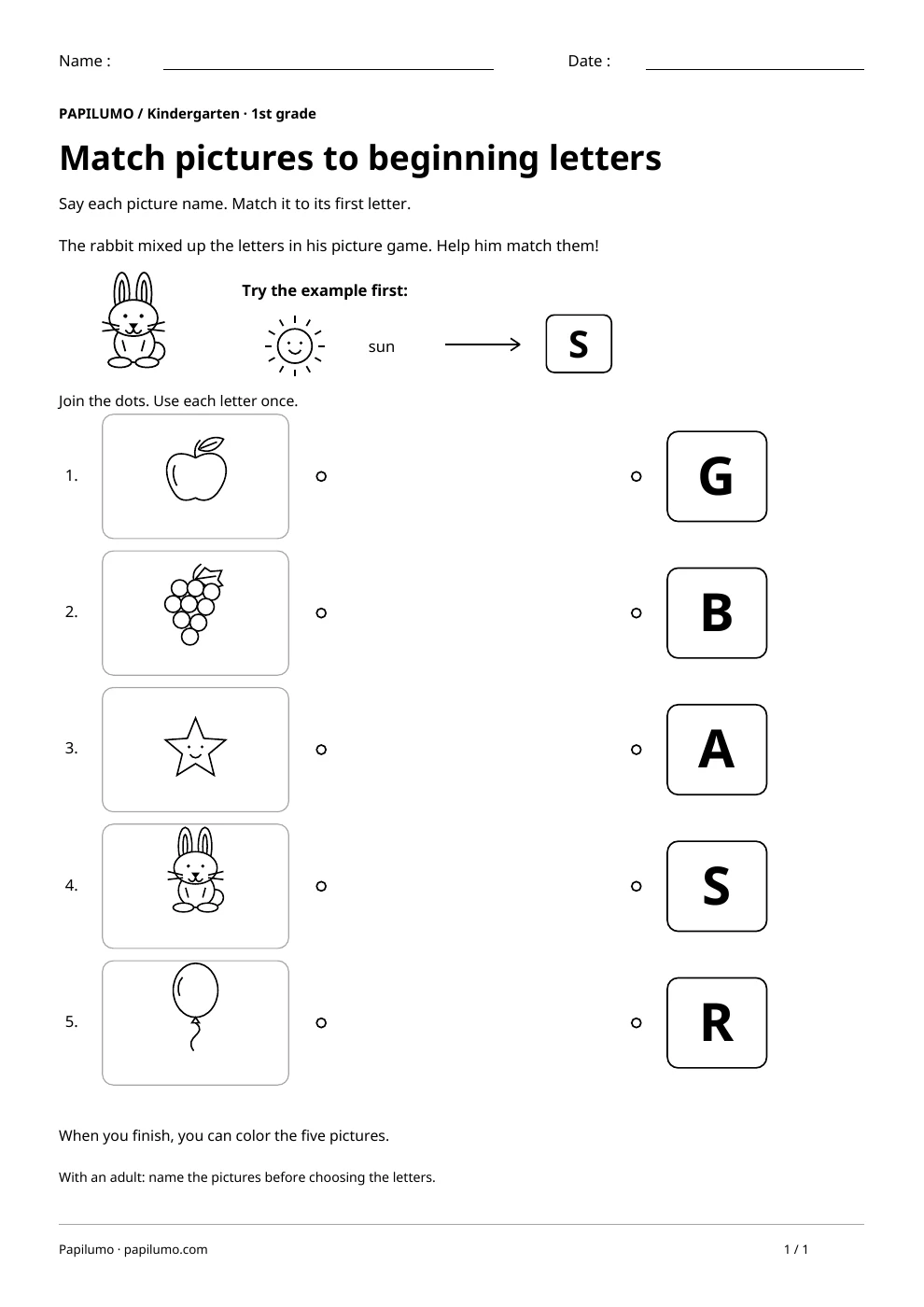
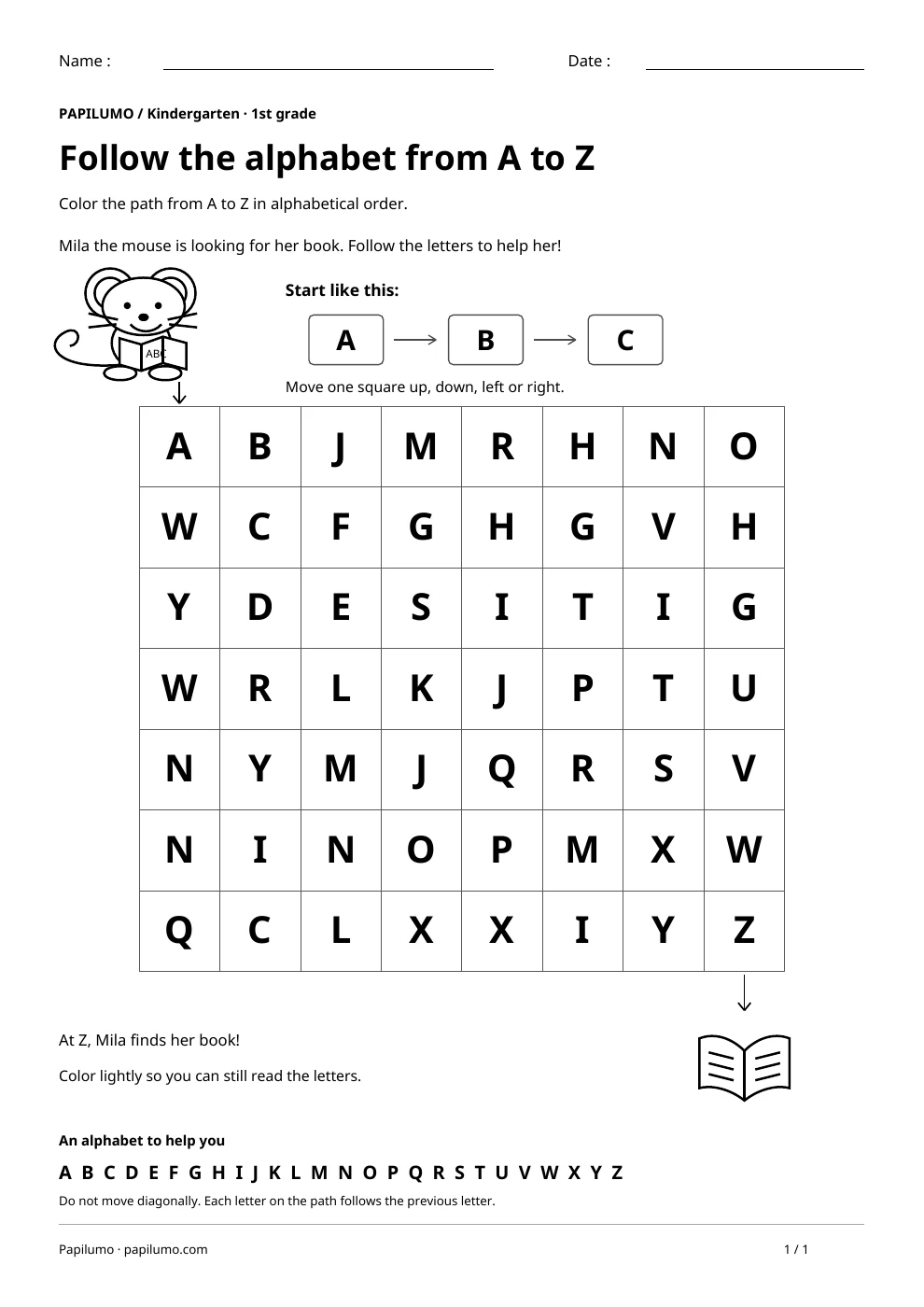
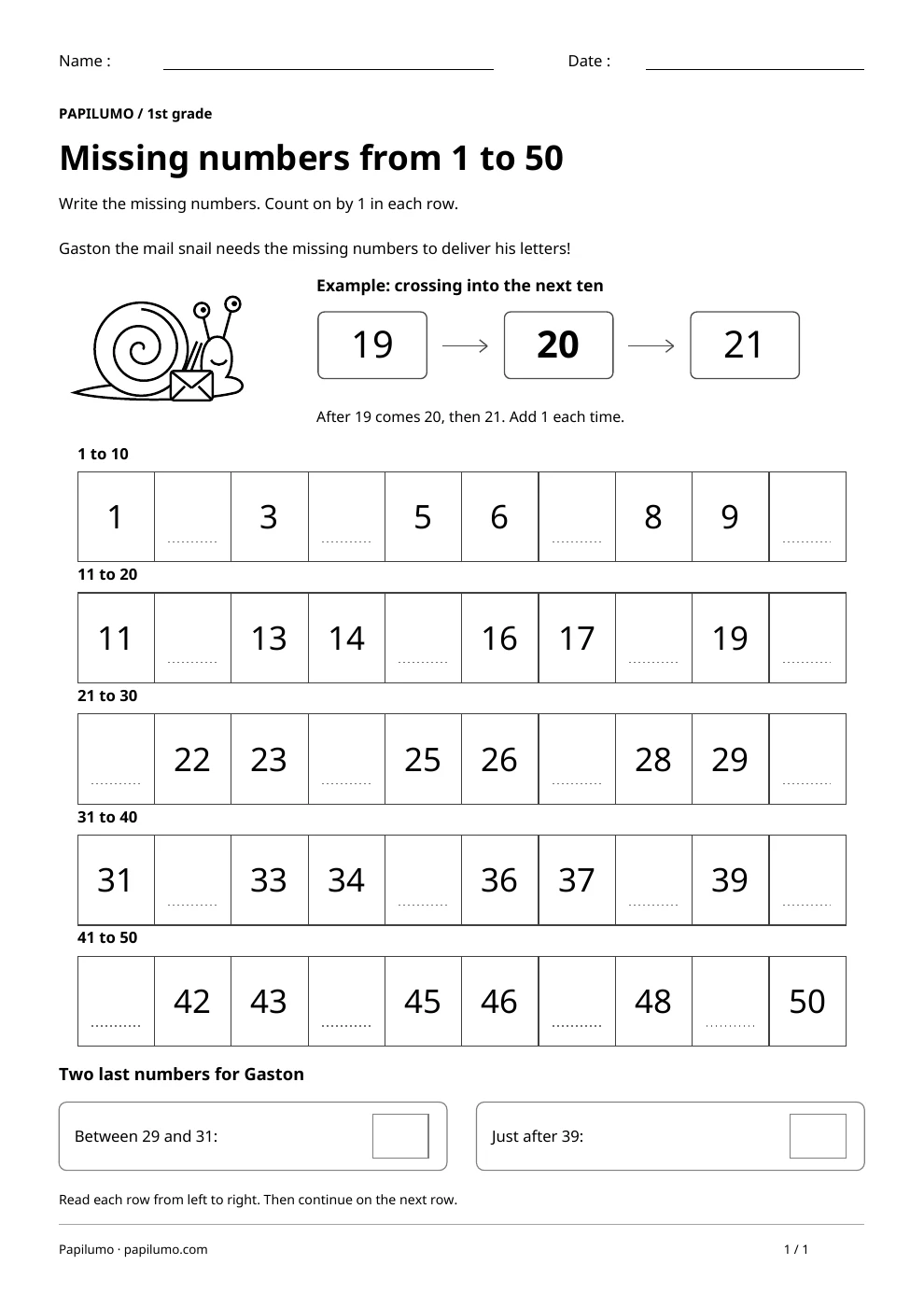
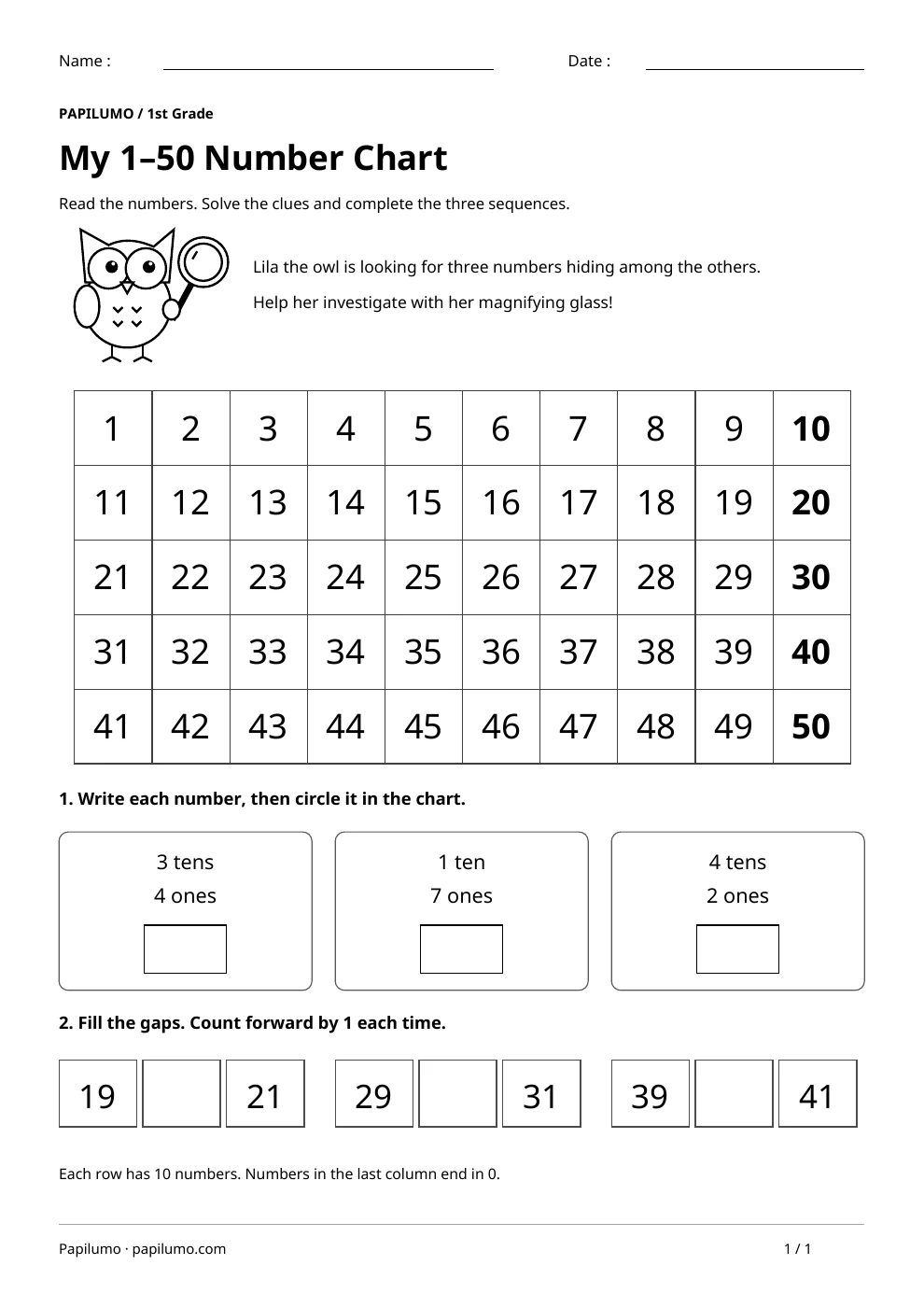
Pictures, counters and simple sketches remain useful for representing a problem. Move gradually from a concrete model to a written answer and invite a brief explanation. The answer key checks the result, while the worksheet page suggests what to observe in the child's method and how to adapt the next attempt. Gaston the mail snail invites children to fill twenty missing numbers from 1 to 50. Five rows of ten boxes, a 19–20–21 example and two short questions practice the number sequence across tens. The A-to-Z alphabet maze guides Mila the mouse to her book. Children find each next uppercase letter in a neighboring square, using the alphabet reference and separate answer key. The rabbit’s beginning-letter matching game pairs five pictures with five uppercase letters. A sun-to-S example introduces the task. The guide names each picture and the separate key shows the connections. Malo the owl records park visitors with tally marks. Twelve records up to 20 practice reading groups of five and the remaining strokes, with a worked example and a separate answer key. Kimi the koala helps children find the immediate neighbors of eight two-digit numbers. A 29–30–31 example and crossing tens practice develop before and after numbers to 99, with a separate answer key. Romy the fox guides twelve comparisons to 99. Examples compare tens first, then ones when needed; two missing-digit challenges accept several valid answers. Milo’s workshop labels practice writing the number words from one to twenty after children can read them. Noah the beaver introduces four sets of seven numbers to 50. Children order them from least to greatest, using a tens-and-ones example and a separate answer key to check every value. Zoe the owl guides polygon tracing and completion. Children trace a rectangle, pentagon, hexagon and octagon, then add two missing sides to each matching outline. Lila’s pearls invite children to invent six ways to make ten. They choose both parts, show them in a ten frame and check each addition sentence. Multiple answers are accepted. Leo’s subtraction matching worksheet combines four number-answer matches with four equal-result pairs, giving first graders another way to explain subtraction within10. Nora the owl introduces two addition tables with sixteen missing sums within 20 and practice locating row-column intersections.