
What this worksheet helps children practise
A slightly oval circle or uneven square can still show the correct choice. This activity focuses on recognizing a repeated unit, rather than drawing perfect geometry. For a triangle, look for three sides and a recognizable outline. Avoid erasing an entire row for a small drawing mistake. Let the child explain or make a fresh sketch nearby. Coloring can follow the check, but the patterns are fully solvable without color.
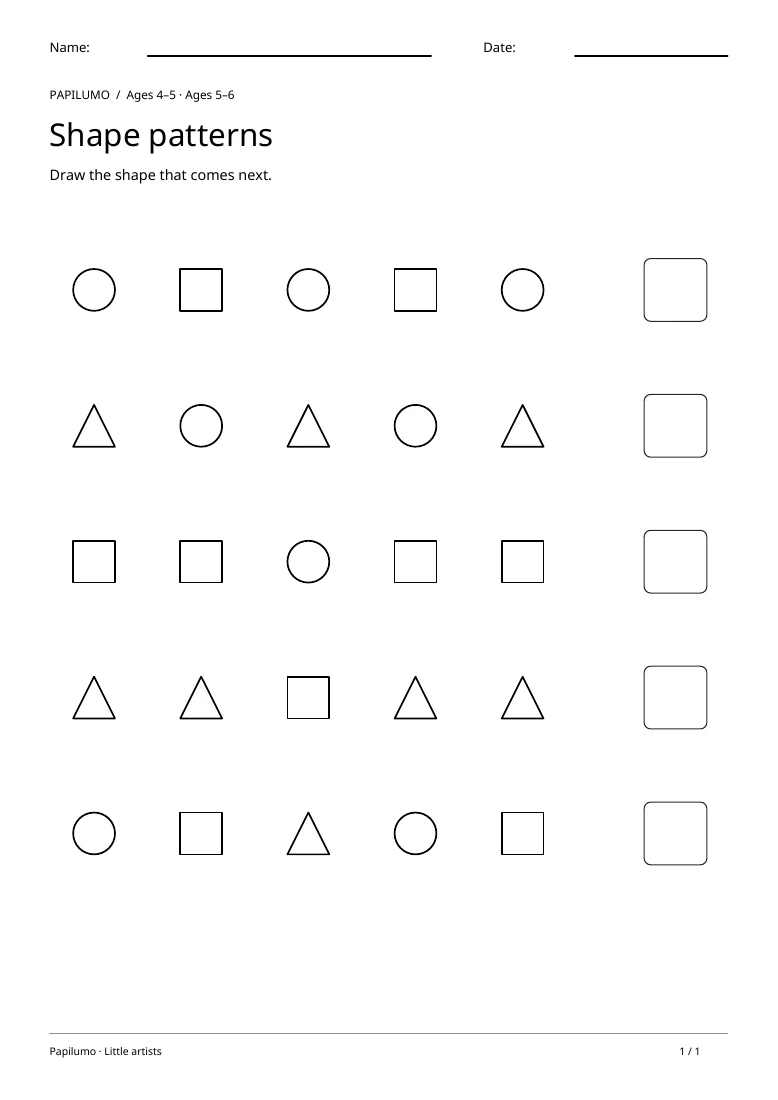
Children identify a repeating unit and use it to reconstruct a missing part. Because the gaps are inside each row, they must look both before and after a box. Two rows use AAB patterns, two use ABB patterns, and two use ABC patterns. These letters describe the rules for adults; children can work by naming the shapes. The activity suits kindergarten or first grade learners who can already continue a simple pattern and recognize the three shapes. For a related skill, use Kindergarten Pattern Worksheet: What Shape Comes Next?: Draw the shape that comes next.
Preparing a short session
Print the student page at actual size and provide a pencil and eraser. Introduce Paco and his unfinished party decorations. Explain that each empty box stands for a lost shape, rather than the end of a row. The short connecting lines show the garland without running through the shapes. Follow one row from left to right with a finger. Ask the child to name the visible shapes before deciding what belongs in the gaps.
A concrete example to get started
The first row repeats circle, circle, triangle. After the first group of three, a box replaces the circle that begins the next group. Farther along, another box replaces the second circle in the final group. Both answers are circles. Check by reading all nine positions aloud: circle, circle, triangle, followed by that same group twice more. A suggested shape needs to fit the whole pattern, not just the shapes immediately next to it.
Supporting the activity
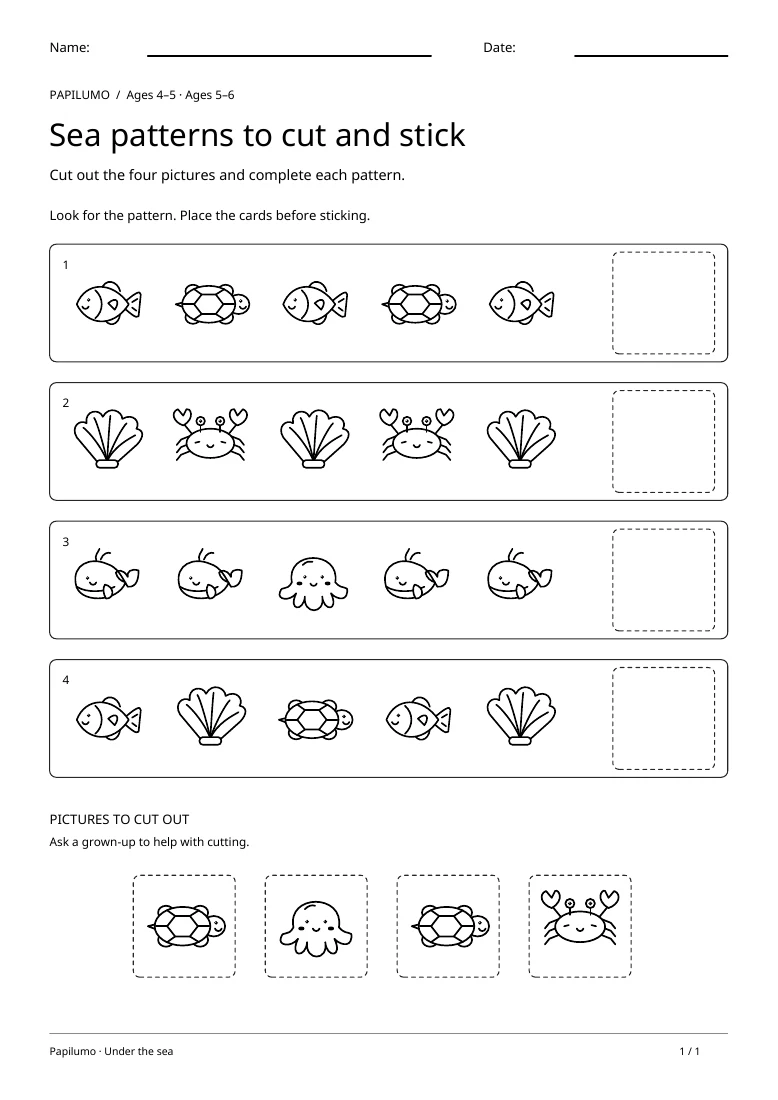
Complete the first row together, then invite the child to try the second with less help. Saying the missing shape before drawing separates the reasoning from the pencil work. Pause after two or three rows if attention fades. Rows three and four change to one shape followed by two matching shapes. The last two rows repeat three different shapes. Give time to describe a rule before supplying its name or pointing out the answer. To vary the practice, try Cut and Paste Patterns Worksheet: Sea Animals: Cut out the four pictures and complete each pattern.
What to notice and how to check
Read answers from left to right within each row. Row 1 needs circle and circle. Row 2 needs square and square. Row 3 needs triangle and circle. Row 4 needs square and triangle. Row 5 needs circle and triangle. Row 6 needs square and triangle. The separate key shows these answers in position. If a choice differs, read from the start and find where the repetition breaks. Check the child's rule before judging the drawing.
Making the task easier
Cover all but the first row. Use three objects to represent circle, circle, triangle, and repeat that small group while pointing to the printed positions. An adult may draw a shape that the child names when pencil control is tiring. A useful earlier step is a pattern with only the final shape missing. Choosing a picture to complete a pattern can also reduce the drawing demand while preserving the need to notice repetition.
Keep the learning aim, but reduce how much the child has to handle at once. Cover part of the page with another sheet and reveal one task at a time. Demonstrate a separate example, then leave a real opportunity to work something out. An answer reached with support is still a useful attempt; it does not yet show that the same task can be completed independently.
Taking the idea beyond the worksheet
On scrap paper, build a nine-shape garland by repeating one three-shape unit three times. Hide two internal shapes and ask a partner to restore them. Leave enough visible information to establish the rule. Then swap roles so the child creates a pattern and listens to the adult explain a choice. Save number sequences for a separate activity; this page keeps the focus on visual repetition and looking beyond a gap.
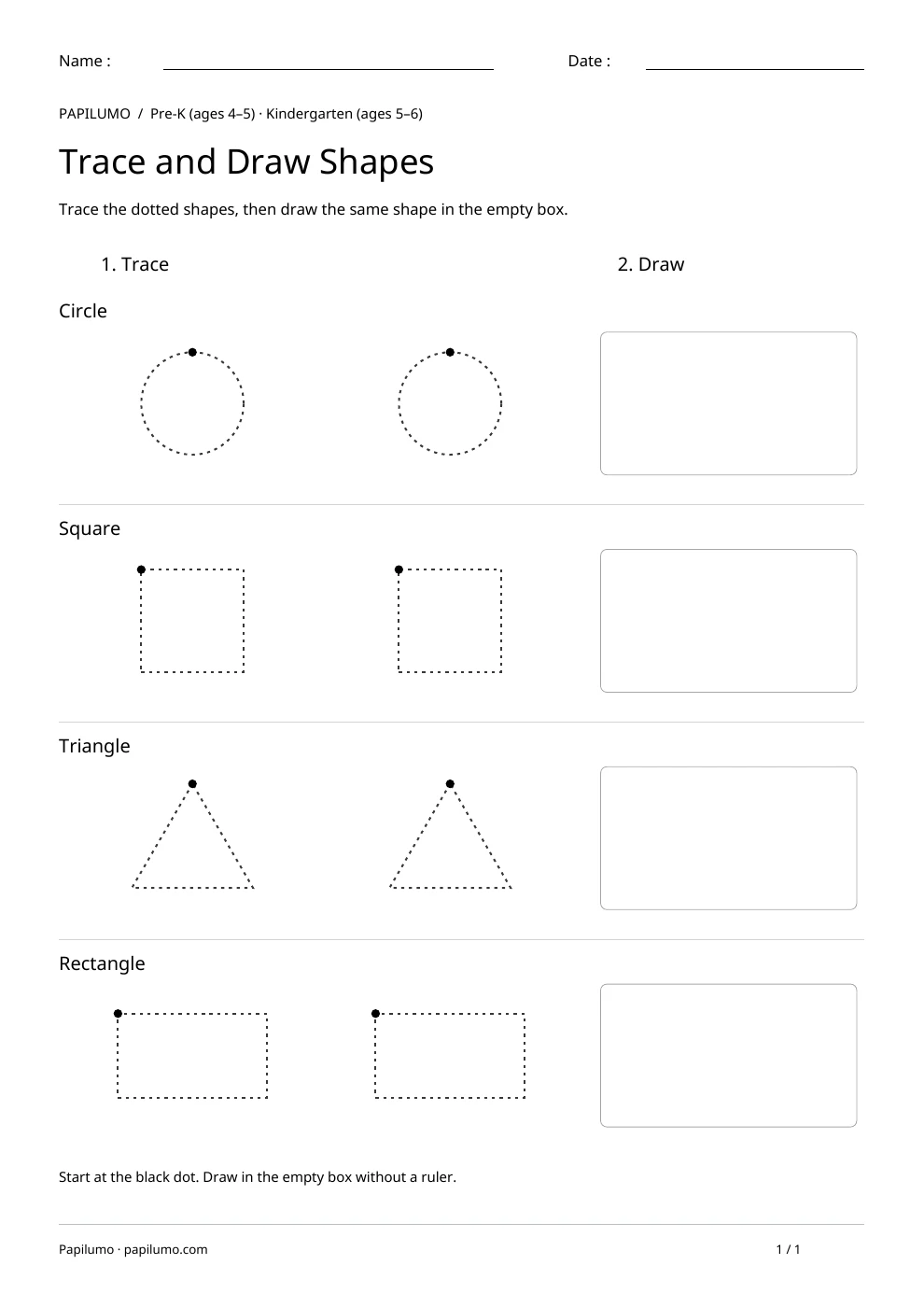
Use the follow-up to meet the same idea in a different setting. Offer it once the first task makes sense, without insisting that the whole page must be perfect. The child might explain a strategy, make an example or set a challenge for an adult. Return to the worksheet only when it helps connect the two situations. A short conversation or a practical activity can be enough to finish the session. To continue exploring, use Trace and Draw Shapes: Trace the dotted shapes, then draw the same shape in the empty box.
Downloading and printing the PDF
This free PDF contains one worksheet designed for A4 paper. Download the file using the button on this page and open it in your PDF reader. Choose actual size or a 100% scale, check the orientation in the print preview and turn off any browser headers or footers. The illustrations use vector lines, so their outlines stay sharp when printed. Check the margins on one copy before preparing several sheets for a group. The level shown on the page is a guide, rather than a requirement to complete the activity at a particular age.