

What this worksheet helps children practise
Count the rods first, then the single squares. Write the number of tens in the first column and the number of ones in the second. Use those digits to write the whole number, keeping the zero when there are no single squares.
This tens and ones worksheet practices place value in two-digit numbers. Each rod contains ten small squares and represents one ten, while a separate square represents one one. The six pictures contain several tens, extending earlier work with one ten and a few extra ones. Each table separates three ideas: how many rods there are, how many single squares there are, and the total value shown. Three rods represent thirty ones, not a total of three. Children can count the ten squares in one rod to check its value, then count the remaining rods by tens. One exercise has no single squares. It requires a zero in the ones column and a zero in the completed number. The page does not introduce hundreds or ask children to regroup ten loose ones. It suits first graders who have already explored two-digit numbers with objects or base-ten materials. The drawings support understanding before children rely only on the written digits. For a related skill, use Comparing numbers to 99: tens and ones: Compare the numbers. Write <, > or = in each box.
Preparing a short session
Provide a pencil, eraser and, if available, linking cubes or bundles of ten objects. Look at the example at the top: two rods and three separate squares represent 23. Ask the child to point to one whole ten and then to one single unit. Keep the answer key aside during the first attempt.
A concrete example to get started
In the example, two rods are twenty and three squares add three, making 23. In the first exercise, the child finds three rods and four single squares. Write 3 under Tens, 4 under Ones and 34 under Number. Check aloud that thirty and four make thirty-four.
Supporting the activity
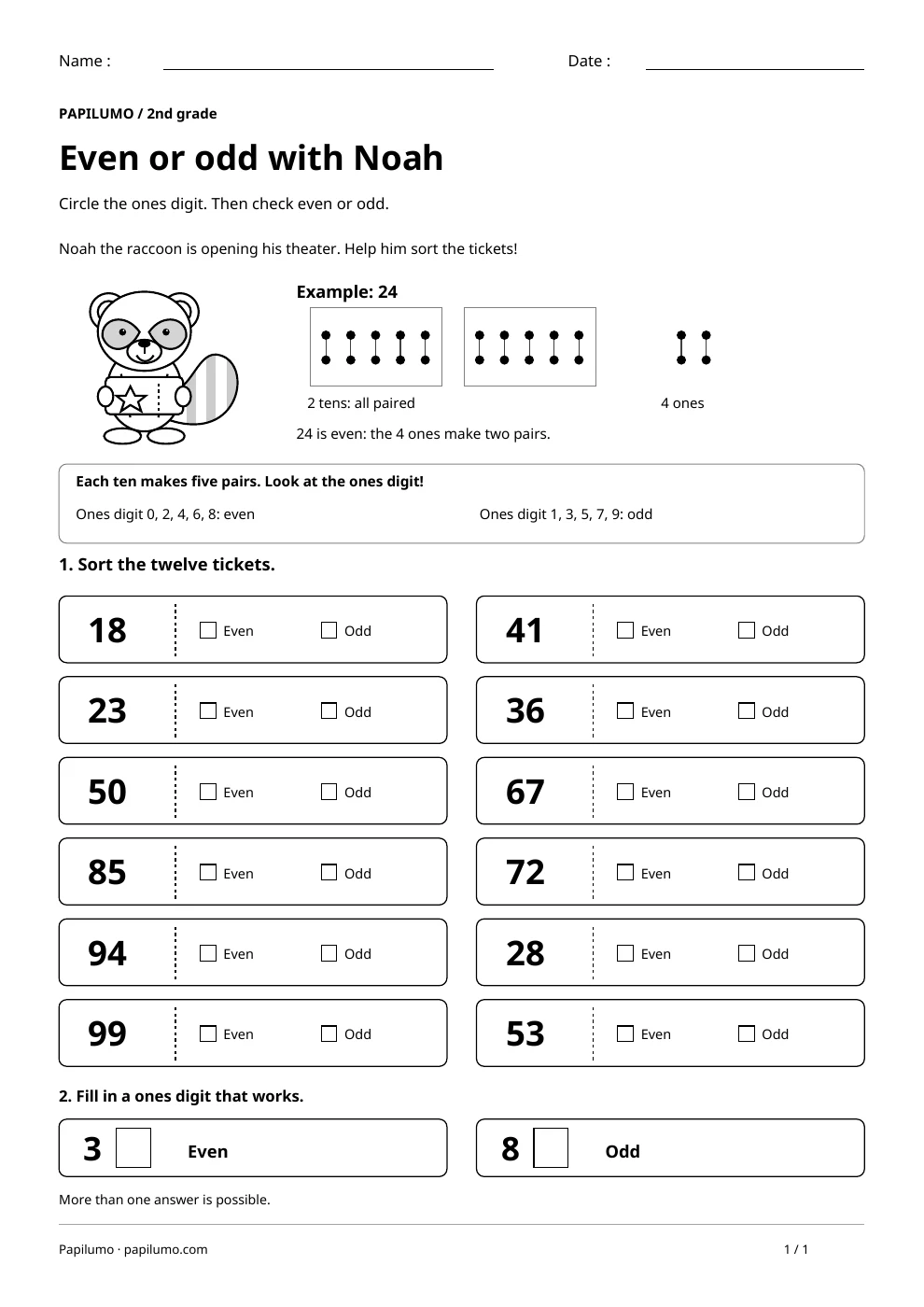
Work through one collection at a time. Ask how many tens are shown before asking about the loose ones. To move beyond counting every tiny square, point to a whole rod and say ten, then point to the next and say twenty. Count the separate squares one at a time afterward. Distinguish the count of tens from their value: five tens are fifty, but the Tens column contains 5. To vary the practice, try Even and odd numbers to 99: use the ones digit: Circle the ones digit. Then check even or odd.
What to notice and how to check
Recount each picture and compare it with all three entries. Check the column order and possible digit reversals such as 34 and 43. Four rods with no loose squares mean 4 tens, 0 ones and 40. Leaving the ones box blank does not communicate zero. The answer key repeats the same pictures so children can compare their own work directly.
Making the task easier
Begin with the example and first exercise only. Build the rods with objects and cover the other collections. Return to teen numbers if one group of ten is not yet secure.
Keep the learning aim, but reduce how much the child has to handle at once. Cover part of the page with another sheet and reveal one task at a time. Demonstrate a separate example, then leave a real opportunity to work something out. An answer reached with support is still a useful attempt; it does not yet show that the same task can be completed independently.
Taking the idea beyond the worksheet
Choose a completed number and ask what would change if one more rod were added while the ones stayed the same. Check with materials and connect this idea to the existing ten more and ten less activity.
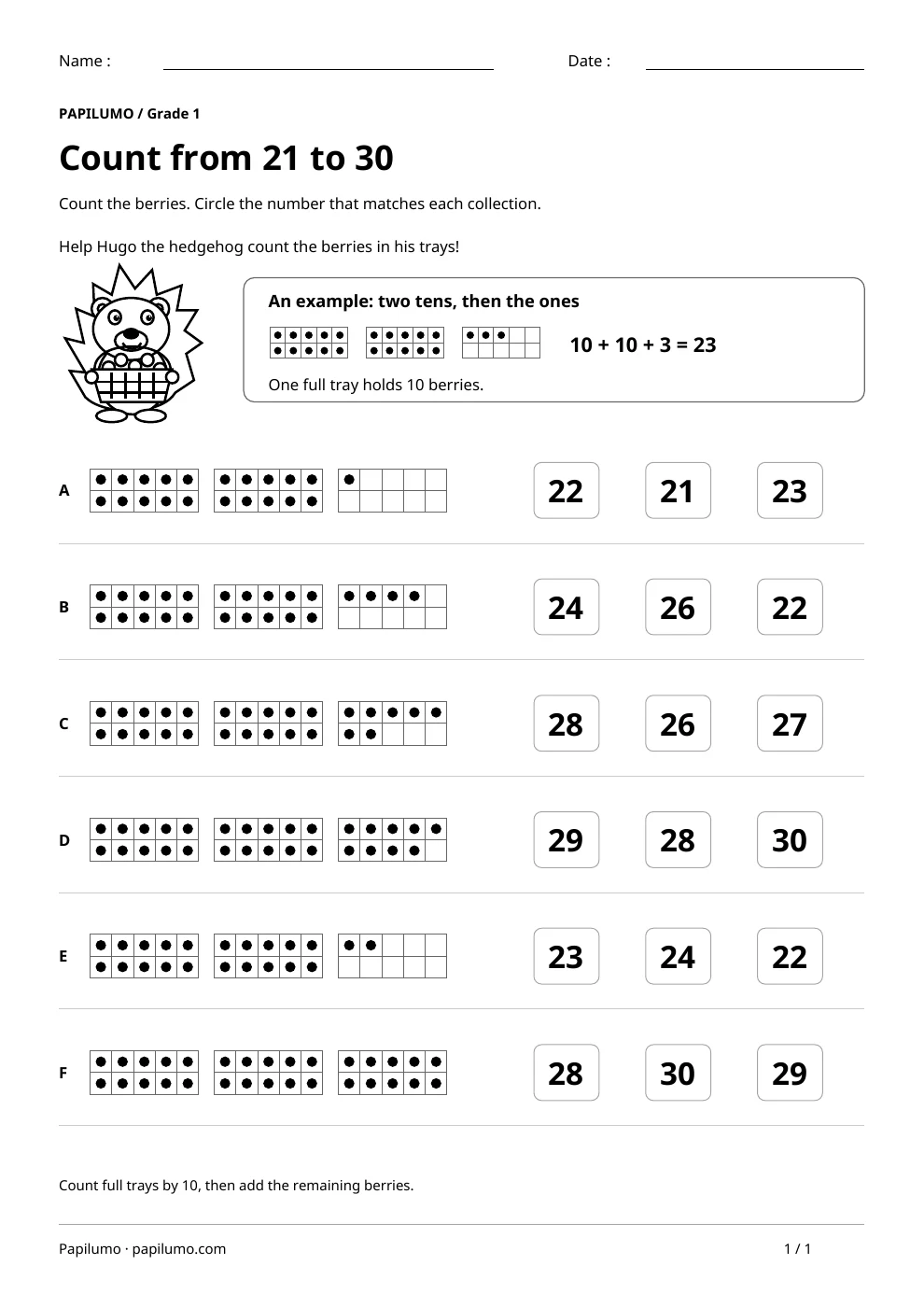
Use the follow-up to meet the same idea in a different setting. Offer it once the first task makes sense, without insisting that the whole page must be perfect. The child might explain a strategy, make an example or set a challenge for an adult. Return to the worksheet only when it helps connect the two situations. A short conversation or a practical activity can be enough to finish the session. To continue exploring, use Counting 21–30 with Ten Frames: Count the berries. Circle the number that matches each collection.
Downloading and printing the PDF
This free PDF contains one worksheet designed for A4 paper. Download the file using the button on this page and open it in your PDF reader. Choose actual size or a 100% scale, check the orientation in the print preview and turn off any browser headers or footers. The illustrations use vector lines, so their outlines stay sharp when printed. Check the margins on one copy before preparing several sheets for a group. The level shown on the page is a guide, rather than a requirement to complete the activity at a particular age.