








Choose the next skill from what the child understands
Build place-value understanding by counting tens rods and single ones. Ask why four tens and six ones represent 46. This connection prepares children to line up digits in written calculations and understand what changes when one ten is exchanged for ten ones.
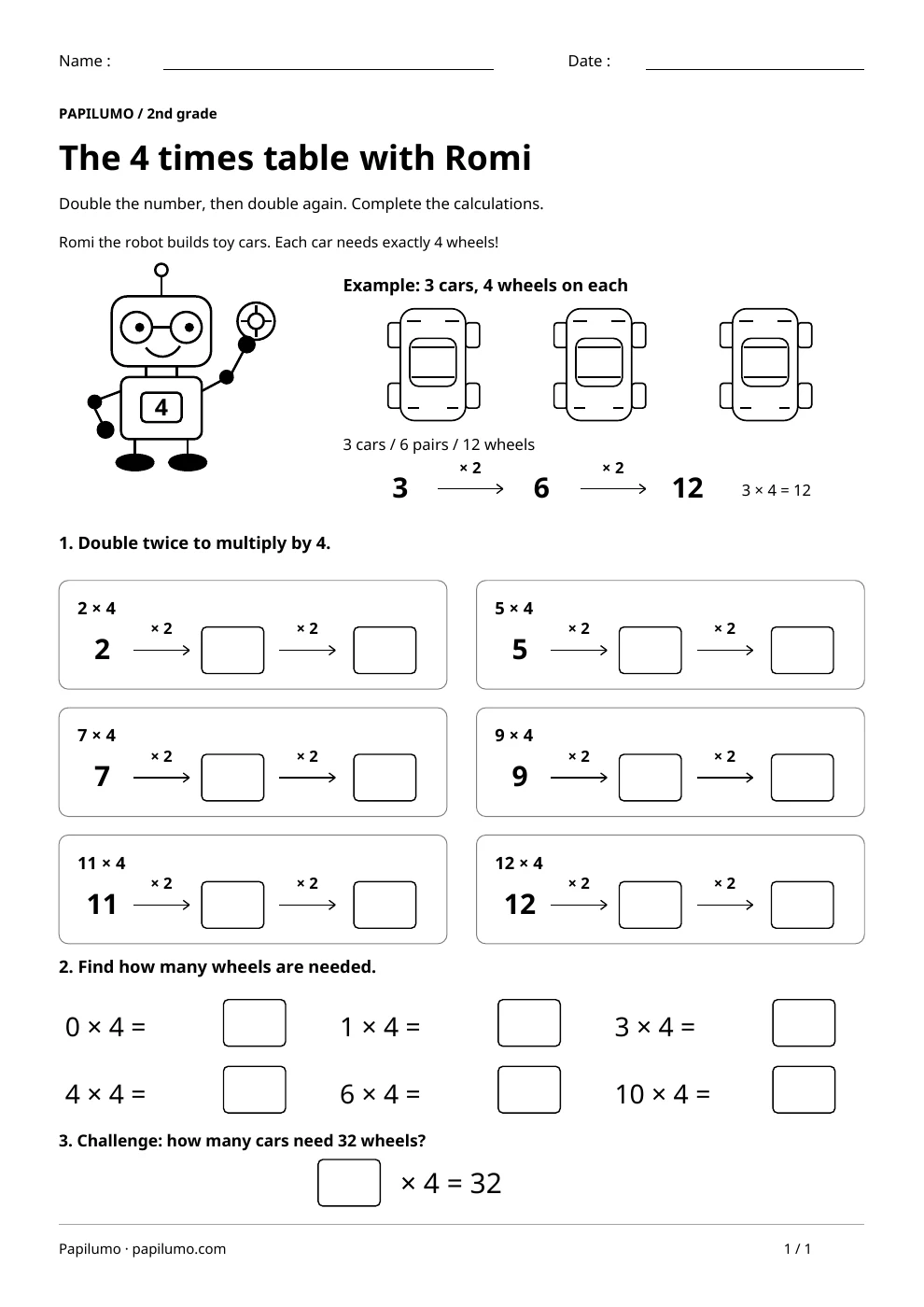
Start with 4 times table: double twice with Romi.
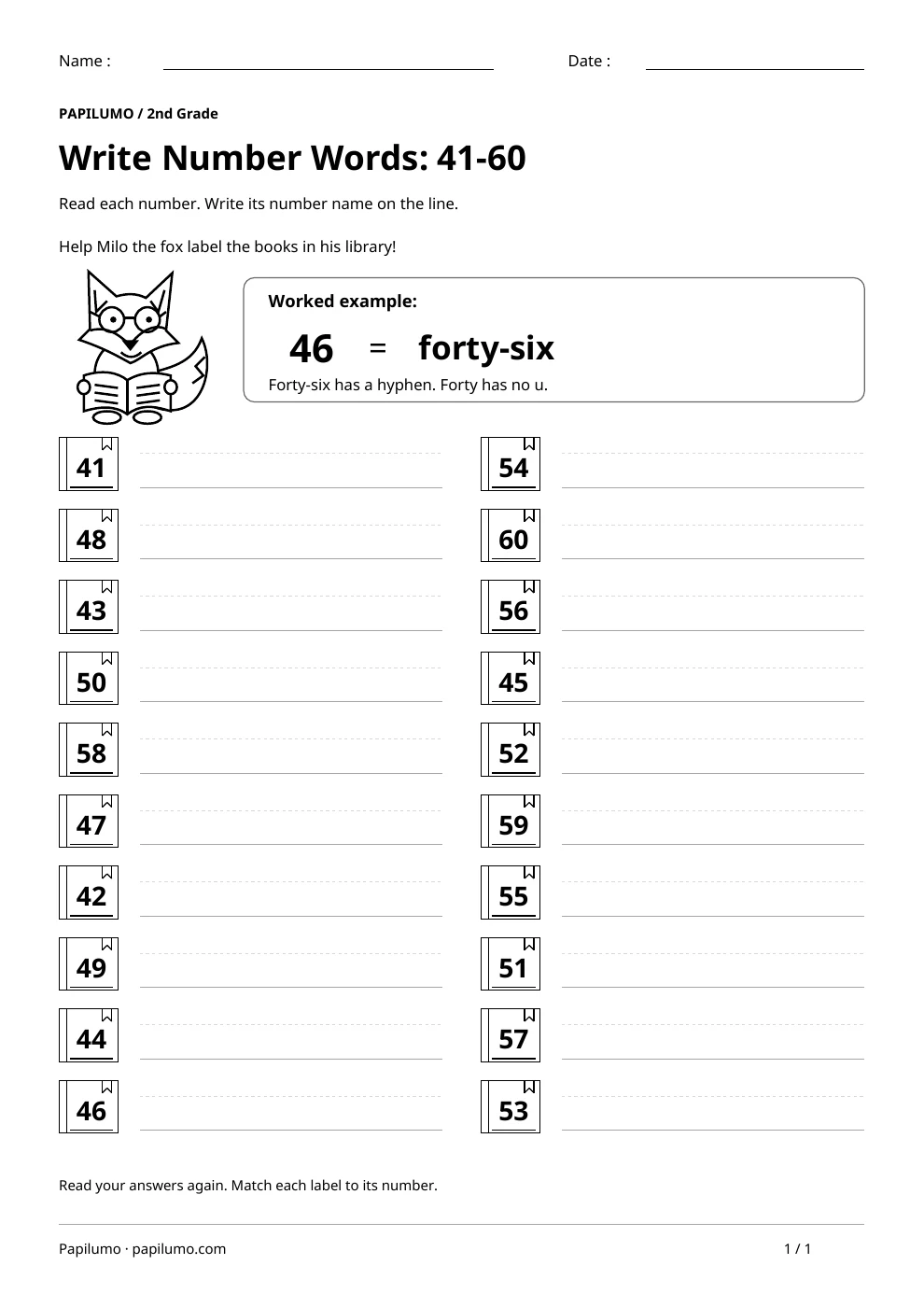
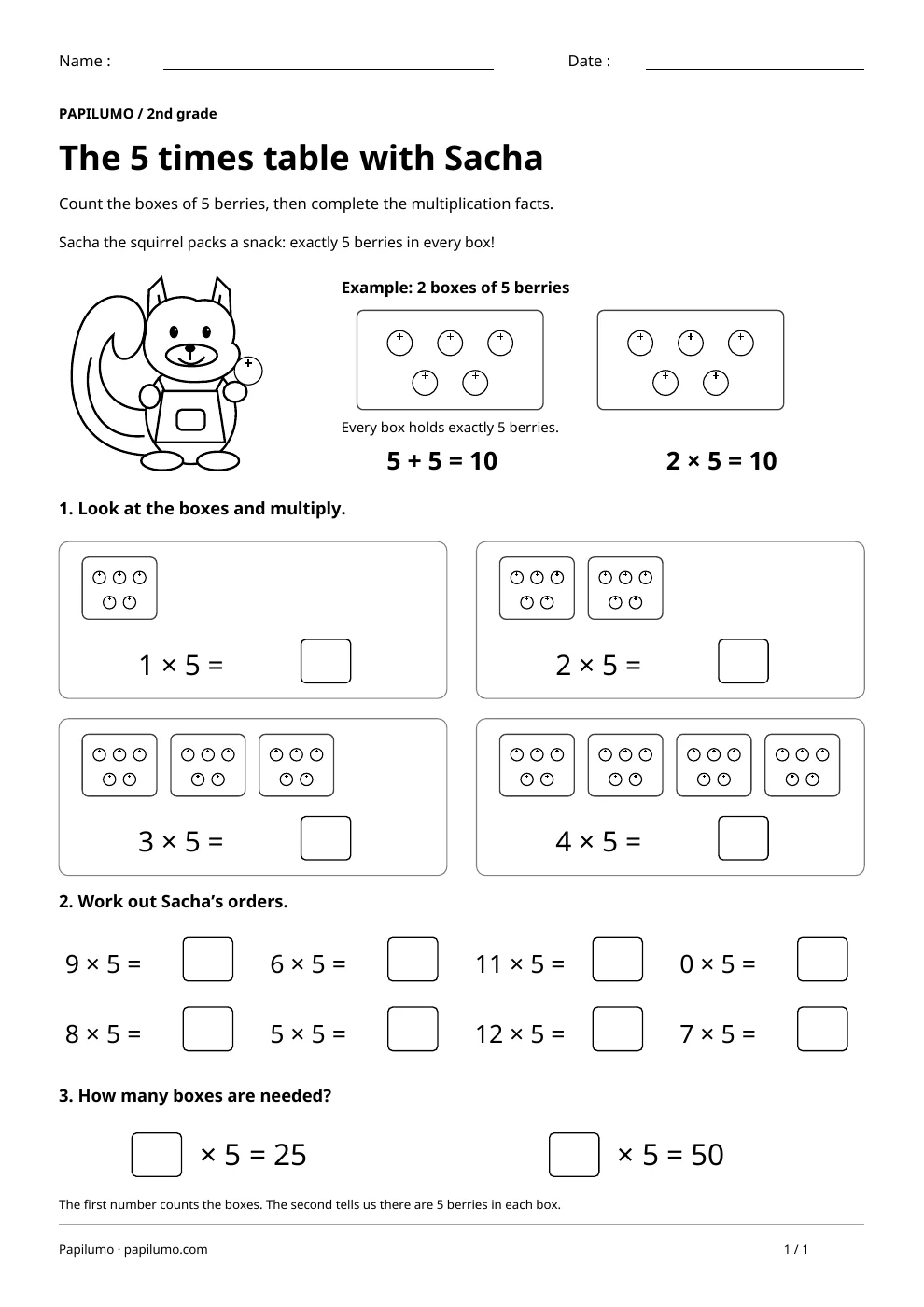
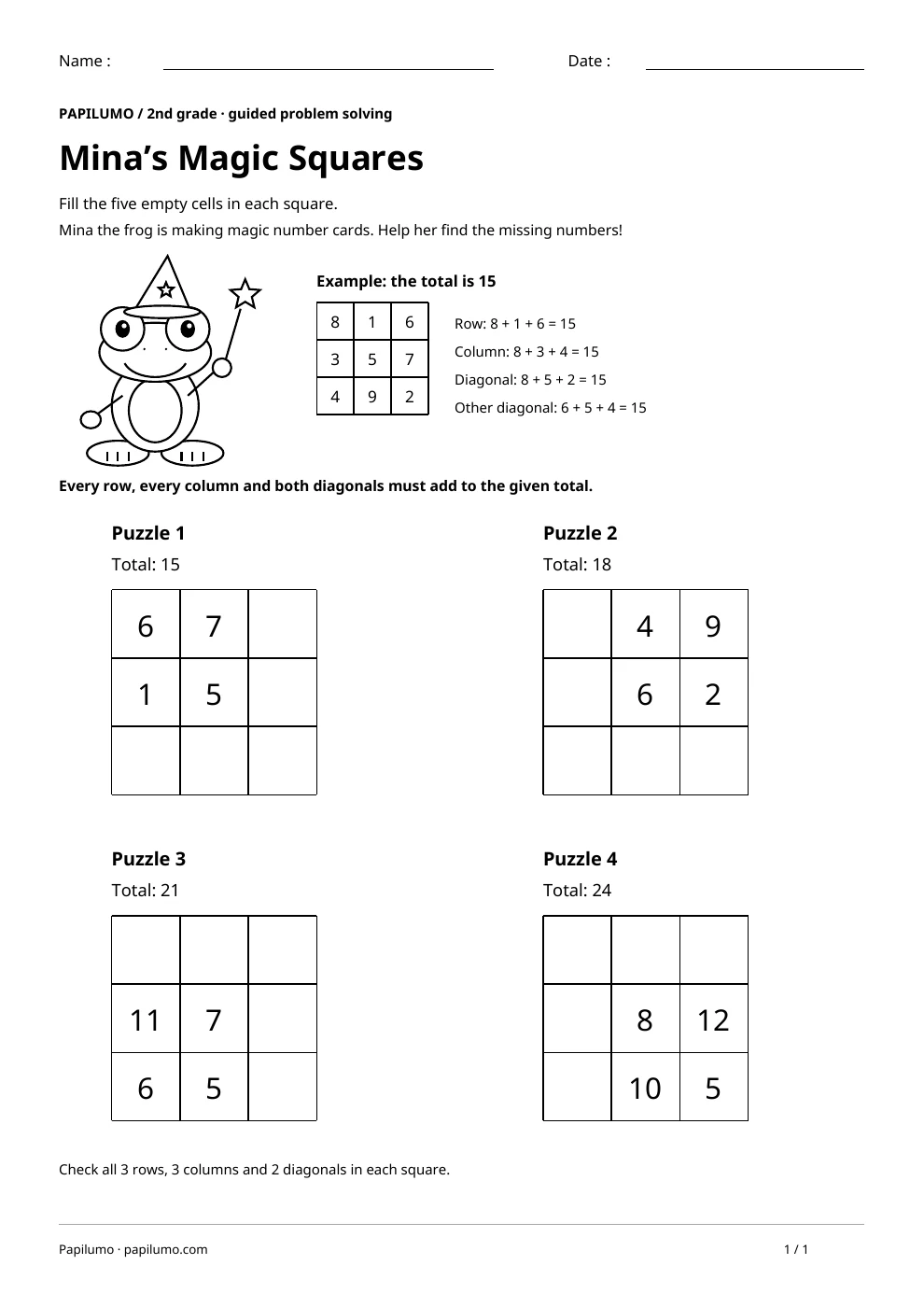
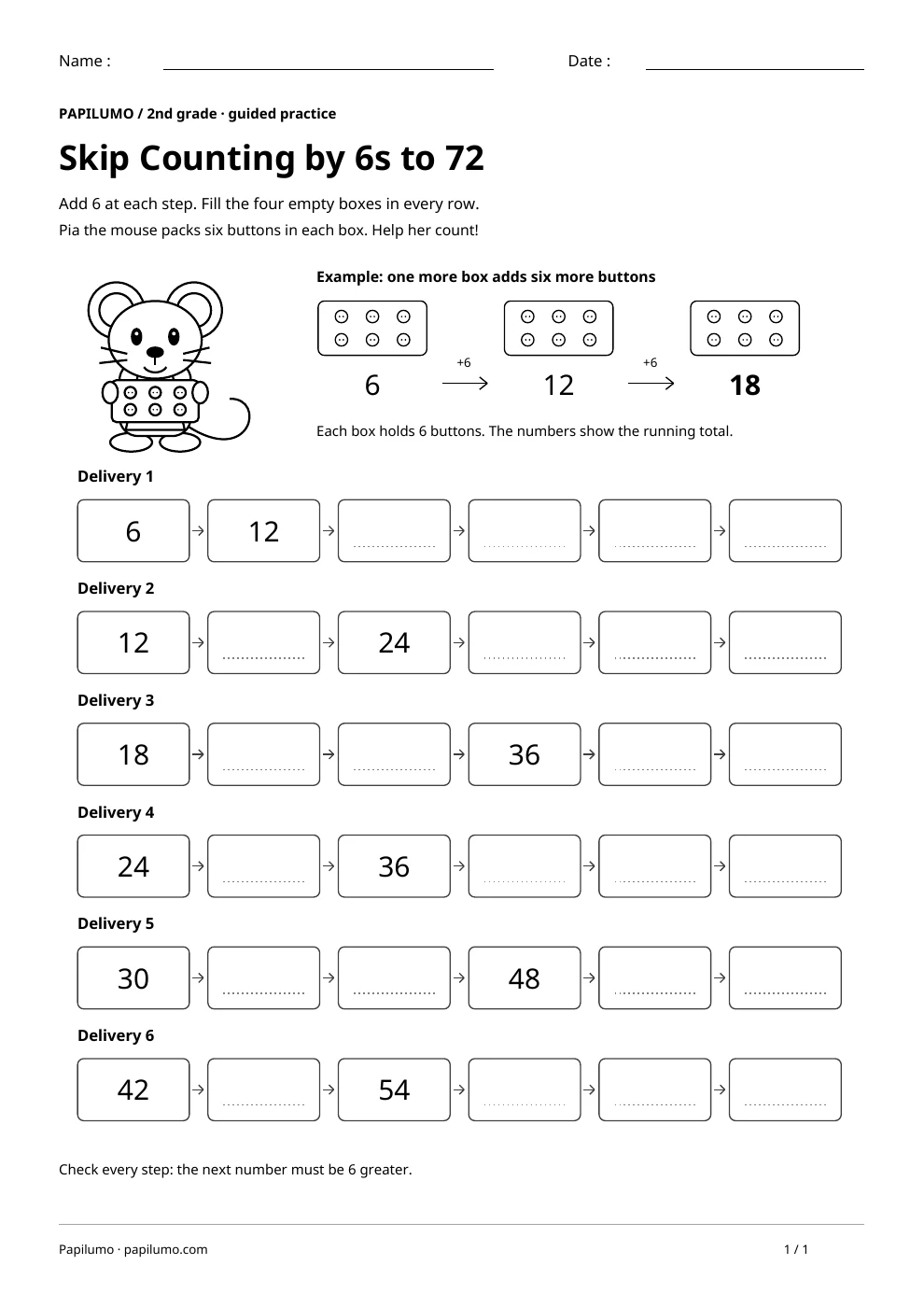
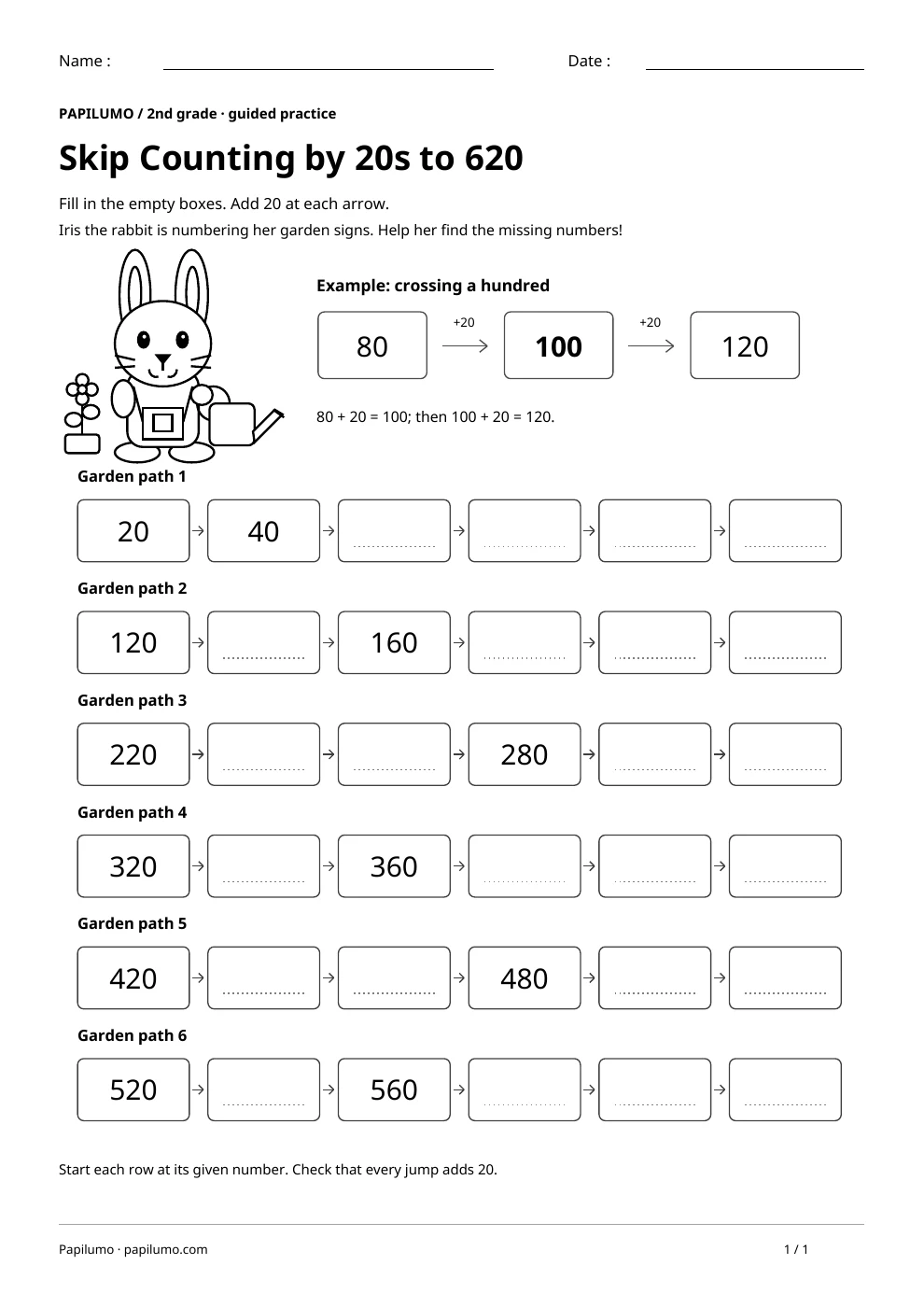
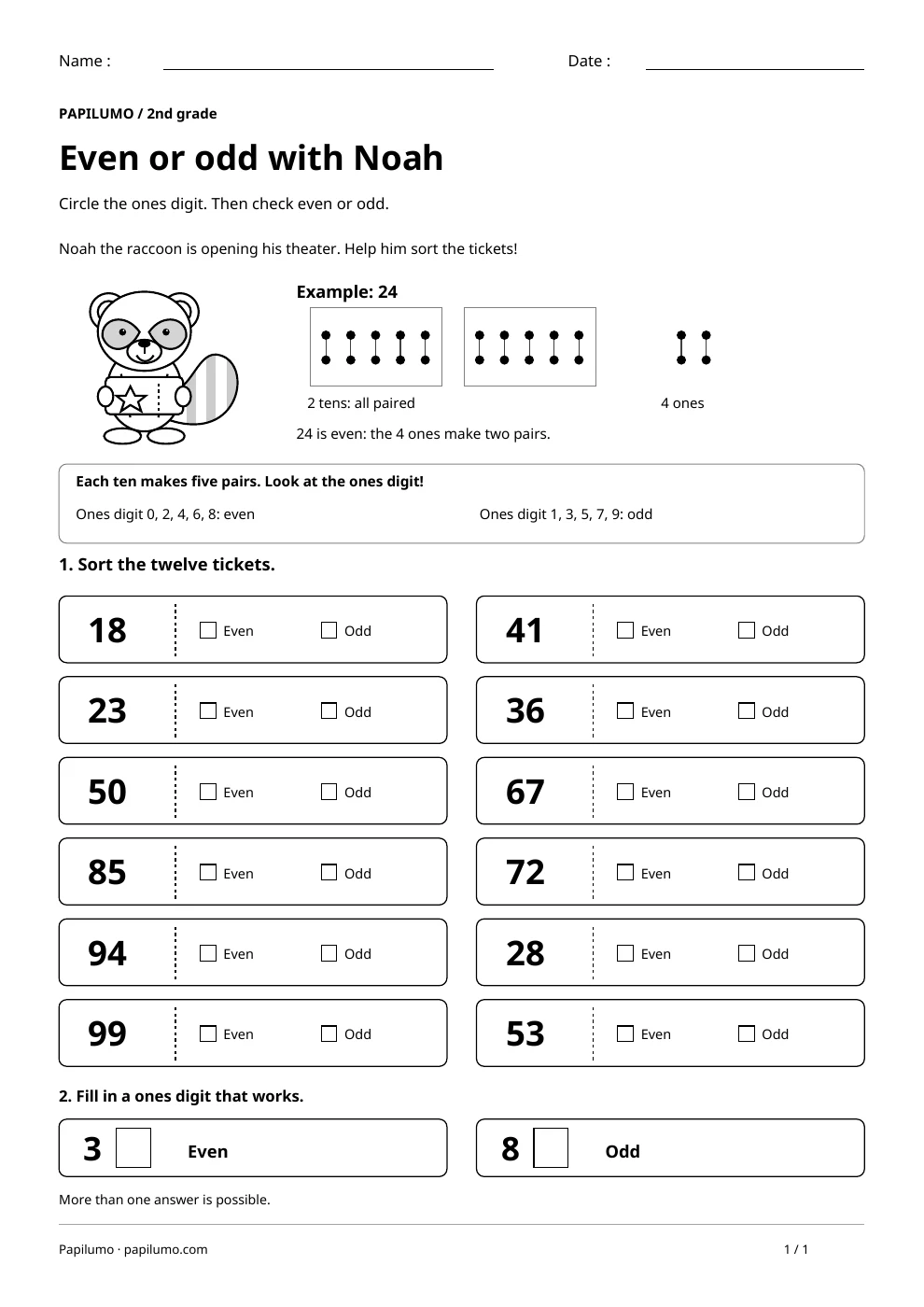
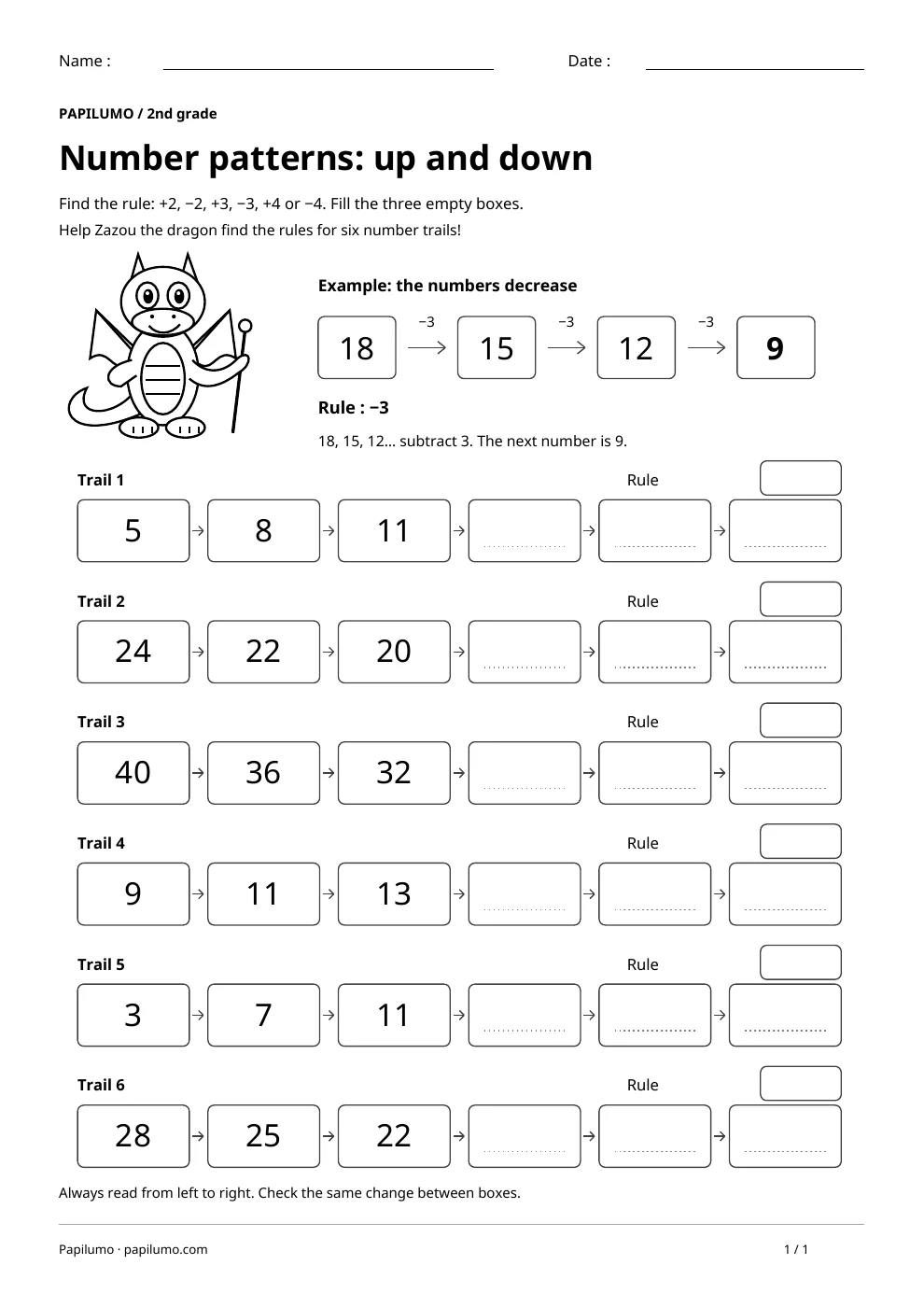
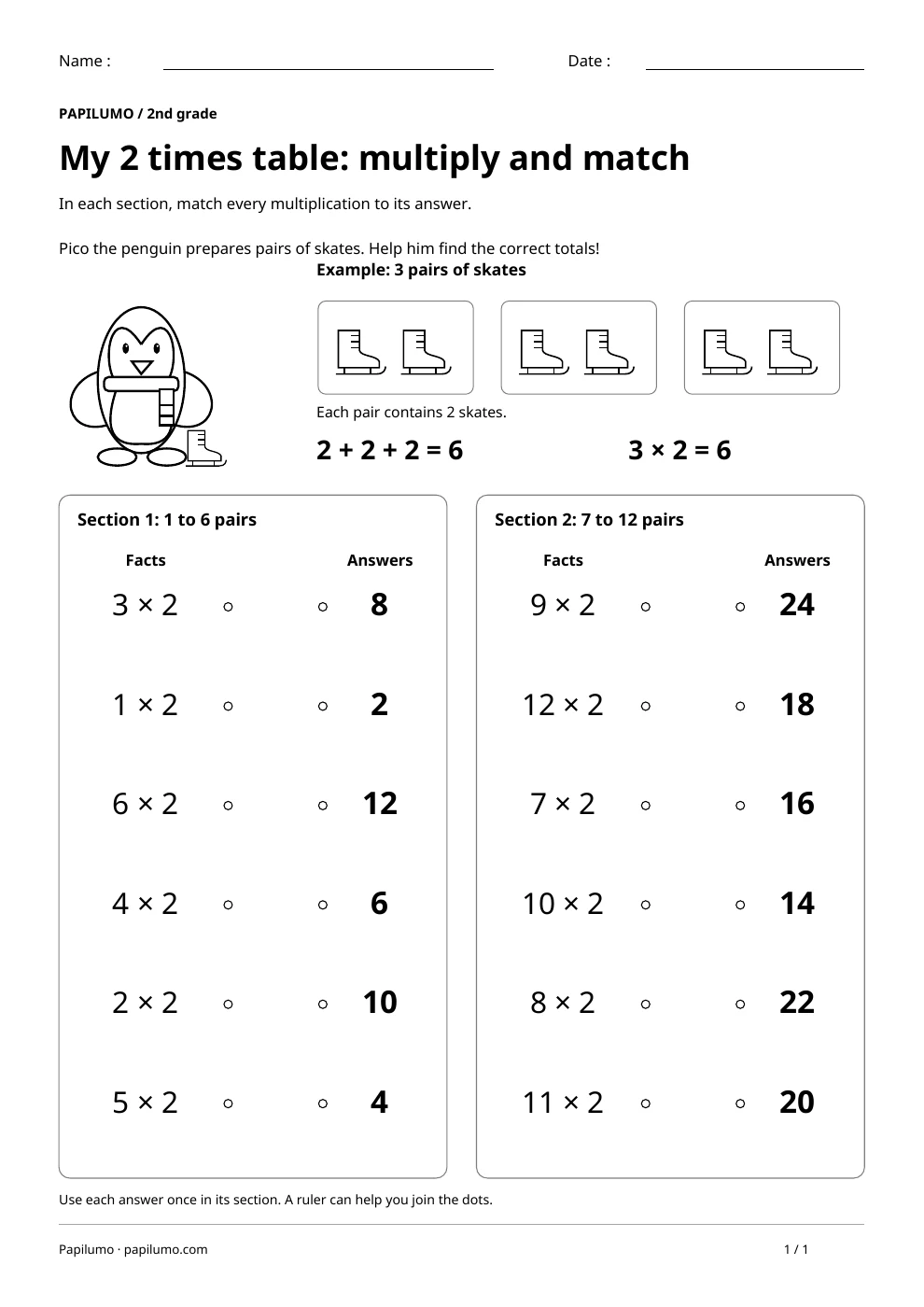
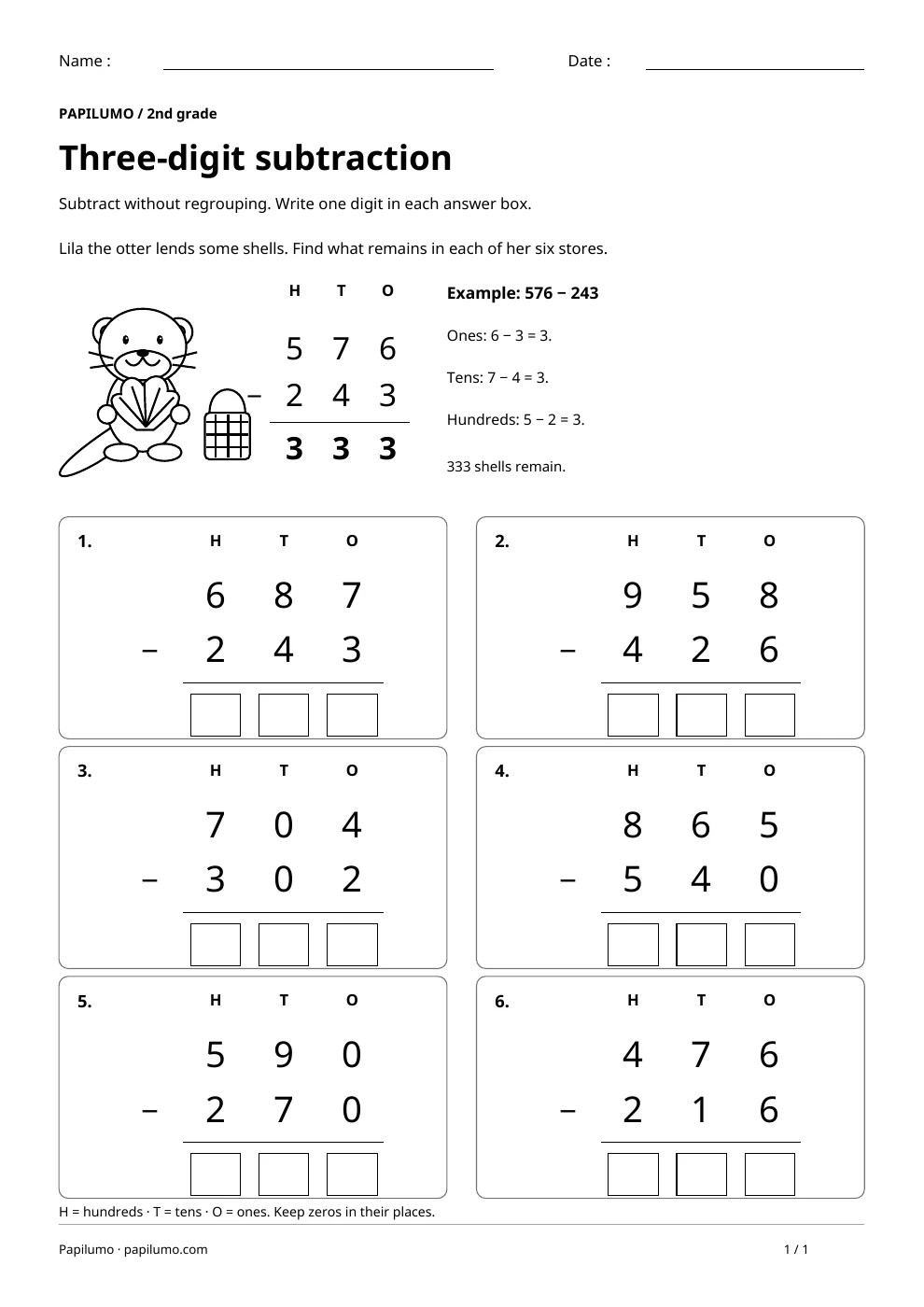
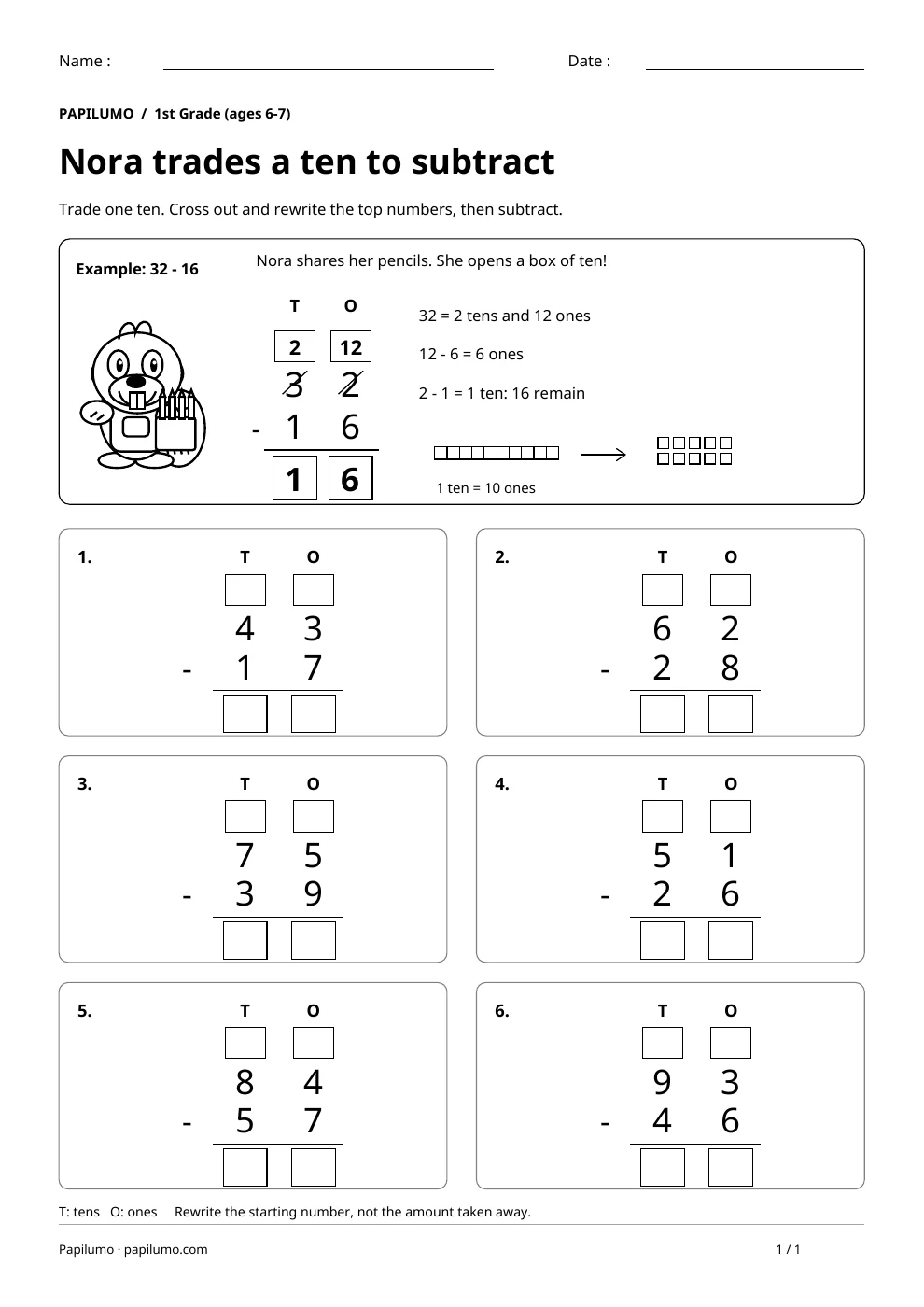
Next, try two-digit addition and subtraction without regrouping. Once tens and ones stay aligned, introduce a calculation that needs regrouping. In subtraction, trading one ten for ten ones preserves the starting amount. Use the answer key to discuss the steps as well as the final answer. Bobi the robot introduces six three-digit additions without regrouping. A worked example explains hundreds, tens and ones, and the order labels also practice keeping zero in its place. Lila the otter checks six shell stores using three-digit subtraction without regrouping. A worked example explains hundreds, tens and ones; the practice also keeps zeros in their correct places. Pico the penguin prepares pairs of skates: match twelve 2 times table facts with their products in two sections. Three pairs illustrate 3 × 2 = 6 before guided practice with totals to 24. Zazou the dragon explores six increasing and decreasing number patterns to 40. Children find a +2, −2, +3, −3, +4 or −4 rule, then fill in three numbers. A worked example and separate answer key support the task. Teo the turtle packs carrots in groups of three. The 3 times table worksheet moves from equal-group pictures to multiplication facts and two missing factors. Factors range from 0 to 10, with a worked example and separate answer key. Noah’s theater tickets introduce even and odd numbers to 99 using the ones digit. A paired-dot example explains why complete tens do not change parity, followed by twelve classifications and two missing-digit challenges. Iris the gardening rabbit introduces six sequences counting by 20s to 620. A worked 80–100–120 example, 24 missing numbers and a separate answer key support practice across hundreds. Pia’s skip-counting-by-6s worksheet uses boxes of six buttons to introduce totals through 72. Six sequences and 24 missing numbers connect equal groups with repeated addition. Mina’s four magic squares use target sums of 15, 18, 21 and 24. Twenty missing numbers connect addition facts with checking rows, columns and diagonals. Sacha’s 5 times table sheet connects boxes of five berries with eight mixed facts and two missing-group challenges, supported by an example and a separate answer key. The numbers 41–60 in words worksheet extends the 21–40 activity with Milo’s twenty library labels, writing lines and a separate answer key. Romi’s 4 times table worksheet uses doubling twice, six guided paths, six facts and a missing-factor challenge about four-wheeled toy cars.
For the next step, try Writing numbers 41 to 60 in words.
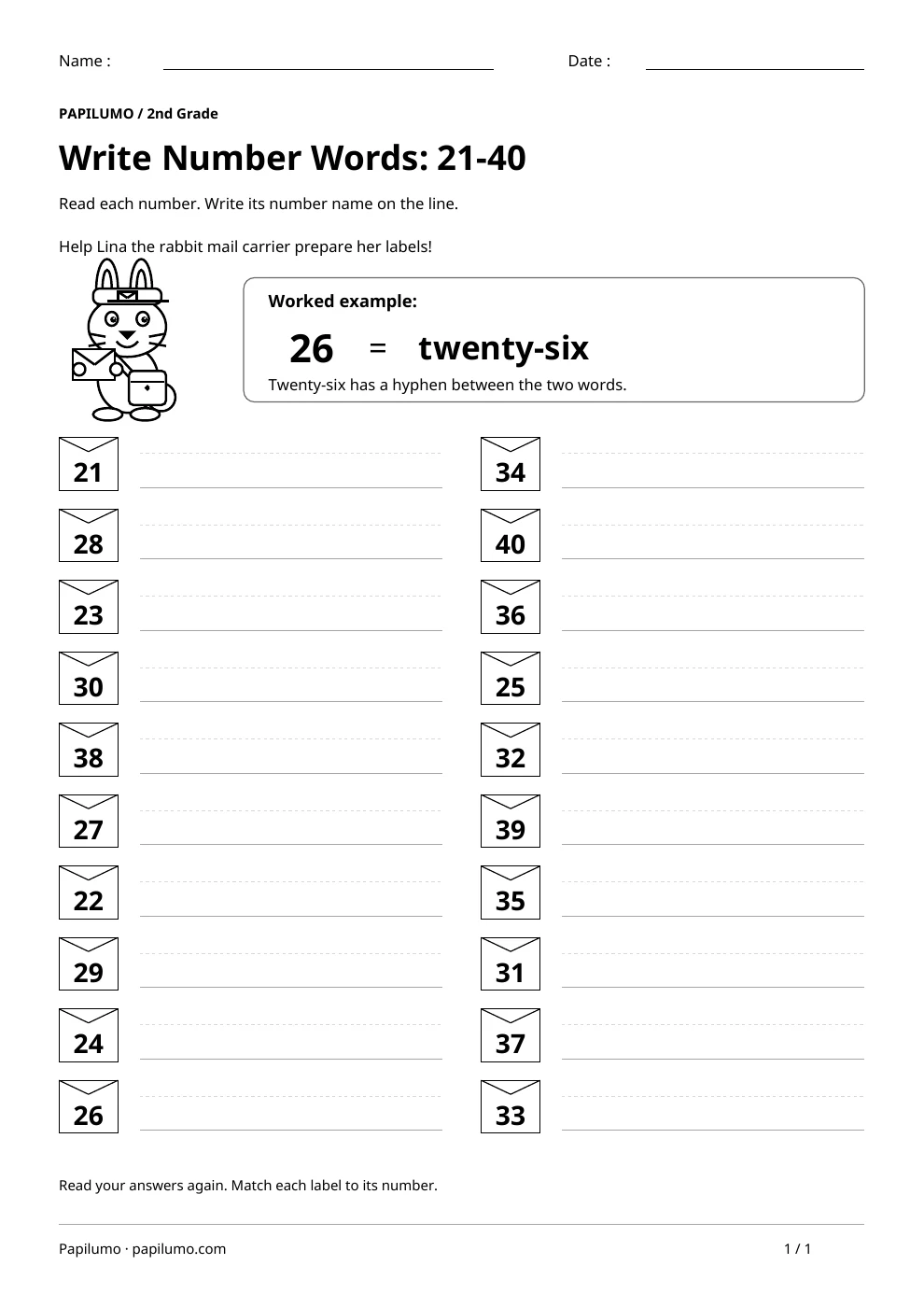
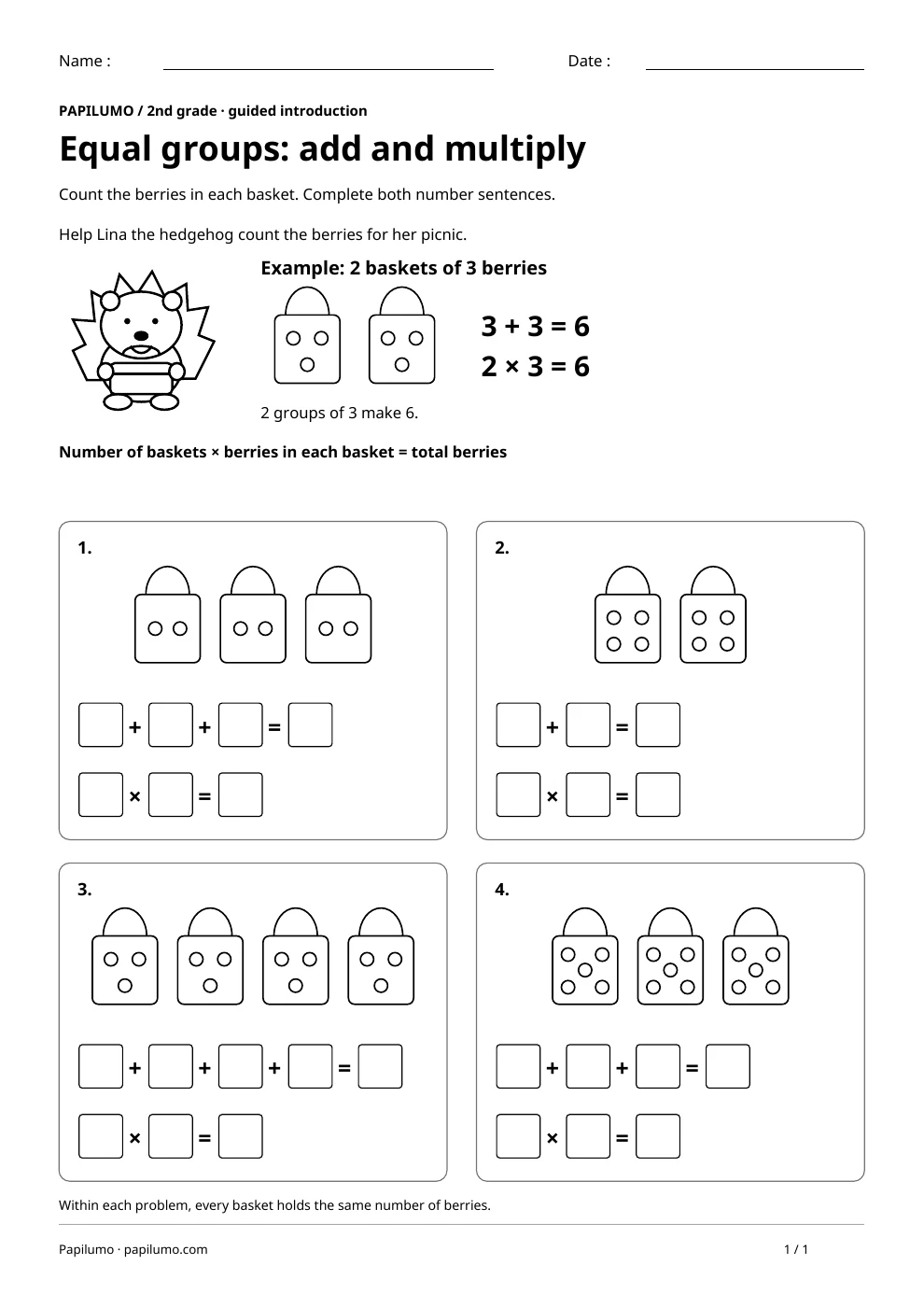
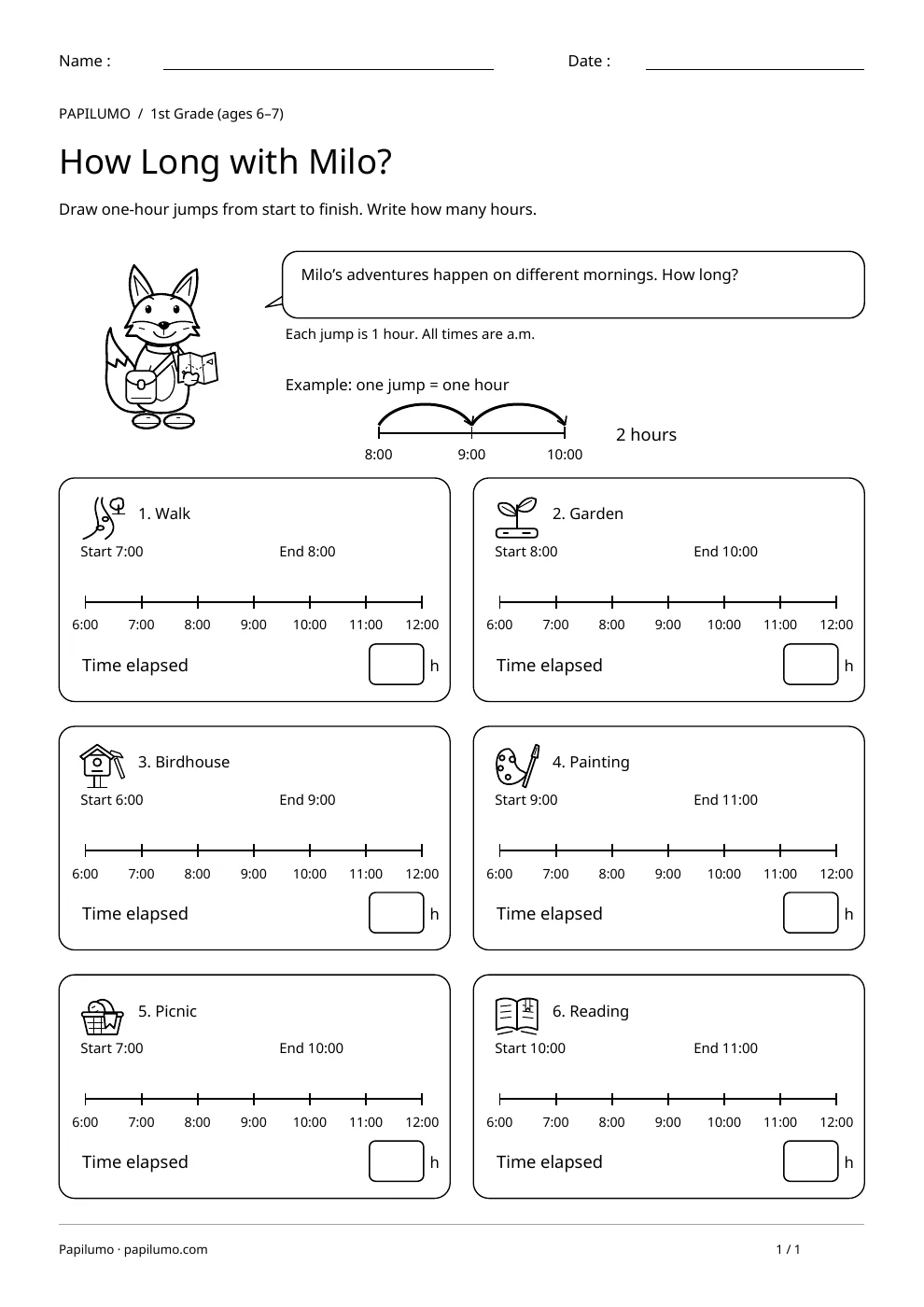
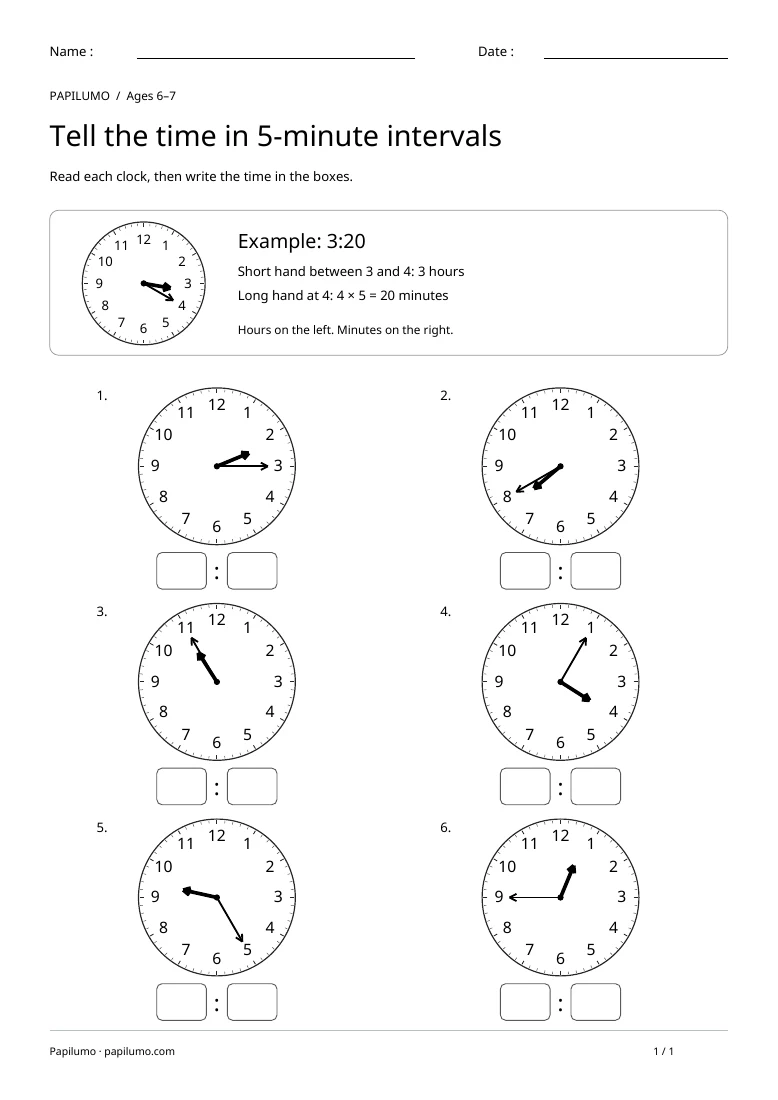
Adding three two-digit numbers provides a guided extension. To switch skills, try reading clocks in five-minute intervals. The separate elapsed-time worksheet uses whole hours only; it does not ask children to calculate an interval combining hours and minutes. Check the preview before choosing the level of challenge. Explore equal sharing within 12: drawing the same number of dots on each plate introduces division with no remainder. Explore equal groups as a guided extension: Lina’s four berry-basket collections connect repeated addition and multiplication, with totals through 15. Four short multiplication word problems ask children to identify equal groups, calculate the total and write an answer with its unit. Lina the mail carrier brings twenty envelopes numbered from 21 to 40. Write each number in words on the lines, using the worked example to get started.
Start with 5 times table: Sacha’s berry boxes.
Print at actual size on A4 paper. Set the answer key aside, cover later exercises if needed and ask for a short explanation after each attempt. Grade labels are guides: a child may benefit from easier review or from adult support. Focus on one skill during a short session.
For the next step, try Magic Squares: Mina’s Four Number Puzzles.
Worksheets to try
- 4 times table: double twice with Romi
- Writing numbers 41 to 60 in words
- 5 times table: Sacha’s berry boxes
- Magic Squares: Mina’s Four Number Puzzles
- Skip Counting by 6s to 72 with Pia
- Skip Counting by 20s to 620 with Iris
- Even and odd numbers to 99: use the ones digit
- 3 times table: count Teo’s equal groups
- Increasing and decreasing number patterns to 40
- 2 times table: multiply and match
- Three-digit subtraction without regrouping
- Three-digit addition without regrouping
- Writing numbers 21 to 40 in words
- Multiplication word problems with equal groups
- Repeated addition and multiplication: Lina’s berry baskets
- Equal sharing within 12: Mimo’s cookies
- Tens and Ones to 99
- Two-digit subtraction with regrouping
- Tell the time in 5-minute intervals
- Two-Digit Addition Without Regrouping
- Two-Digit Subtraction Without Regrouping with Luma
- Two-Digit Addition with Regrouping
- Elapsed Time in Whole Hours with Milo
- Add Three Two-Digit Numbers with Regrouping