Breaking the Habit of Skipping Diagrams and Subheadings
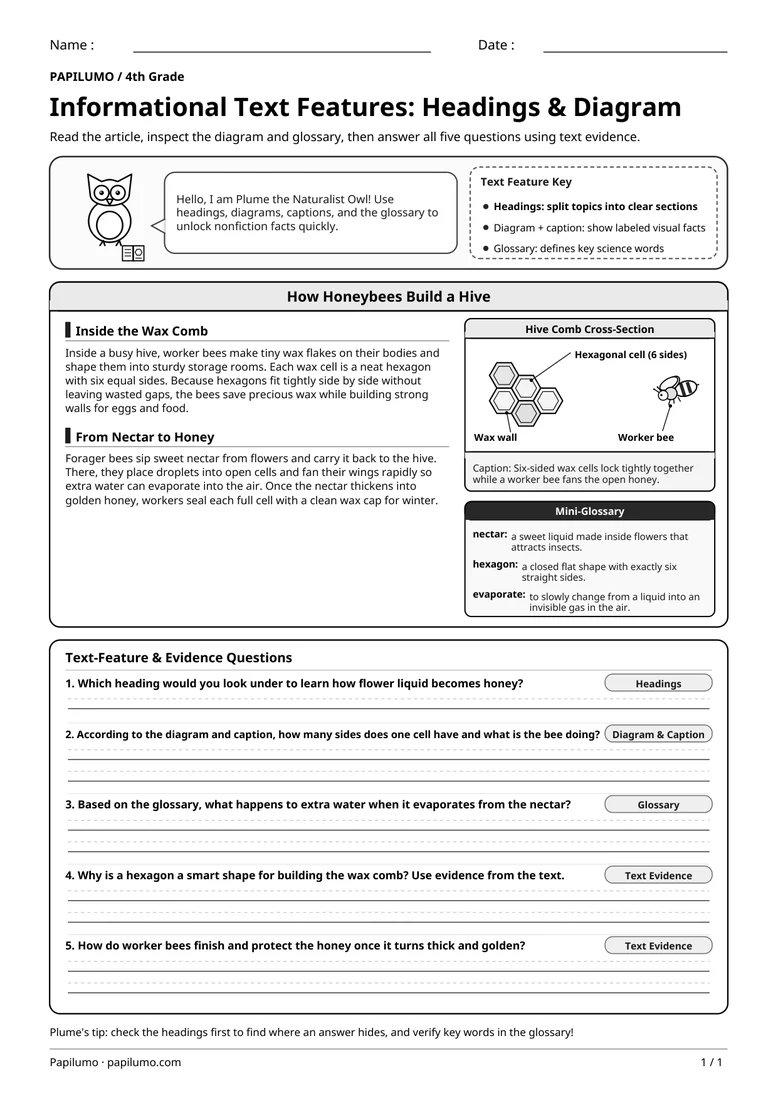
Hand a fourth grader a science or social studies article and watch where their eyes go: most kids dive straight into sentence one and treat headings, diagrams, captions, and vocabulary boxes like decorative wallpaper. Plume's passage, "How Honeybees Build a Hive," flips that habit by giving every feature on the page an actual job to do.
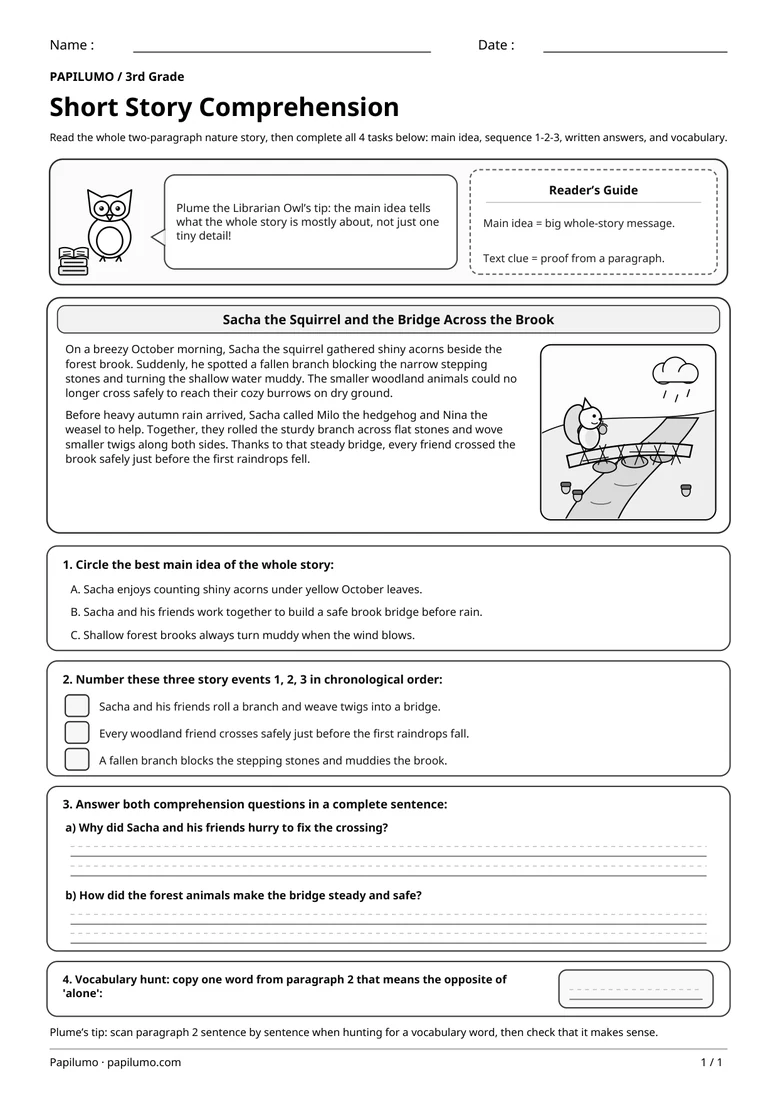
Before reading the paragraphs straight through, take thirty seconds to scan the title, the two section headings ("Inside the Wax Comb" and "From Nectar to Honey"), the comb diagram, and the three-word Mini-Glossary. Question 1 proves why that preview matters right away—students pinpoint where flower liquid turns into honey just by weighing the two headings. Readers who still struggle to pull basic details from short passages can build stamina first with short story evidence practice.
Catching Both Halves of the Diagram-and-Caption Question
Keep a close eye on Question 2, because it catches rushed upper-elementary readers red-handed. It asks two things from the visual box: how many sides one cell has, and what the worker bee is doing. Kids almost always spot "Hexagonal cell (6 sides)" on the diagram pointer and stop writing—completely overlooking the one-line caption underneath that explains the worker bee is fanning the open honey.
Question 3 builds a similarly sharp habit around domain vocabulary. Instead of guessing from context that "evaporate" means bees drink the extra water or blow droplets out the door, students check the Mini-Glossary alongside nectar and hexagon to explain accurately how liquid water slowly changes into an invisible gas in the air.
Writing Evidence Sentences Instead of Vague Bee Trivia
Questions 4 and 5 move onto roomy double writing lines and ask for full-sentence answers backed by passage proof rather than background nature trivia. A strong answer for why hexagons work so well names the exact engineering reason in paragraph one—six-sided cells lock together without wasted gaps, saving precious wax while forming sturdy walls—and Question 5 cites sealing each full cell with a clean wax cap for winter.
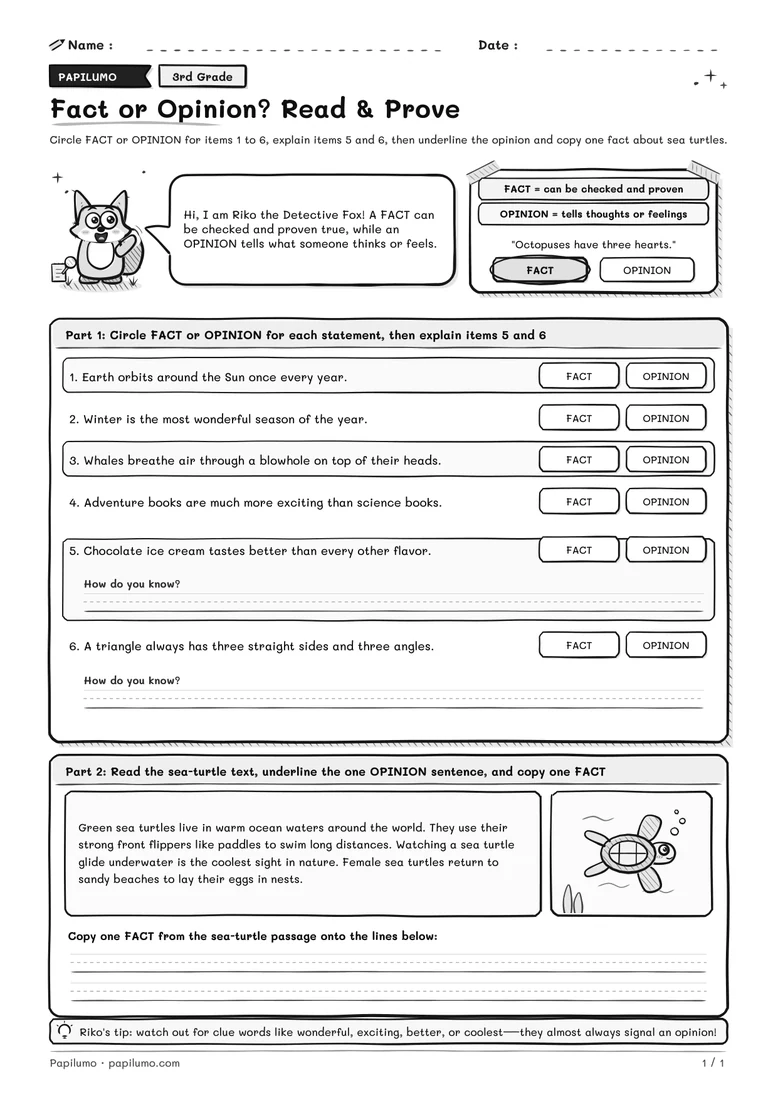
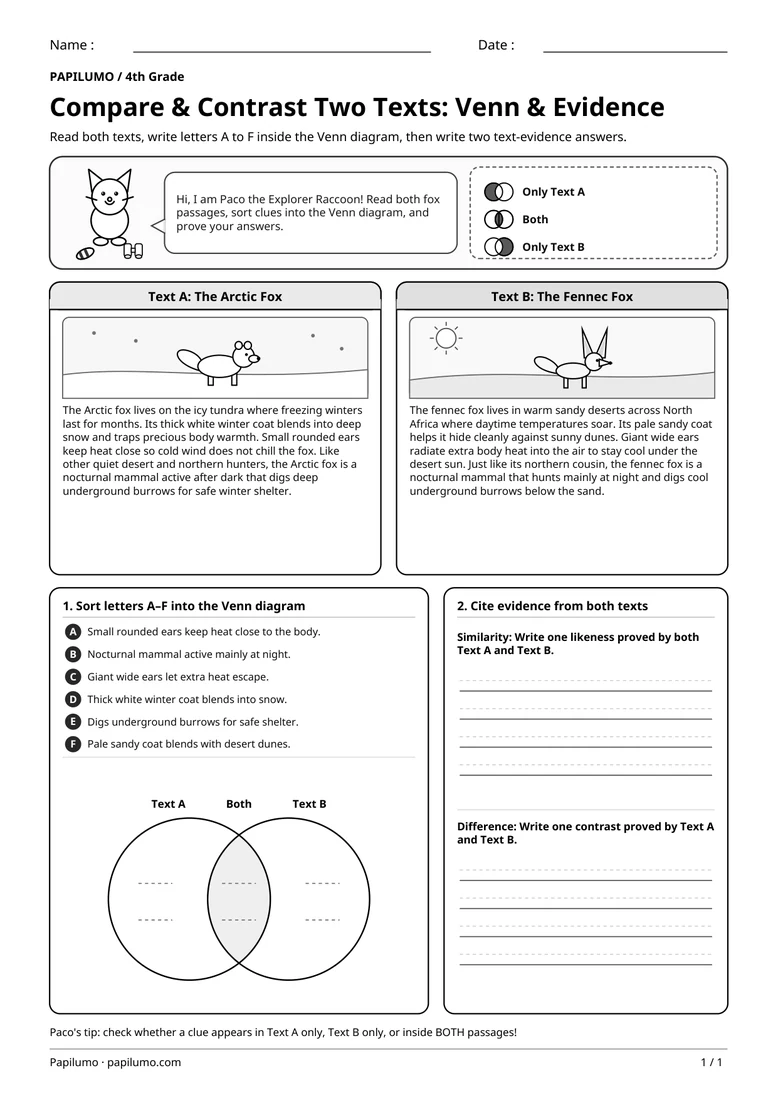
Insisting on verifiable text proof pairs naturally with separating facts from opinions, and prepares fourth graders to juggle multiple nonfiction sources at once when comparing two nonfiction passages.