Separating Whole-Story Main Idea from One Catchy Detail
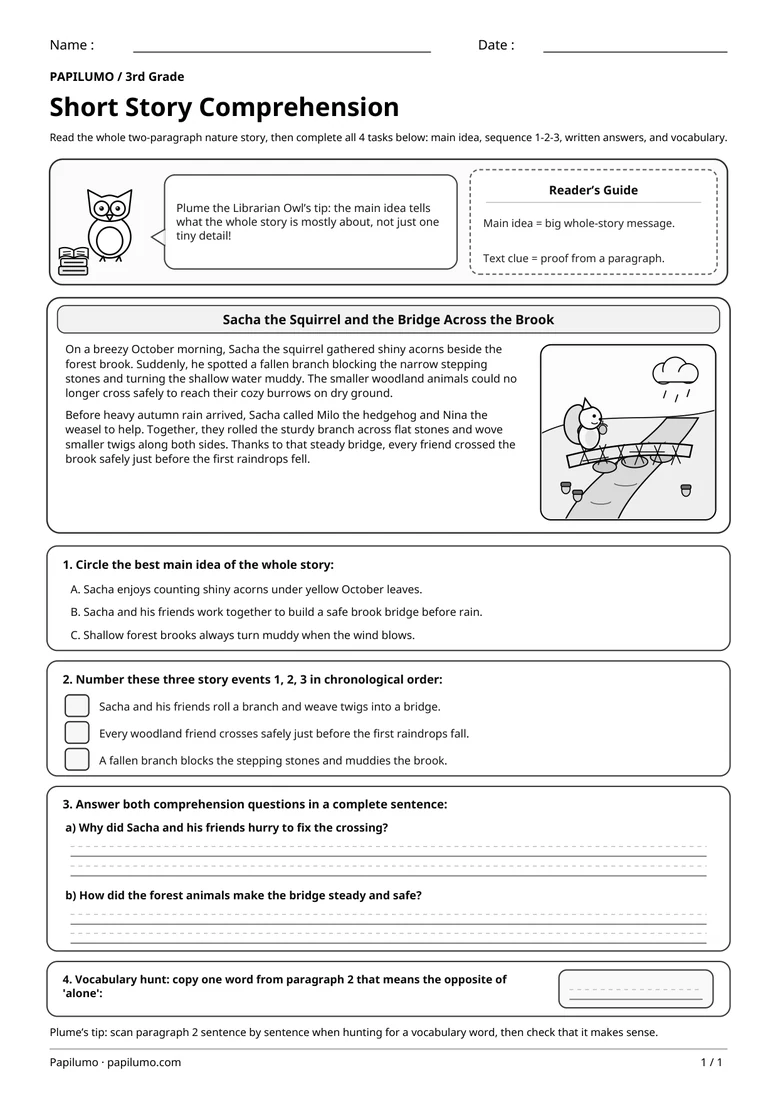
By third grade, plenty of children read aloud with smooth expression yet hit a wall when asked for the main idea—usually because they latch onto one vivid detail from the first two sentences instead of stepping back to weigh the whole passage. Up in the banner, Plume the Librarian Owl gives a crisp visual anchor: 'Main idea = big whole-story message' versus 'Text clue = proof from a paragraph.' Before starting the four tasks, have your reader lightly circle the woodland characters and their stream problem in paragraph 1, then underline the bridge-building solution in paragraph 2.
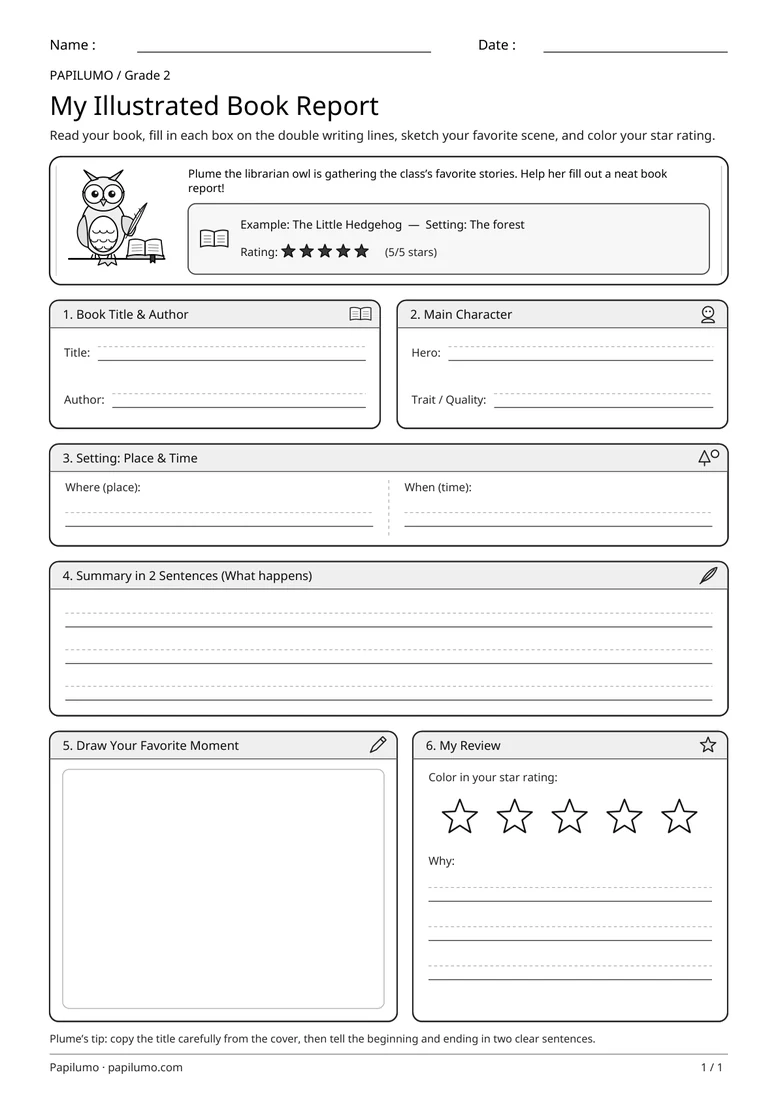
Students who have already practiced pulling together story big-picture takeaways on an illustrated book report page will quickly see that the true main idea must cover both getting stuck at the water and working together to cross safely.
Coaching Complete Why, How, and Vocabulary Answers
At the homework table or guided-reading group, watch for two classic third-grade shortcuts: picking a main-idea option that mentions only the blocked stream while ignoring the friends' teamwork, and answering the written 'Why' and 'How' prompts with choppy two-word fragments recalled vaguely from memory. Teach a fast self-check on Task 1—'Does my choice fit paragraph 1 AND paragraph 2 together?'—and have students double-check their 1-2-3 chronological order on Task 2 by scanning the story from start to finish.
On Task 3 and Task 4, insist on physically pointing to the proving sentence before writing: students locate the exact cause in paragraph 1 for 'Why,' trace the cooperative bridge steps in paragraph 2 for 'How,' and copy the target vocabulary word straight out of paragraph 2 with exact spelling.
Building Stamina for Deeper Evidence-Based Reading
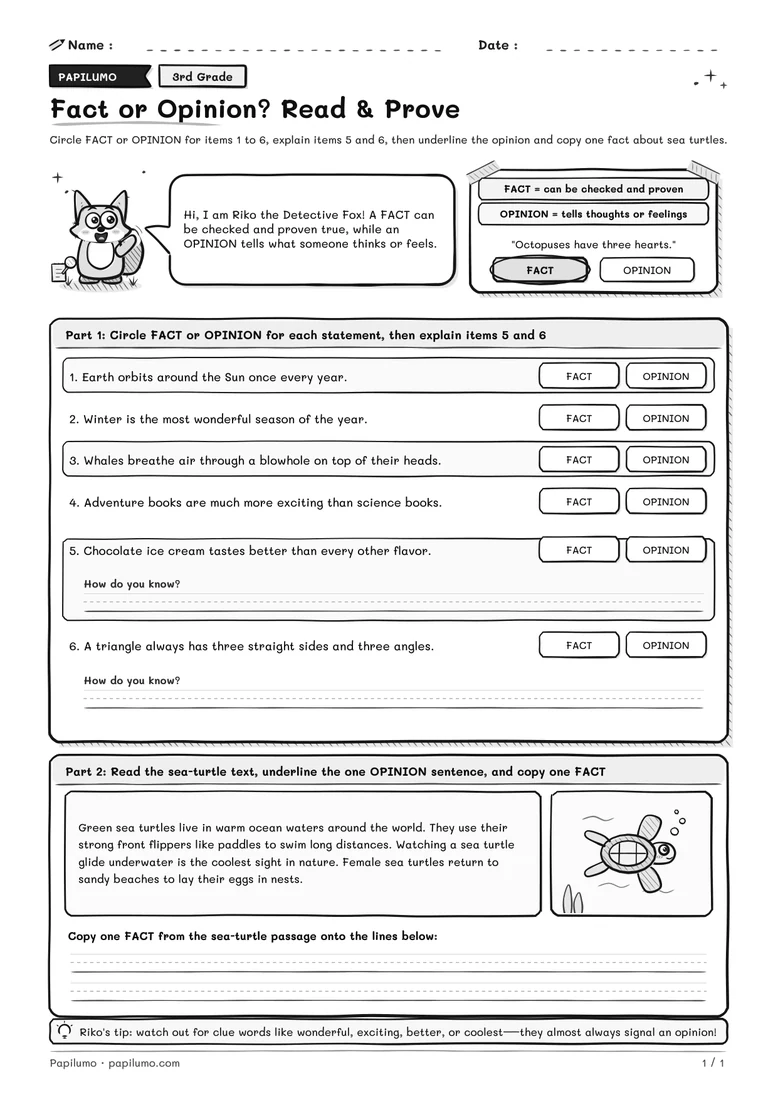
Combining big-picture synthesis, event sequencing, open-ended written explanation, and context vocabulary around a single two-paragraph story prepares third graders to decide between fact and opinion with proof in longer classroom articles.
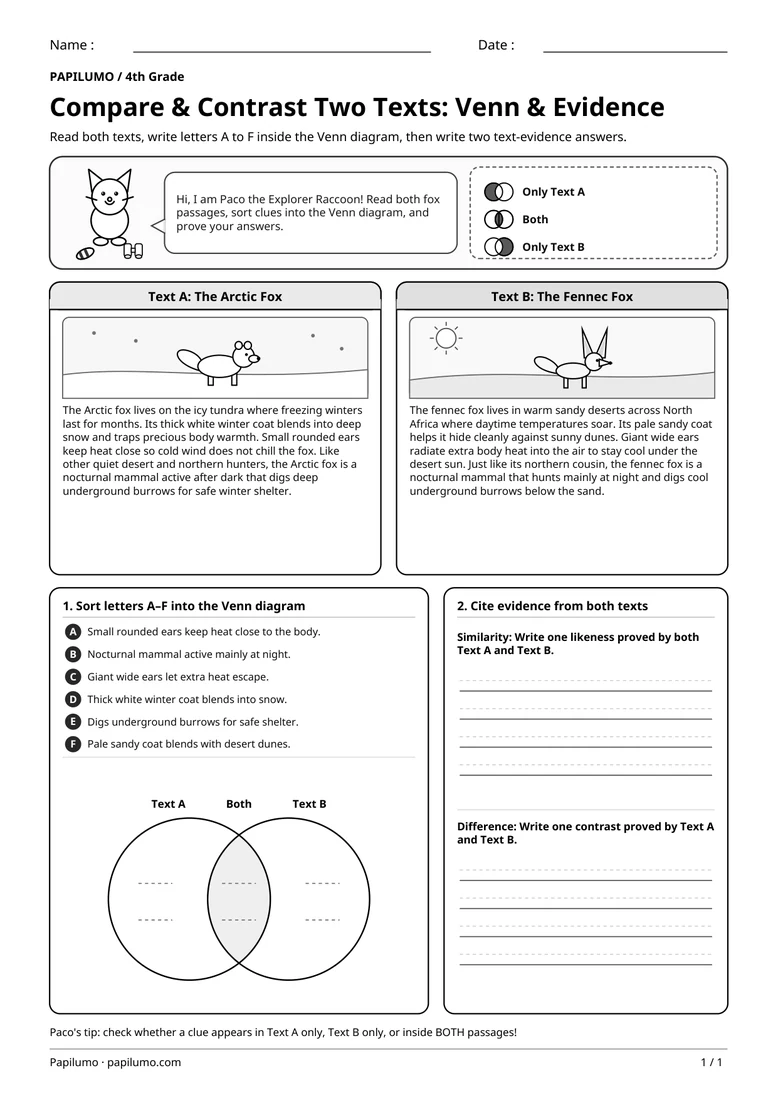
To wrap up, invite writers to flip the sheet over and add one closing sentence telling what Sacha and his friends do once tucked inside their dry burrows—or color the stream bridge neatly—building strong paragraph-evidence habits before fourth graders compare two texts with a Venn diagram across paired passages.