
Pushing Past Because-It-Is-True on Items 5 and 6
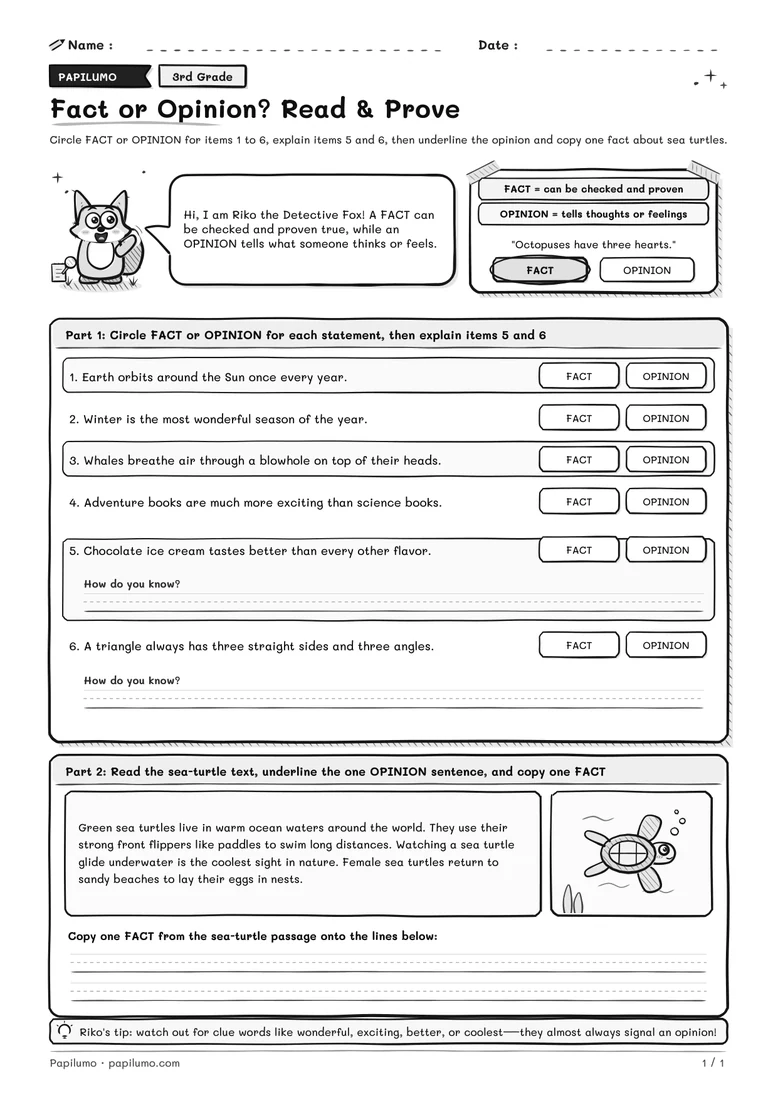
Third graders who remember sorting introductory second-grade statements usually cruise through circling FACT or OPINION on items 1 through 4, then hit a real thinking wall on items 5 and 6 where they must explain their choice in writing. Left uncoached, eight-year-olds almost always write 'Because it is true!' for a fact. At the reading table, point back to Riko’s model—'Octopuses have three hearts'—and ask *how* someone could verify it: counting, measuring, or checking a marine biology book. For opinions, require students to name the exact judgment word that changes from person to person.
Spotting the Opinion Tucked Inside the Sea Turtle Text
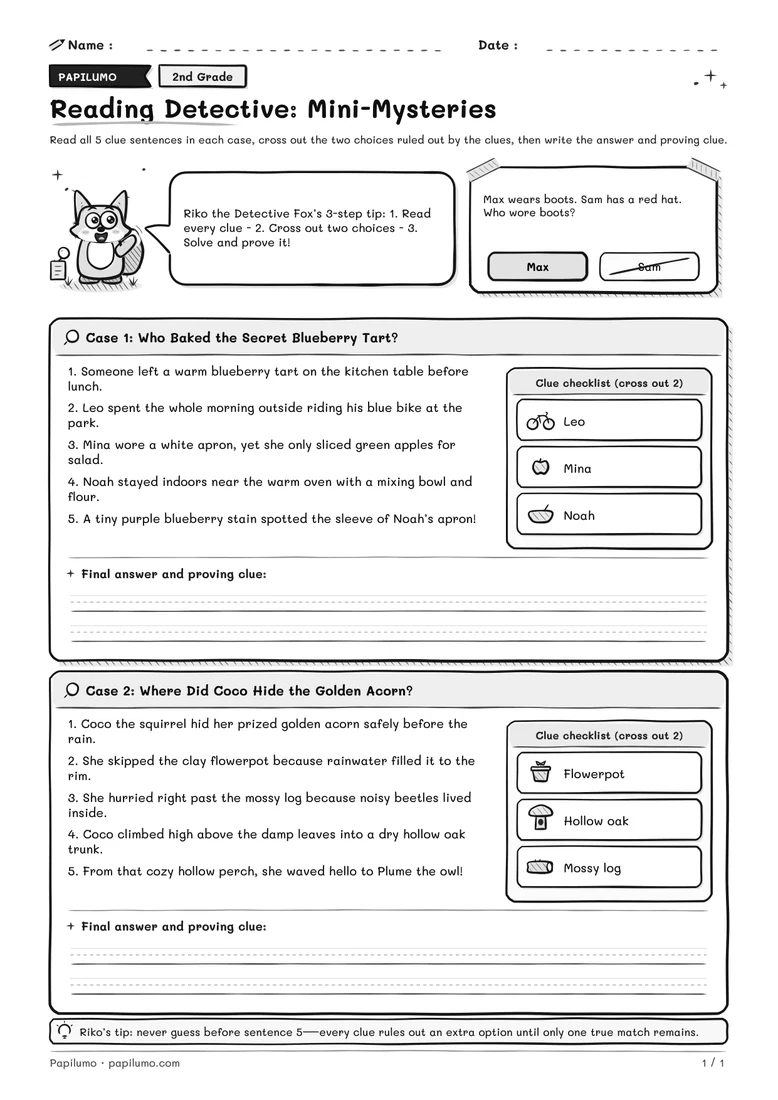
The final sea turtle section mirrors what actually happens in real-world reading: an author weaves one enthusiastic opinion sentence right into an informational paragraph packed with real animal facts. Many third graders hold the stubborn misconception that if a paragraph sounds like science nonfiction, every single sentence inside it must be 100% fact! Have hesitant readers play detective—just like when they practiced cracking short detective clue mysteries—by scanning the sea turtle lines for value words like 'wonderful,' 'exciting,' or 'coolest' before underlining the opinion and copying one clean, provable fact onto the writing line.
Connecting Clue Words to Nonfiction Research Habits
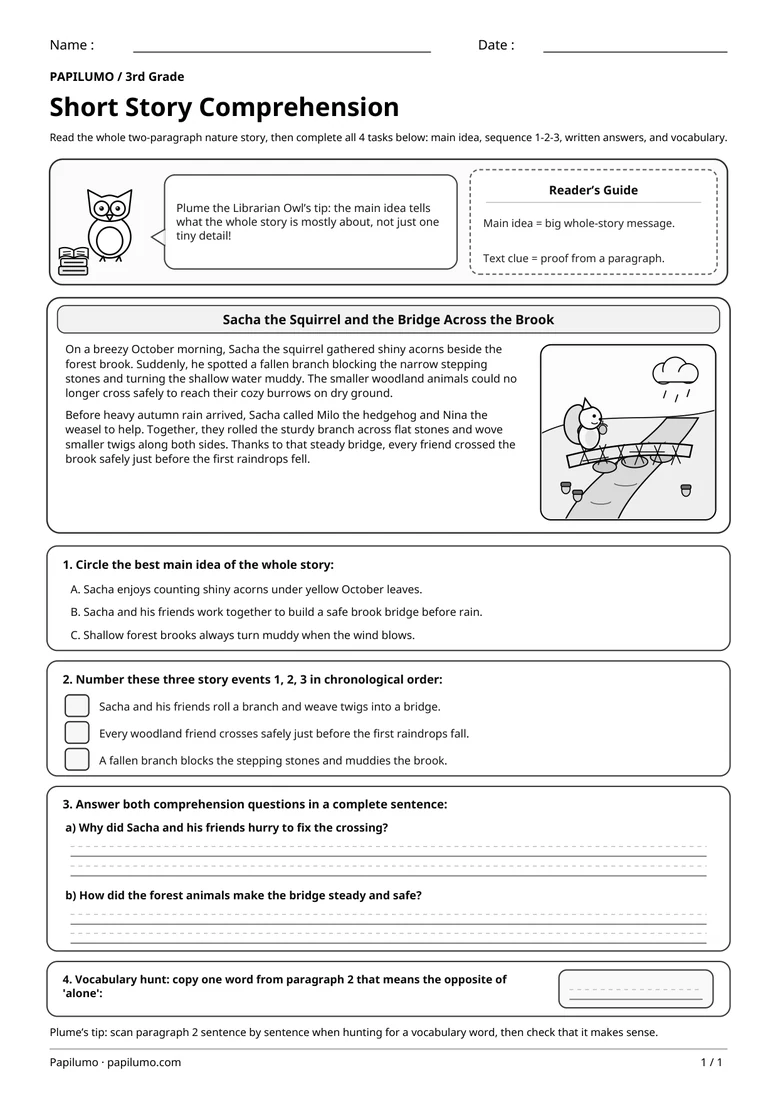
Combining standalone sentences, written justifications, and a short animal paragraph makes this sheet an ideal bridge into third-grade animal research reports. When students draft their own informational paragraphs later in the week, pull this page back out so they can check whether they accidentally stated personal praise as scientific evidence—or intentionally craft a lively hook while keeping body facts verifiable. Strengthening that critical filter also sharpens how readers weigh author viewpoint when identifying main ideas in short stories and short magazine articles across your literacy block.
Drafting Paired Animal Sentences on the Back
To wrap up small-group reading, invite students to turn the sheet over and write two contrasting sentences about a favorite animal—say, a peregrine falcon, sea otter, or grizzly bear. Require Sentence 1 to include a measurable detail, body part count, or habitat fact that a library book could confirm just like Riko’s three-hearted octopus. Require Sentence 2 to use a vivid opinion word expressing personal amazement or preference. Reading both sentences aloud back-to-back without saying which is which lets classmates hold up one finger for Fact or two fingers for Opinion in a lively thirty-second review.