Marking Coat, Ears, and Burrows in Both Passages
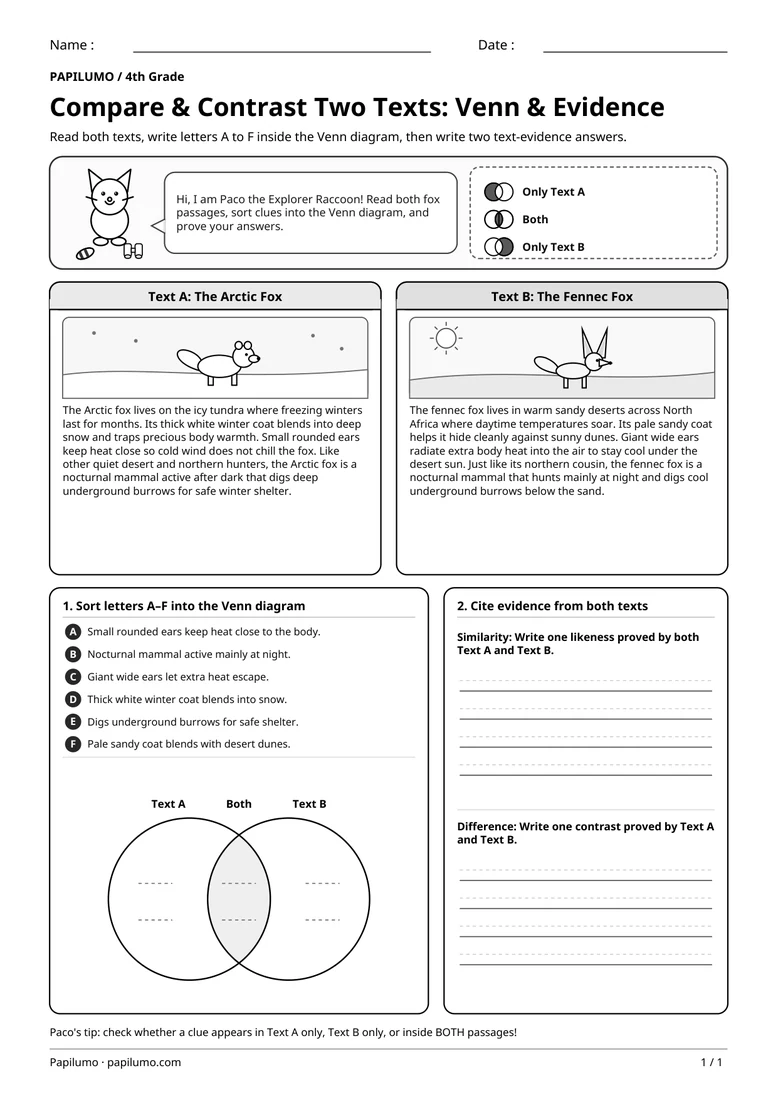
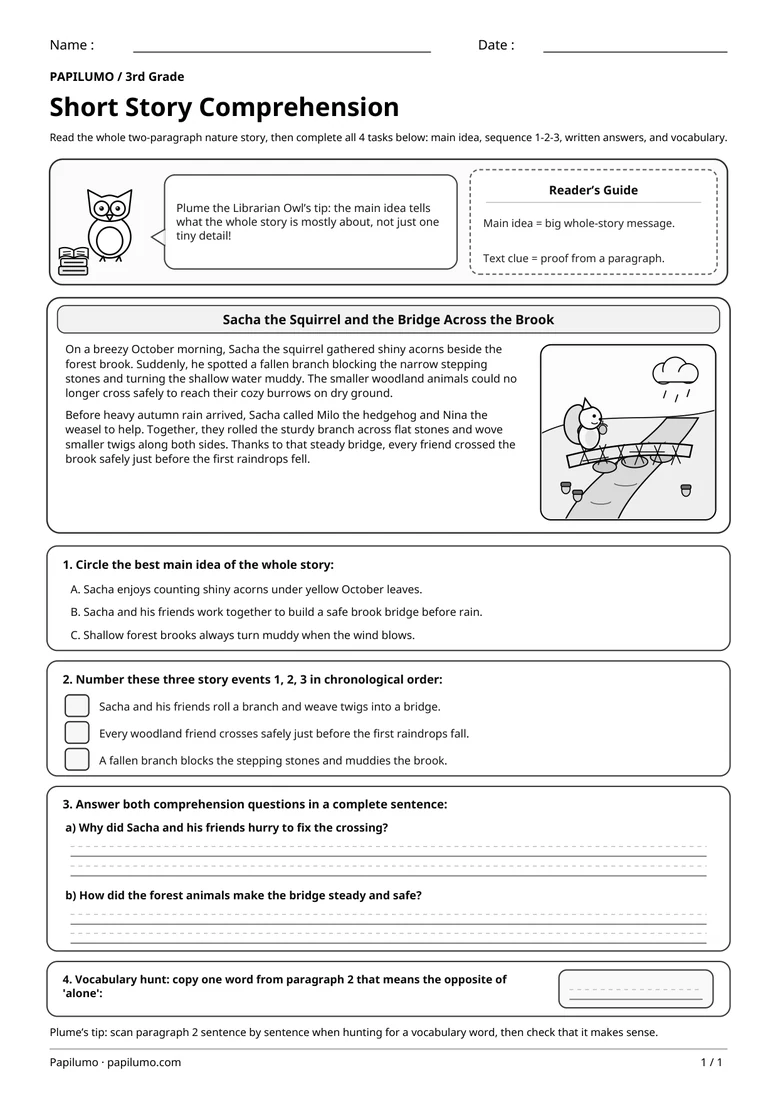
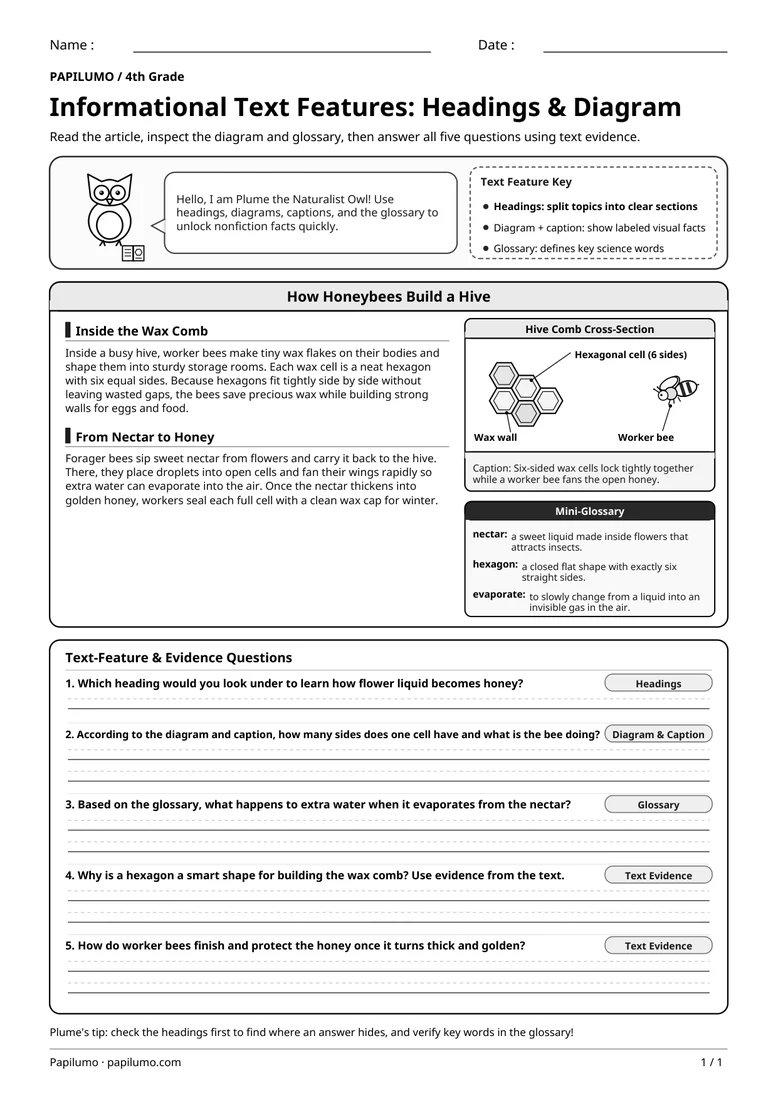
Paired passages ask fourth graders to juggle two sets of details in working memory without letting traits blur together. Here, Text A spotlights survival in freezing polar cold—thick white winter fur and small rounded ears that conserve body heat—while Text B examines life in scorching desert heat with pale sandy camouflage and giant cooling ears. Students who already feel comfortable reading headings, diagrams, and glossaries thrive when you hand them a pencil first to underline four anchor categories across both texts: coat color, ear shape, habitat climate, and shelter habits.
Sorting Letters A Through F Without Guessing From Memory
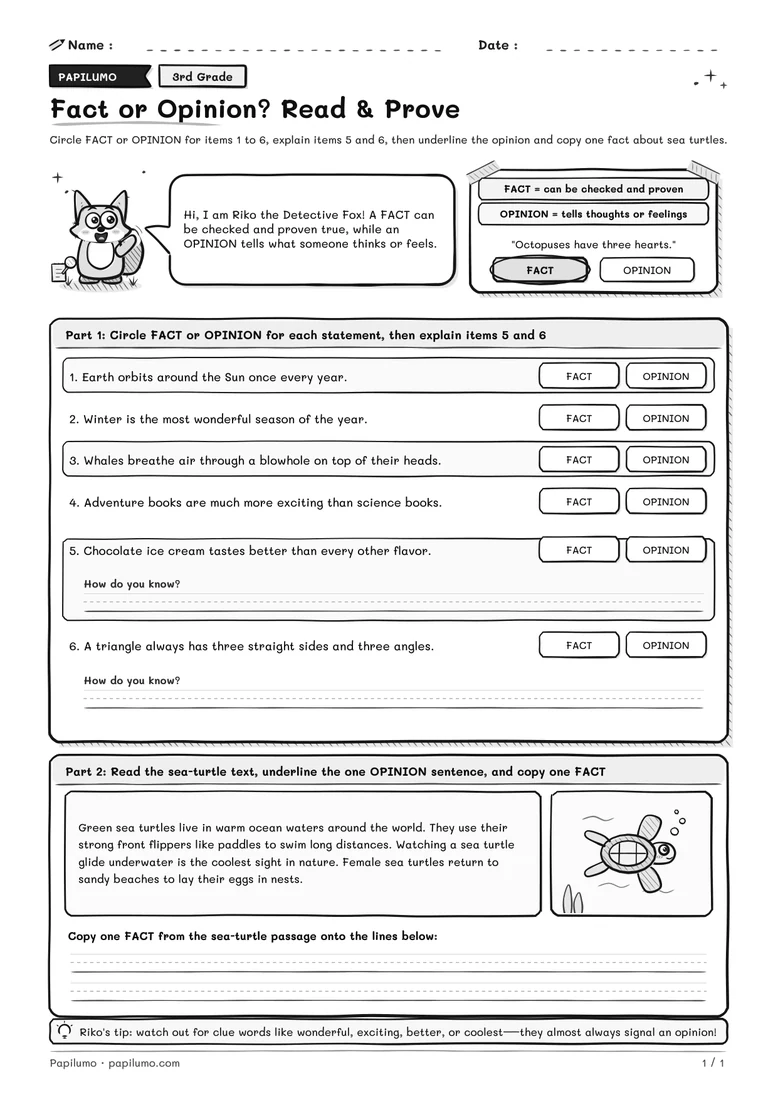
Two predictable hiccups pop up whenever upper-elementary readers fill out a Venn diagram: kids either try squeezing entire copied sentences into the narrow center overlap, or they sort statements using wildlife trivia they saw on television rather than checking what the passages state. Coach students to jot 'A,' 'B,' or 'BOTH' right beside clues A through F first, verifying in print that both foxes are nocturnal mammals that dig deep underground burrows before placing those shared letters squarely in the middle. That text-first discipline echoes the proof habits built while testing claims for provable evidence in third grade.
Writing Two-Sided Text Evidence That Names Both Foxes
Watch the bottom written-evidence lines closely, because fourth graders frequently answer a contrast question only halfway—writing 'The desert fox has giant ears to release heat' while never mentioning Text A at all! Unblock half-comparisons at the small-group table with a quick contrast stem such as 'In Text A..., whereas Text B states...' so both passages appear in one crisp sentence. Coordinating details across two texts takes comprehension well beyond pulling main ideas from narrative passages, and curious readers love extending the routine with encyclopedia entries on emperor penguins and flamingos.
Checking All Six Letters Before Penguin Research
Teach fourth graders a quick self-monitoring habit before they move to the written prompts: count the capital letters inside all three regions of the Venn diagram to make sure every single letter from A through F appears once and nothing vanished in the margins. Students who breeze through both fox evidence questions love sketching a fresh Venn diagram on notebook paper using short encyclopedia entries on emperor penguins and flamingos—comparing feathers, beaks, egg care, and freezing versus tropical waters while keeping every claim anchored strictly in text.