

Understand the amount before calculating
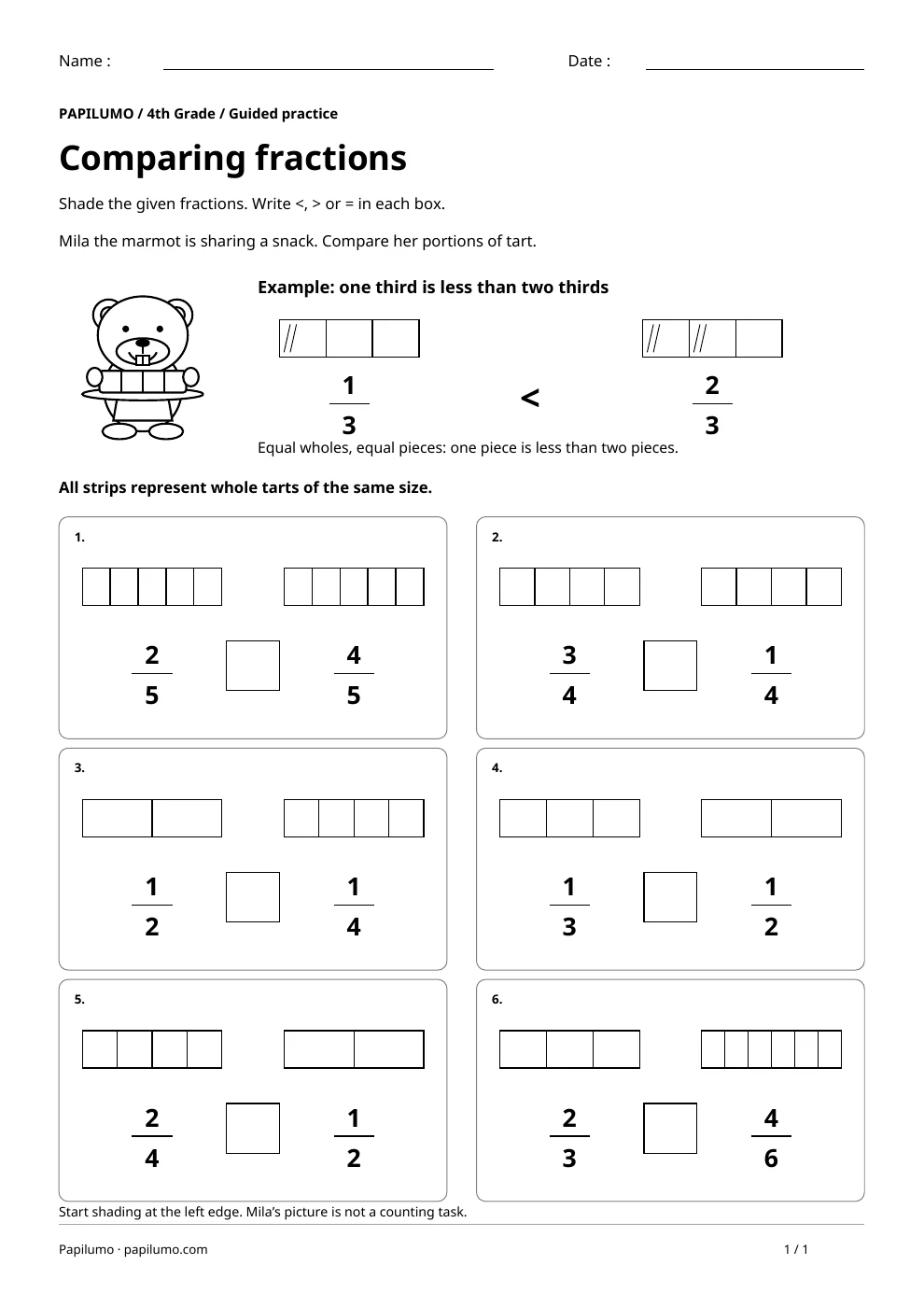
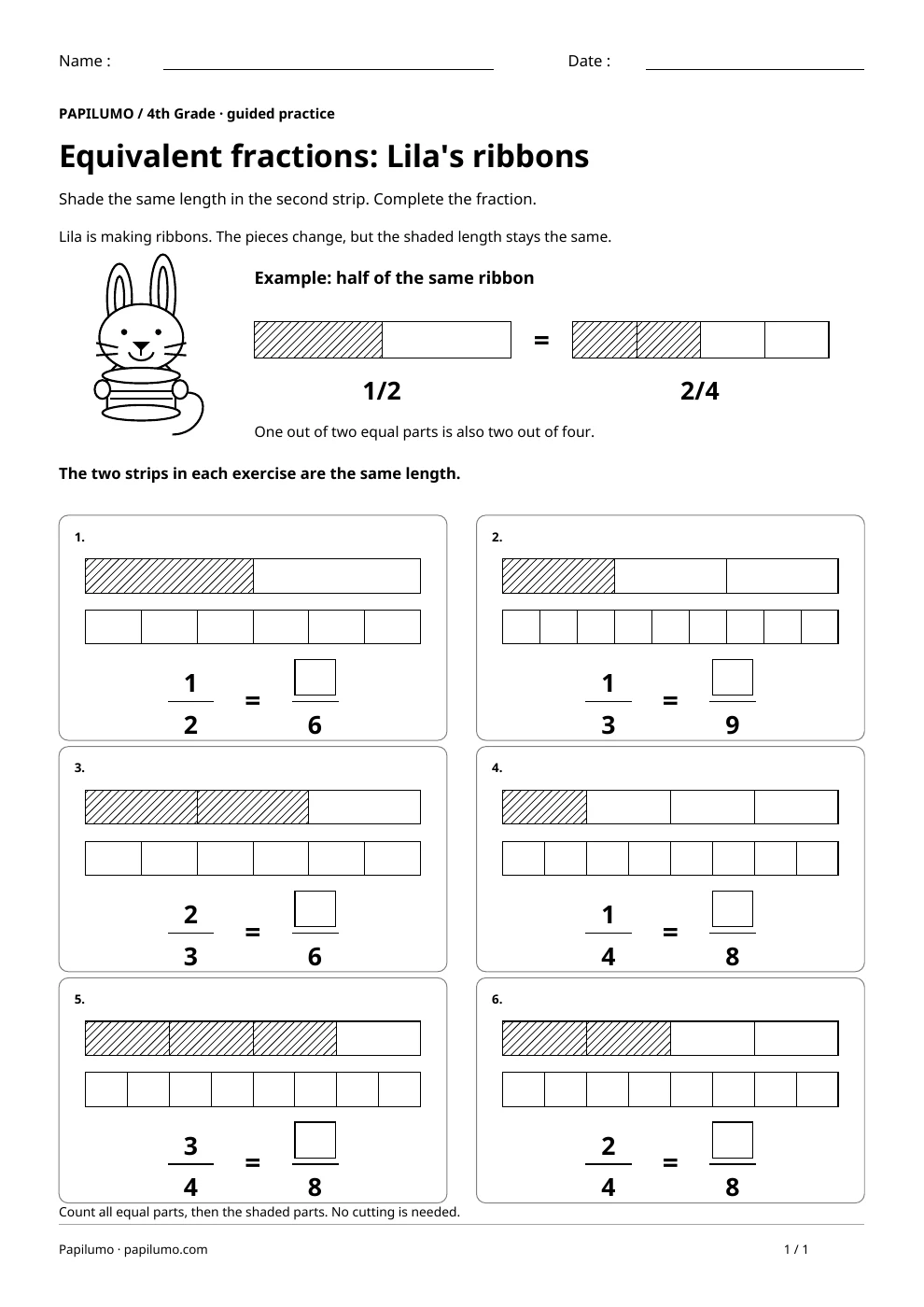
For fractions, compare whole strips of the same length. One half and two fourths cover the same amount despite different notation. Shade first, then count the parts and complete the numerator. Mila’s comparing fractions worksheet uses strips representing equal-sized wholes. Shade the given parts before choosing a symbol; different fraction names can represent the same amount.
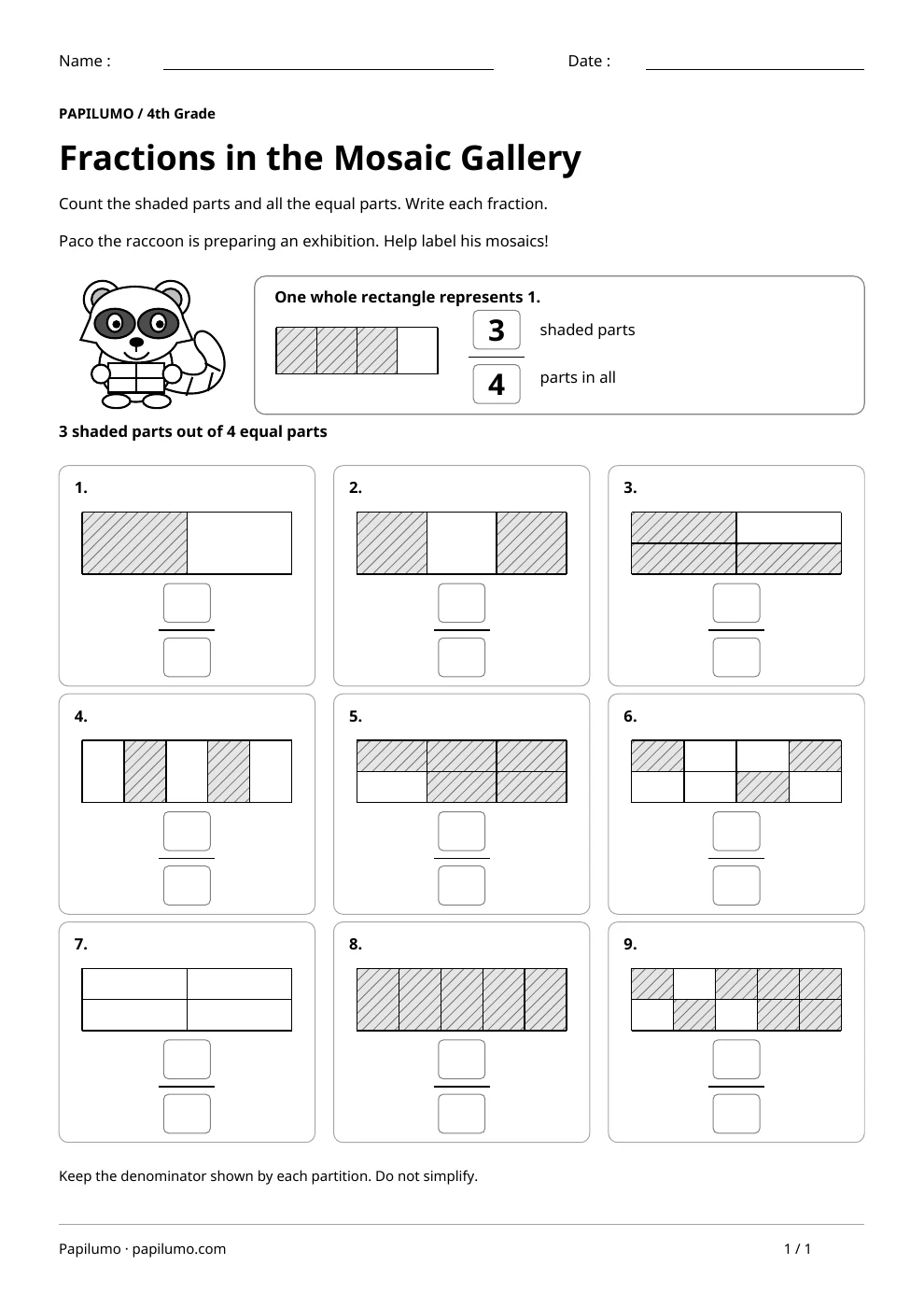
Start with Write Fractions for Shaded Shapes.
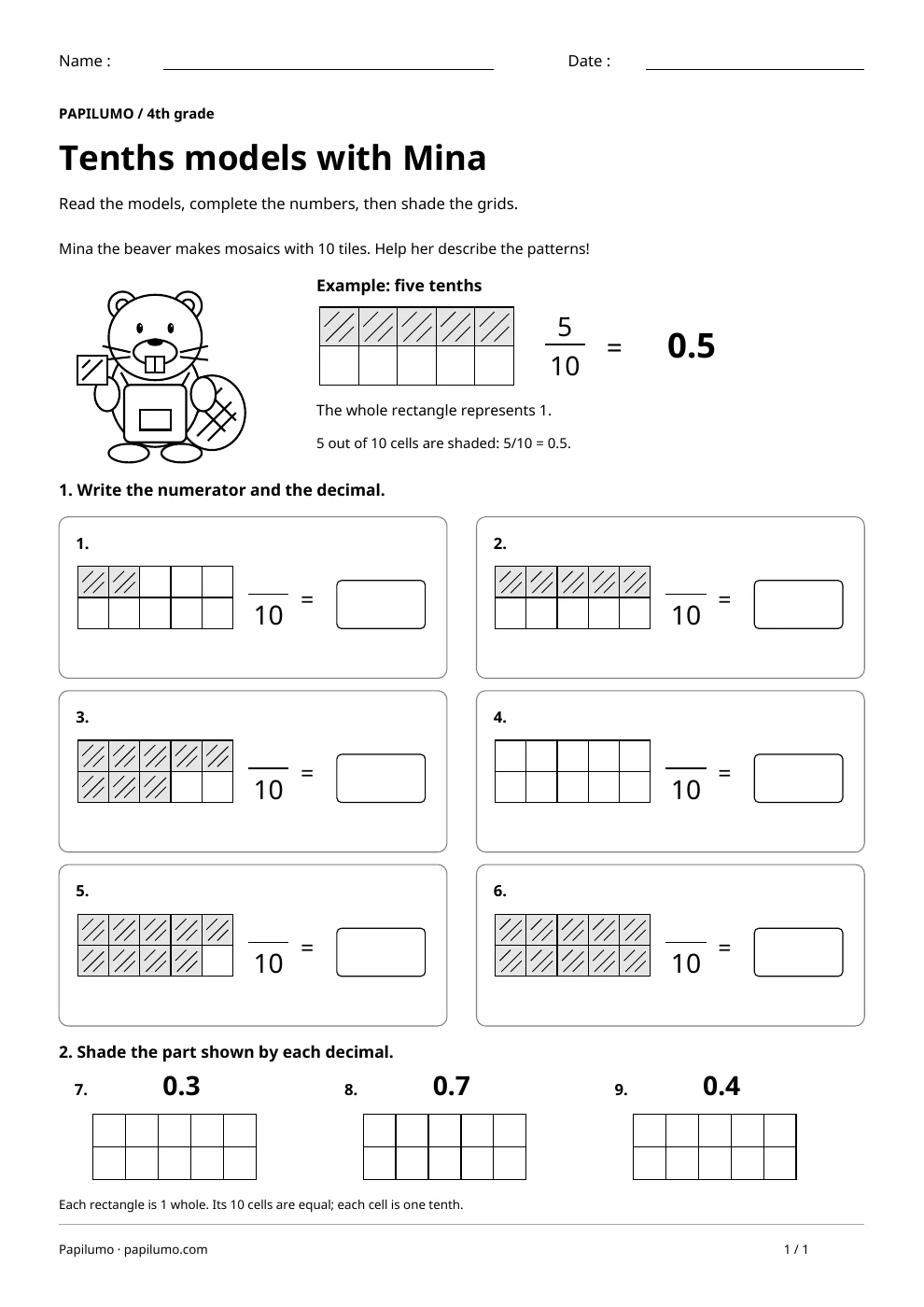
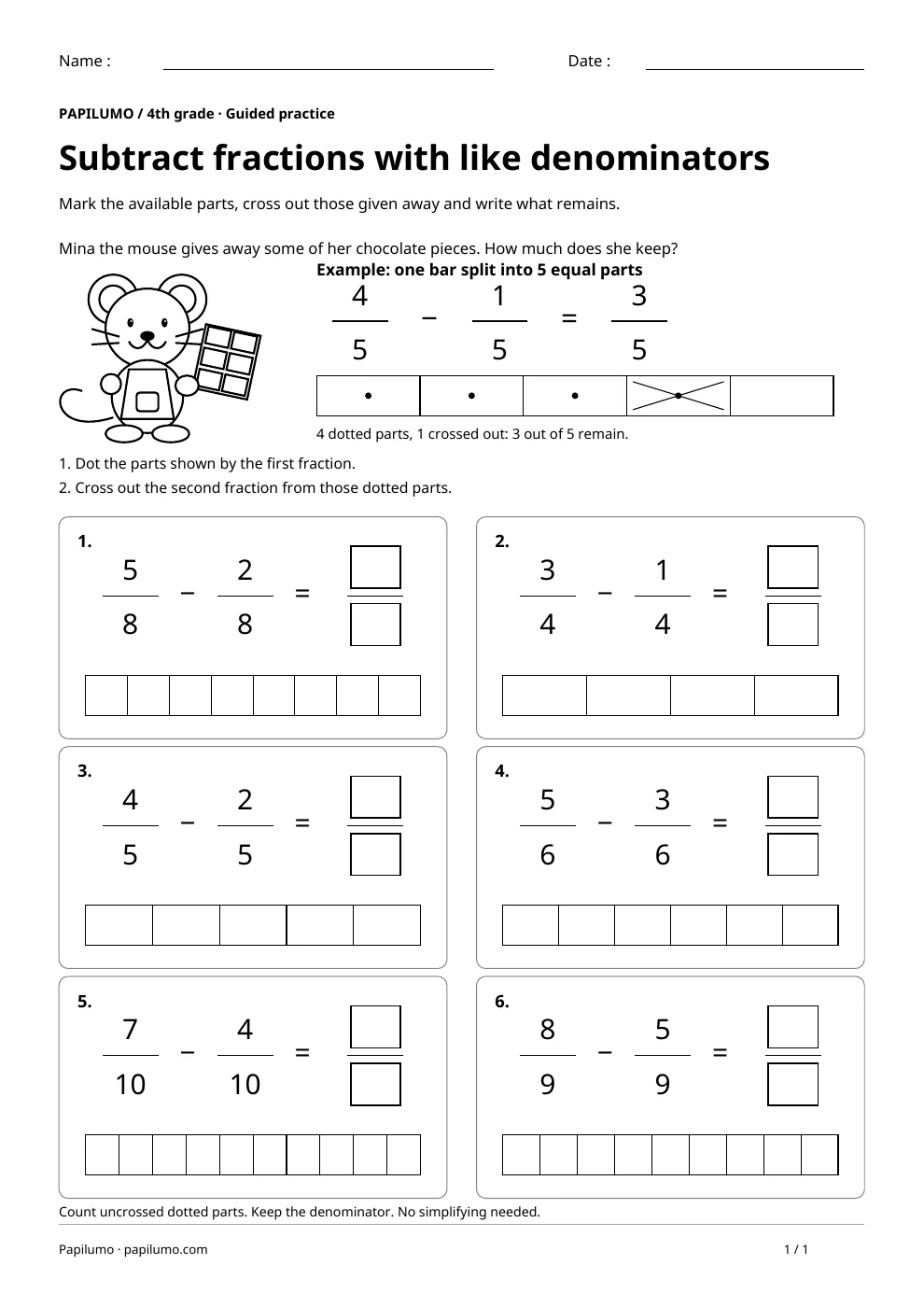
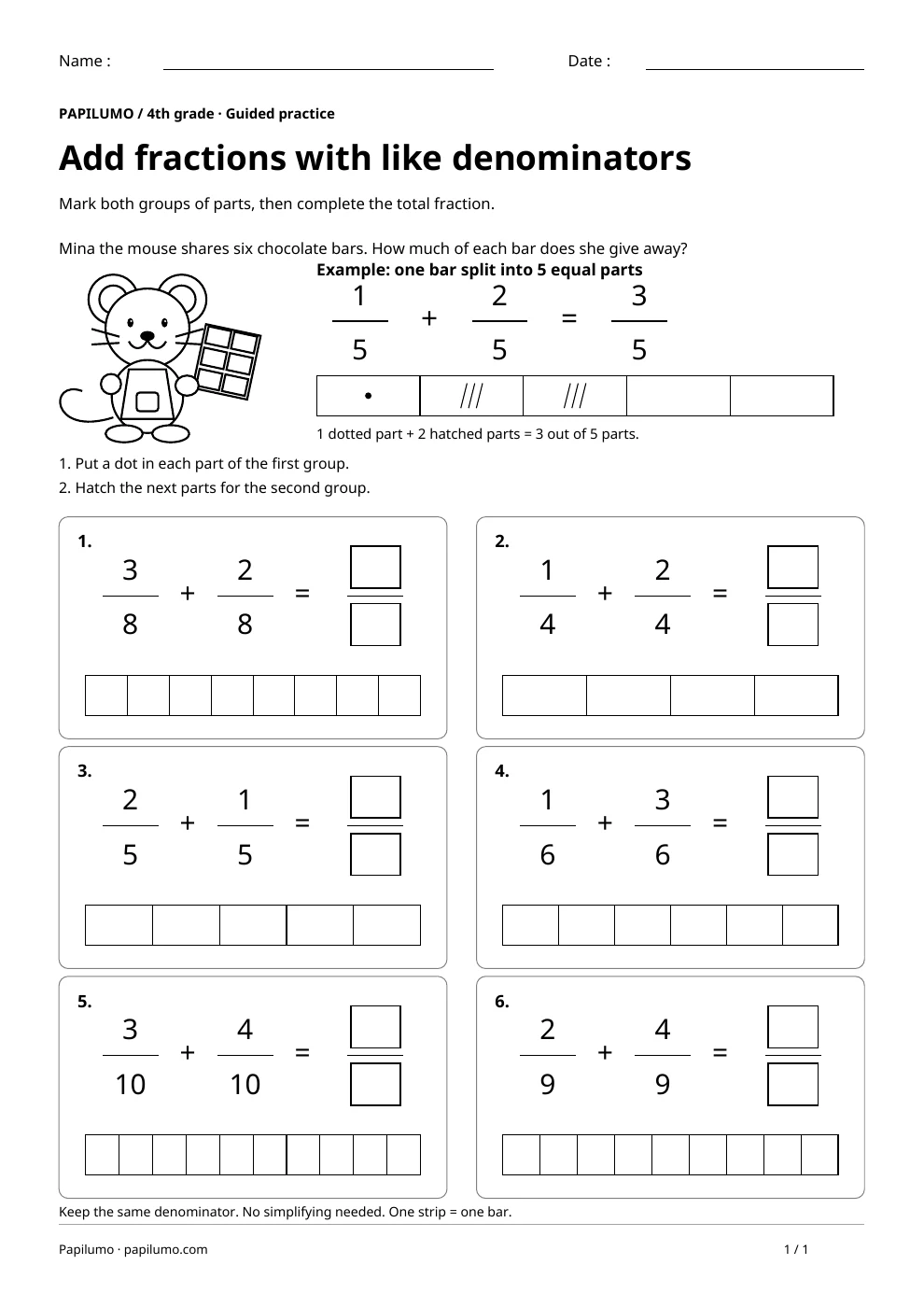
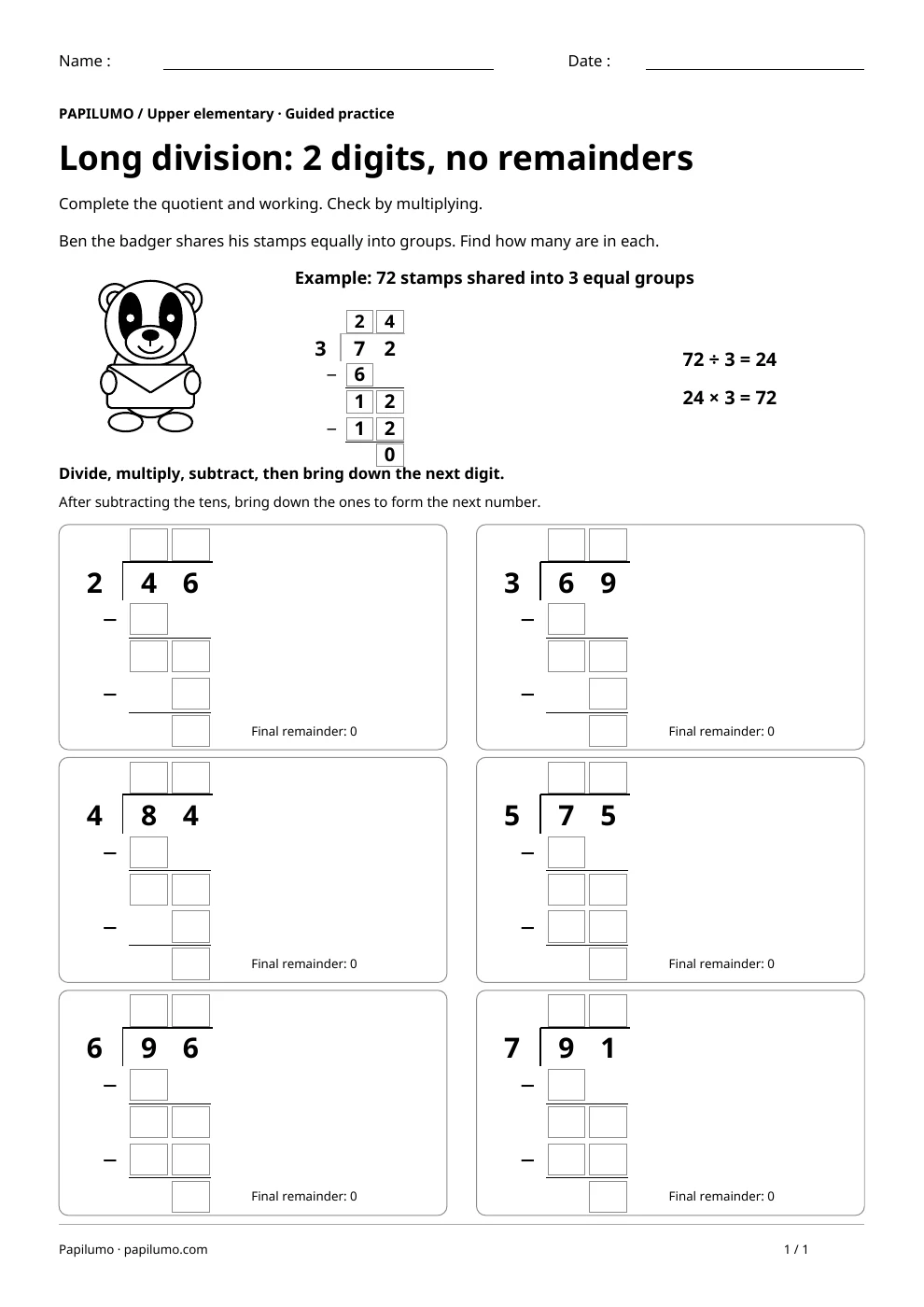
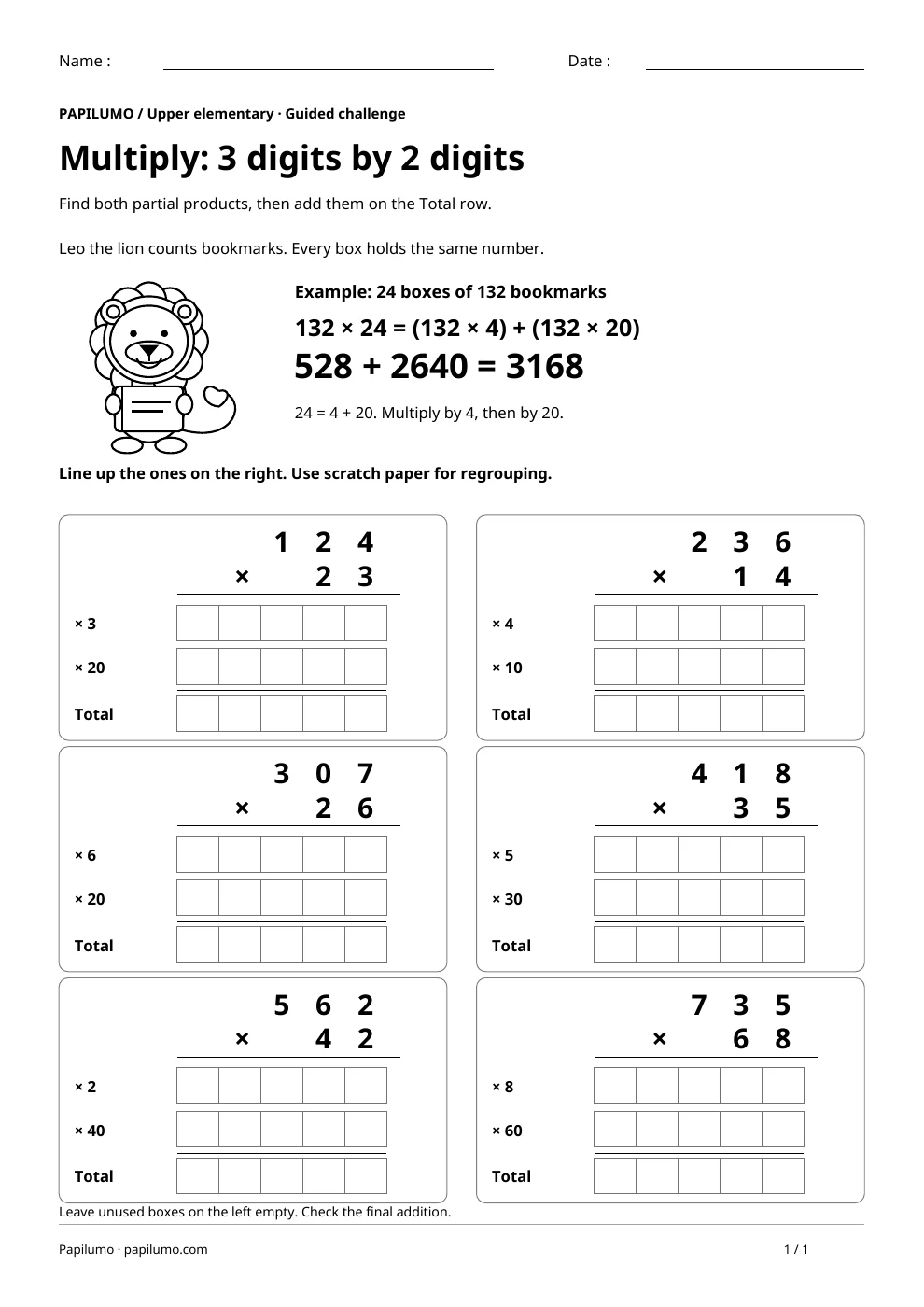
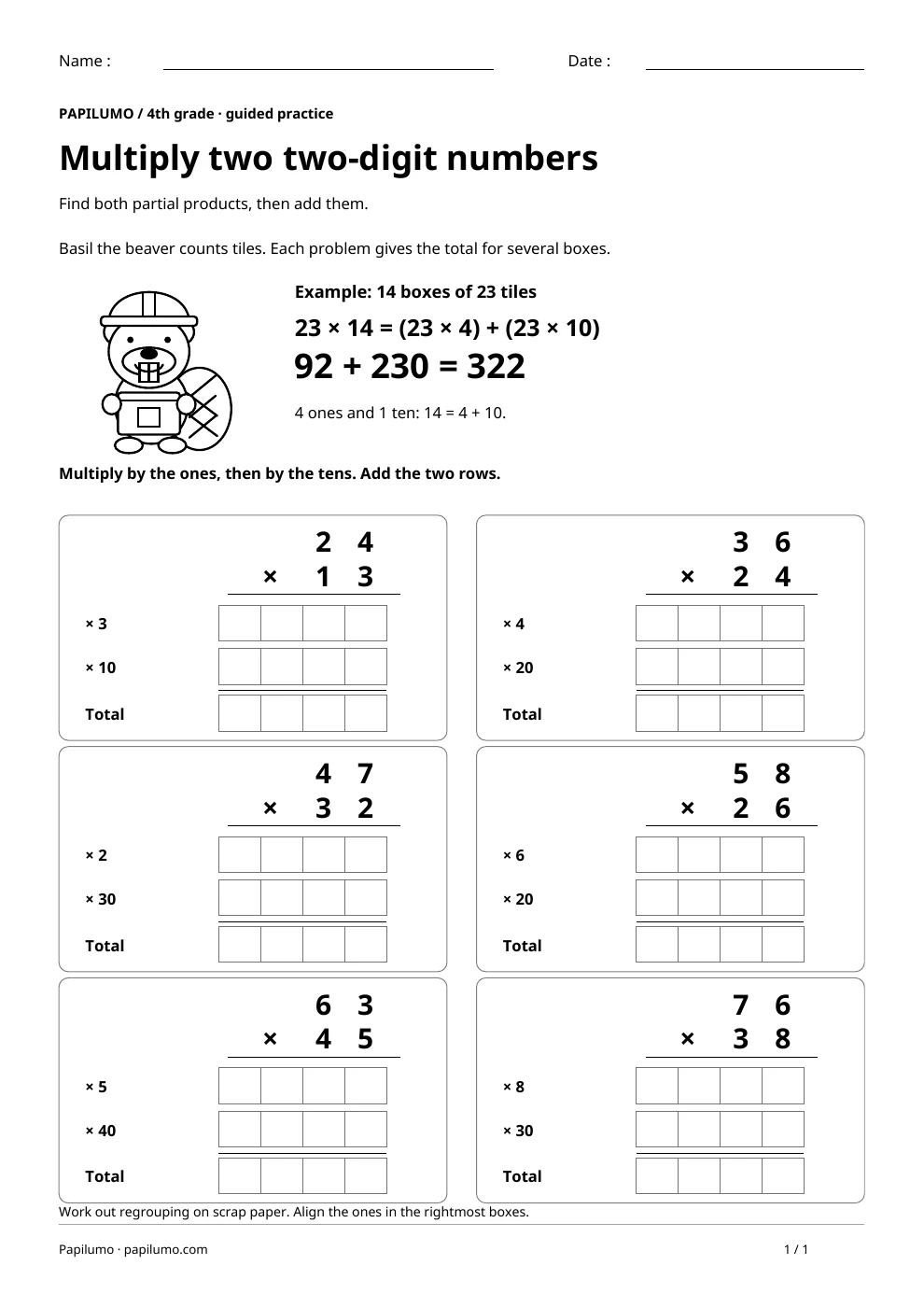
For multiplication, split the multiplier into ones and tens. In 24 × 13, calculate 24 × 3 and 24 × 10 before adding. Boxes support alignment. The grade label is a guide; ask children to explain their reasoning. Leo’s multiplication challenge extends the first factor to three digits. Six problems have two partial-product rows and five boxes for each result. Provide scratch paper for regrouping and choose the task according to readiness. For long division, Ben shares stamps equally. The model 72 ÷ 3 = 24 shows subtraction and bringing down the next digit. Check the quotient by multiplying: 24 × 3 = 72. Timo also presents six additions of two three-digit numbers with sums over 1,000: three regrouping steps lead to a four-digit answer. Pipa prepares six ribbons: add two lengths in meters with one decimal place to connect ones and tenths. A ten-part strip illustrates the model, with no regrouping. Mina shares six chocolate bars: dots and hatching show two groups of equal parts. Adding fractions with like denominators keeps the same partition of the whole; each sum is less than one. Mina gives away chocolate pieces: dotting the starting amount and crossing out pieces models subtracting fractions with like denominators. Six strips and a worked example explain why the partition of the whole stays the same. Mina the beaver connects six ten-cell mosaics with fractions and decimals. Three grids to shade reverse the task and build tenths models, with a worked example and separate answer key. Paco the raccoon introduces nine shaded fraction models with both numerator and denominator to complete, a worked example and a separate key.
For the next step, try Tenths models: fractions and decimals.
Worksheets to try
- Write Fractions for Shaded Shapes
- Tenths models: fractions and decimals
- Subtracting fractions with like denominators
- Adding fractions with like denominators
- Adding decimals: tenths without regrouping
- Three-digit addition with sums over 1,000
- Two-digit by two-digit multiplication with partial products
- 3-Digit by 2-Digit Multiplication with Partial Products
- Equivalent fractions with shaded strips
- Comparing fractions: shade and choose the symbol
- 2-Digit by 1-Digit Long Division Without Remainders