
Tens Digit Versus Total Tens Inside 180
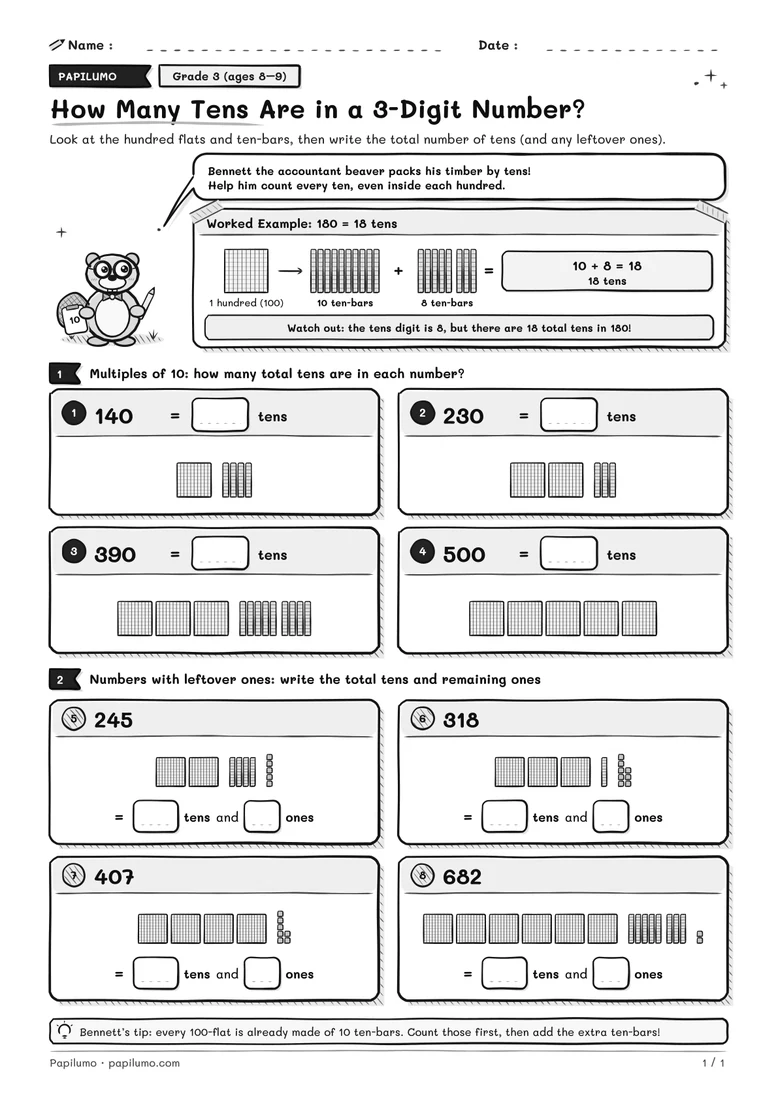
In the top worked example for 180, Bennett takes one 10×10 hundred flat, splits it cleanly into 10 aligned ten-bars, and sets 8 more ten-bars right beside them so students can see 10 + 8 = 18 total tens. Right underneath, the callout banner highlights the exact place-value distinction that trips up so many eight-year-olds.
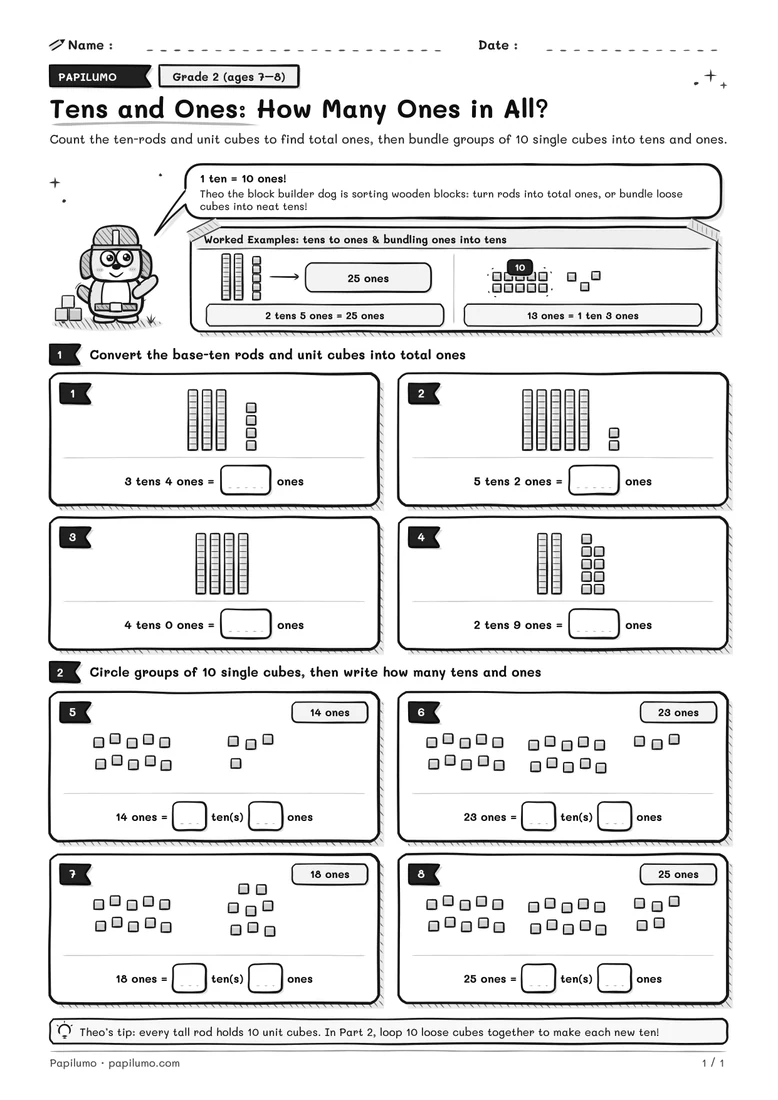
When a test or worksheet asks “How many tens are in 180?”—or worse, “How many tens are in 804?”—students trained only to name column digits almost always answer 8 (or 0!), forgetting the ten tens tucked inside every hundred. Asking a real-world bundling question (“If granola bars come 10 to a box, how many full boxes make 180 bars?”) and letting hands-on learners revisit regrouping tens and ones blocks makes the hidden rods click immediately.
Skip-Counting Hundred Flats by Ten Tens
On the illustrated problems, hesitant students can touch each hundred flat while counting “10 tens, 20 tens, 30 tens,” then count on by ones for each single ten-bar drawn next to the flats. Any loose unit cubes go into the leftover ones box because fewer than ten ones cannot build another full rod. For instance, when Bennett shows two hundred flats, three ten-bars, and six single cubes for 236, students record 23 whole tens and keep the 6 loose ones separate rather than rounding up to 24 tens.
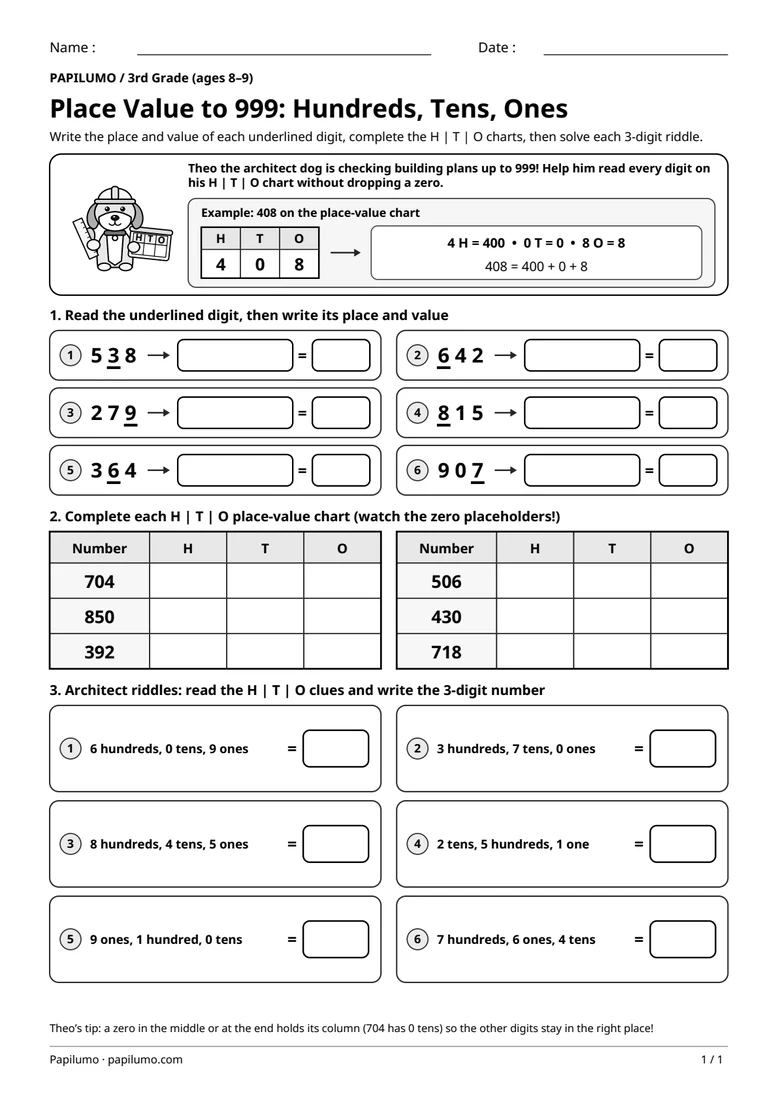
Reading a three-digit quantity both ways—as hundreds, tens, and ones in writing three-digit expanded form and as a single pile of tens plus leftover ones—pays huge dividends later in third grade when children have to regroup across a zero during three-digit subtraction (seeing 402 right away as 40 tens and 2 ones).
Testing the Fingertip Trick Without Base-Ten Drawings
Once students understand *why* each hundred contributes ten rods, let them test Bennett's fingertip check: cover the ones digit on the right with one finger, and the two digits left showing on the left name the total number of whole tens at a glance.
Flip the page over for the quick mental-math extension on 720, 804, and 950 without drawing a single block—spotting 72 tens, 80 tens with 4 ones, and 95 tens in seconds. Pairing block visuals with that place-value shortcut locks in hundreds, tens, and ones to 999 before fourth-grade division by 10.