

Tracking Sequence Across Mimi’s Four-Step Berry Recipe
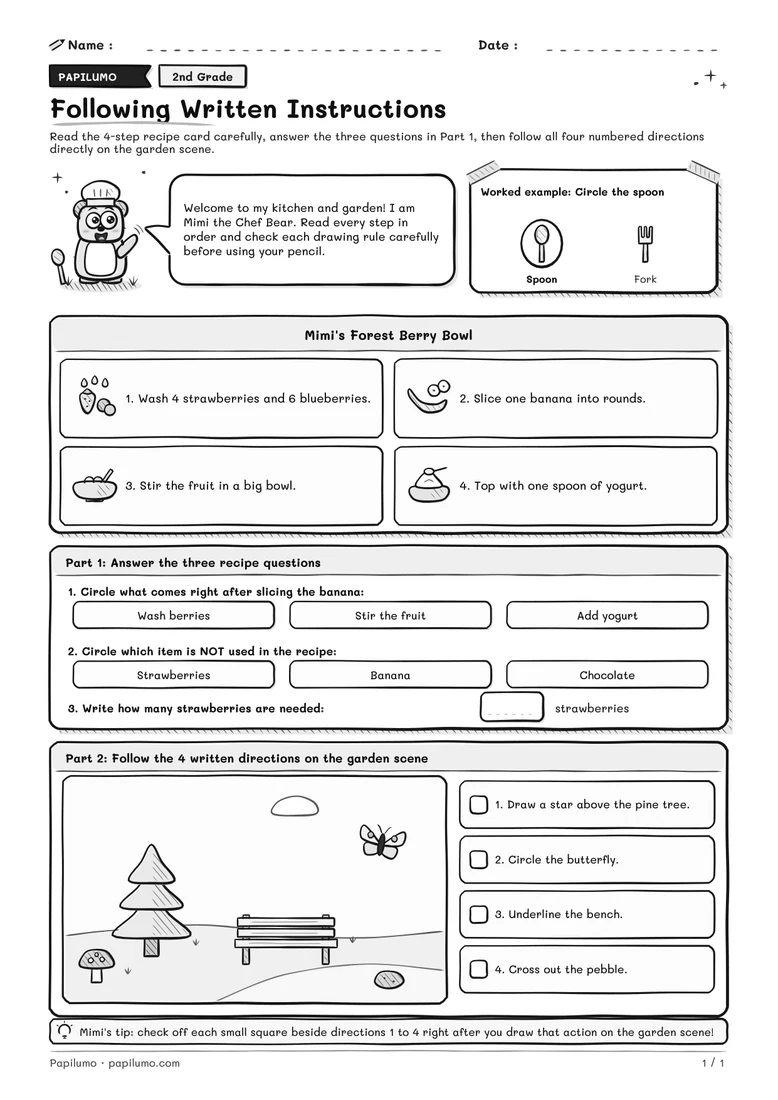
Plenty of second graders breeze through storybook pages yet stumble the moment a worksheet or science lab asks them to follow numbered steps in order. Mimi’s four-step berry bowl recipe slows eyes down purposefully: to answer the three Part 1 questions accurately, students have to check which ingredient or kitchen tool appears first, next, and last rather than guessing from kitchen routines at home. Kids who built early stamina reading beginner mini-stories for details quickly see how functional text works differently—you keep one finger anchored on Steps 1 through 4 to verify every answer right in print.
Slowing Down Pencil-First Readers on the Garden Map
Part 2 is an instant diagnostic for impulsive test-taking habits! Given four numbered directions for the garden scene, hasty seven-year-olds spot a familiar garden noun and circle it automatically, completely missing that the rule actually asked them to underline, cross out, or draw a specific mark in an exact position. That is why Mimi’s top worked example—circling the spoon while leaving the fork untouched—is worth pointing out first. When a child rushes at the table, teach the 'finger first, pencil second' check: touch the target object in the garden, whisper both the action verb and position word aloud, and only then make the mark.
Building Spatial Precision and Back-of-Page Extensions
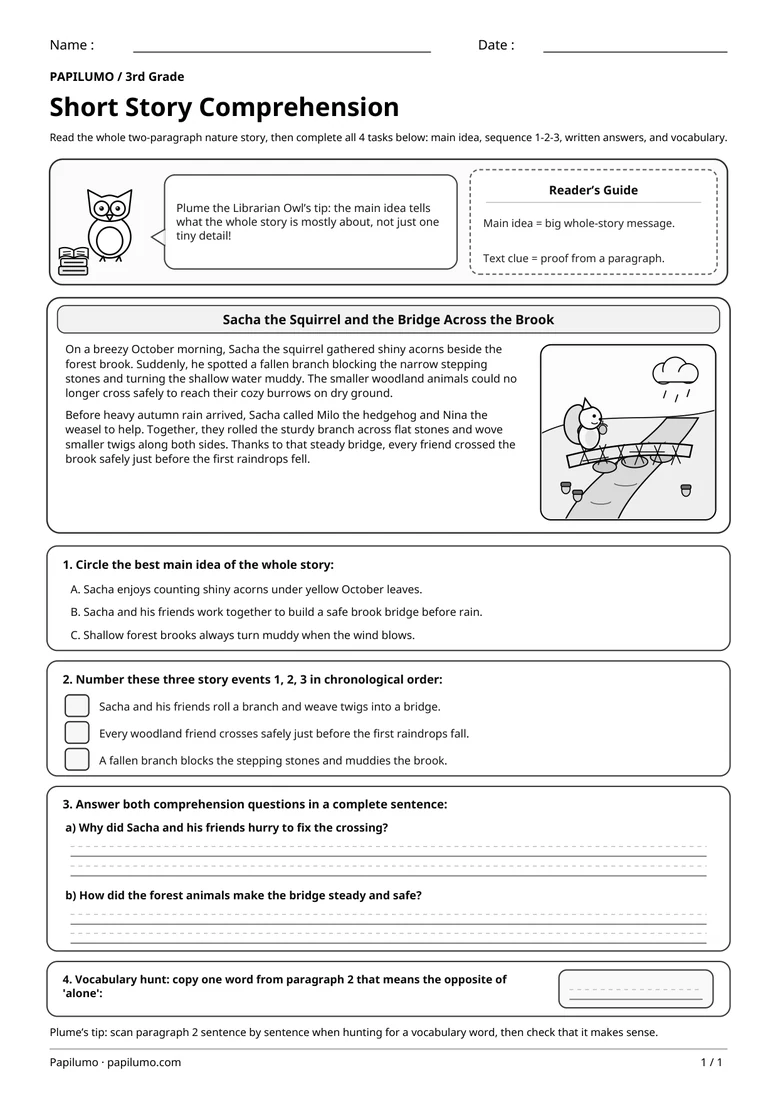
Sharpening command verbs alongside position words pays off across the entire school day, whether students are marking math story problems or sorting short fact and opinion statements without misreading the prompt. If you use this sheet in morning work or homeschool folders, save five minutes at the end for the spotted mushroom challenge: kids flip the sheet over, write a brand-new fifth rule for the mushroom in Mimi’s garden, and trade papers so a partner can carry it out. Watching a classmate follow their written command cements sequential clarity right before third graders begin mapping sequence in longer stories.
Using Pencil Checkmarks Before Coloring Mimi’s Scene
Before bringing out crayons for Mimi’s berry bowl and garden scene, ask students to run a quiet four-finger audit down Part 2. For each numbered rule, they check the exact verb against the mark they actually drew on the garden picture so an accidental circle never stands in for an underline or cross-out. Holding off coloring until all four marks pass inspection keeps line work clean and teaches kids to proofread functional directions just like real chefs.