Matching Numeral Codes Across Moon, Stars, and Leaves
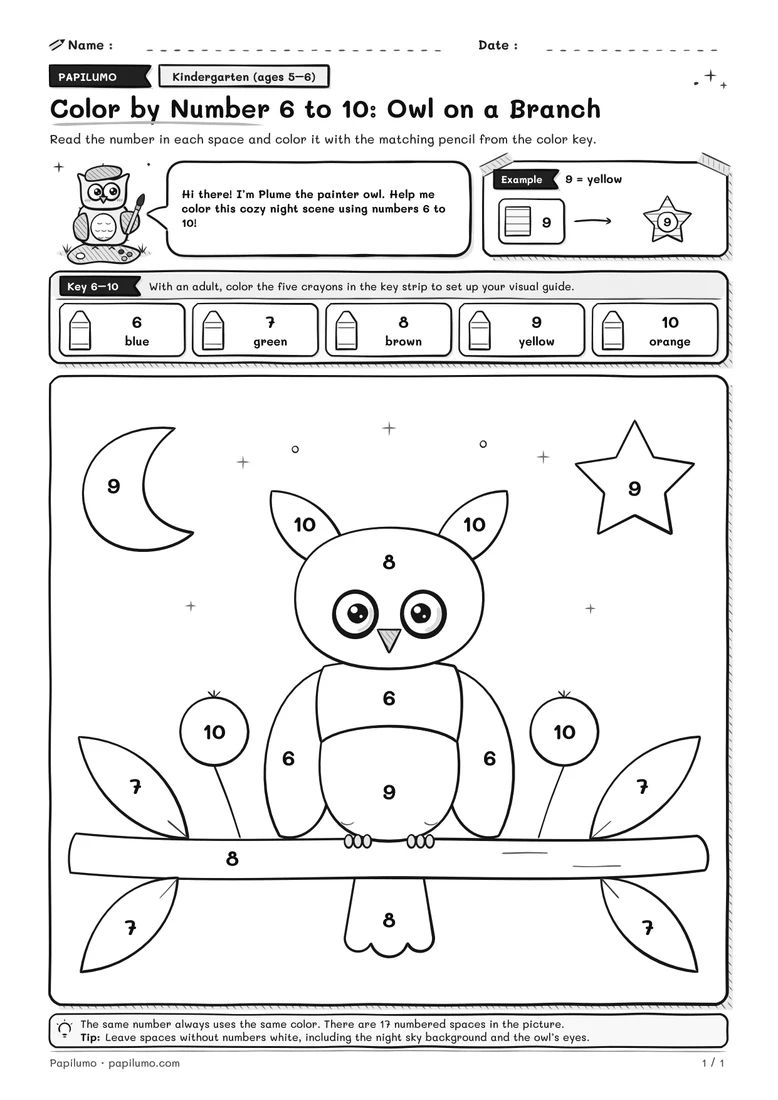
Numerals 6 through 10 take extra practice in kindergarten because five-year-olds can no longer subitize those larger amounts at a quick glance the way they do one, two, or three. Plume’s worked example box at the top pairs a small five-pointed star marked 9 with yellow, then invites kids to hunt down that exact numeral 9 inside the curved crescent moon, the big sky star, and Plume’s rounded belly.
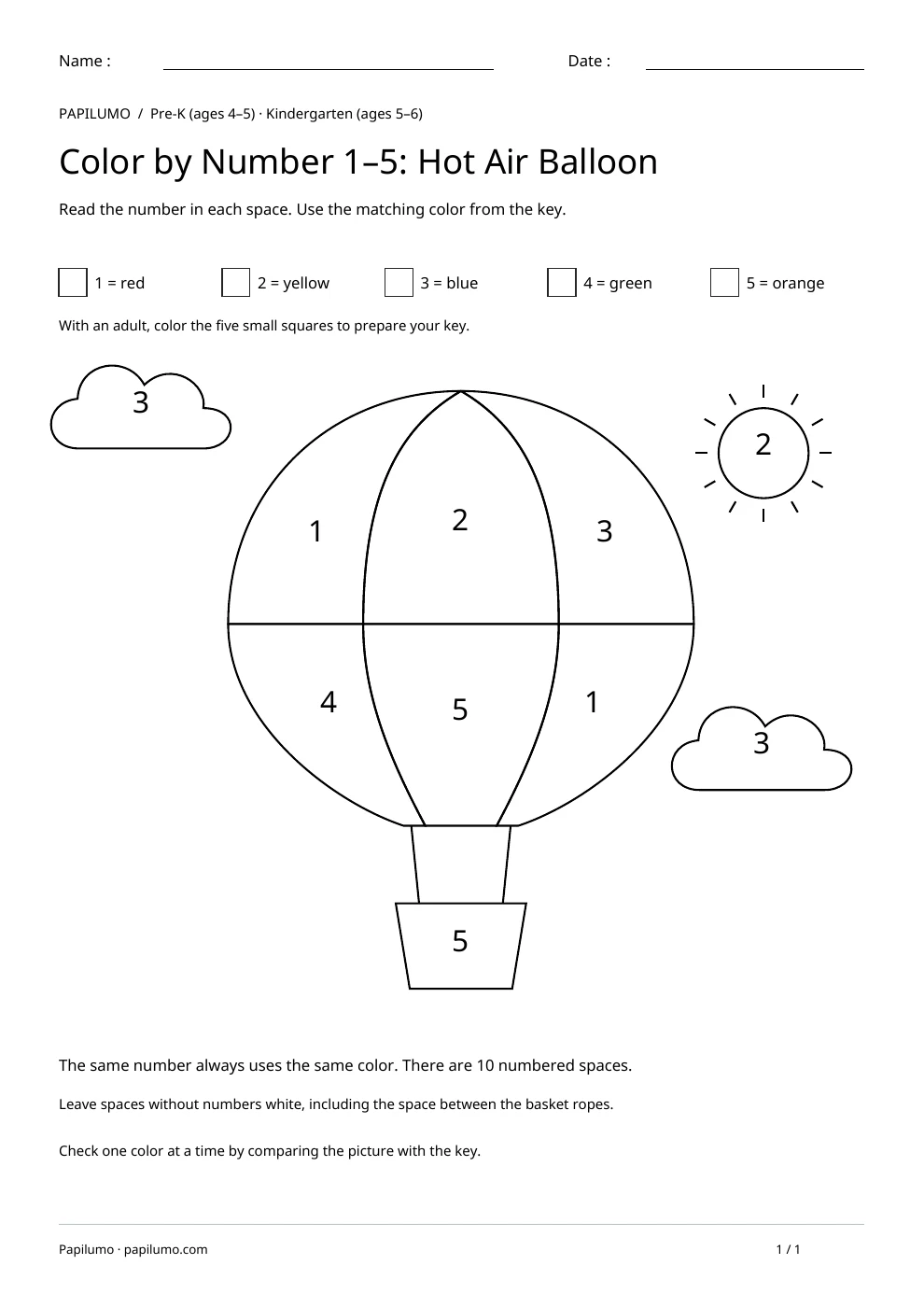
Following a printed numeral code—even when coloring an owl’s tummy bright yellow feels silly compared to free drawing—builds genuine symbol-reading focus and fine-motor control inside curved borders. It makes an ideal next step once learners breeze through coloring early numerals one through five during morning tub routines.
Pre-Coloring the Crayon Key and Untangling 6 From 9
Most beginning kindergartners cannot decode printed color words like yellow or green on their own yet, and flipping 6 and 9 upside down is completely normal at age five. Spend thirty seconds shading the five key crayons across the top strip together before starting, and let hesitant learners hold only the green crayon first to hunt down and color all four branch leaves labeled 7.
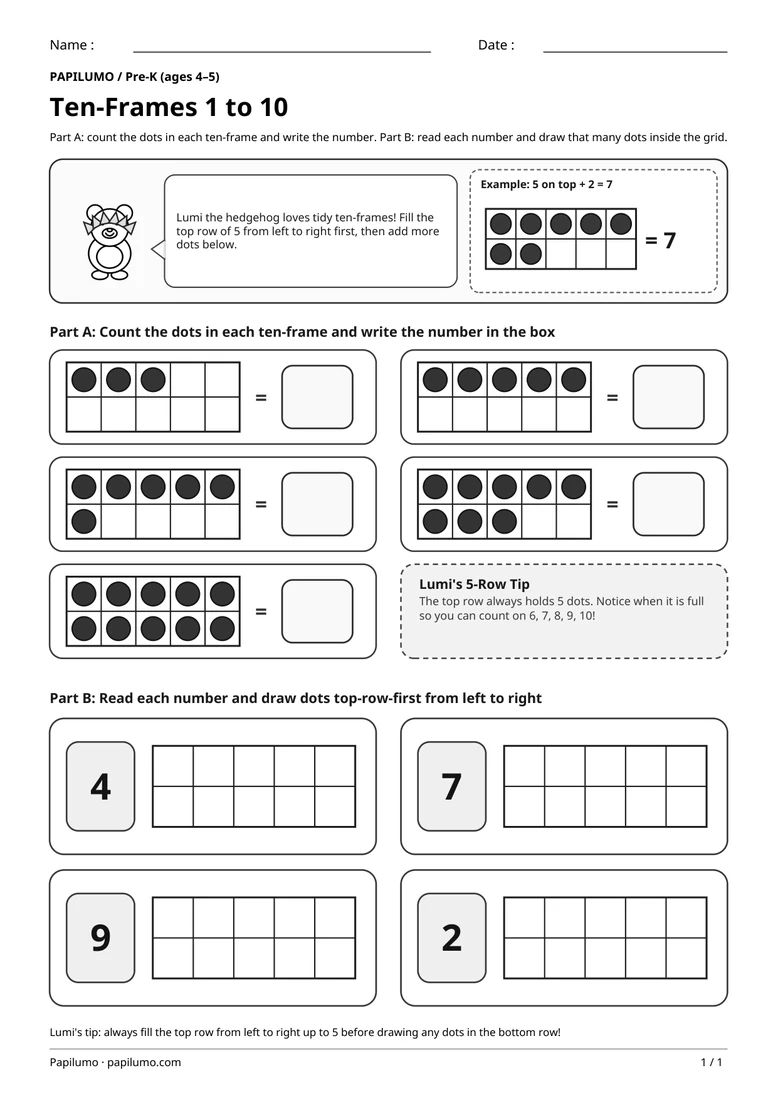
Whenever a child pauses between 6 and 9, point out that 6 sits on a heavy bottom belly loop while 9 floats its loop up high like a balloon on a string. Pairing numeral hunts with counting dots inside ten-frame grids also anchors what six, seven, eight, nine, and ten actually look like as structured five-and-some-more quantities.
Tallying Four-Time and Three-Time Colors at the End
Encourage children to finish every matching space for one crayon across the entire night scene before switching pencils; scanning from sky to tree branch for every 8 or 10 sharpens visual tracking, builds steady hand stamina, and keeps shared crayon caddies much calmer at group tables.
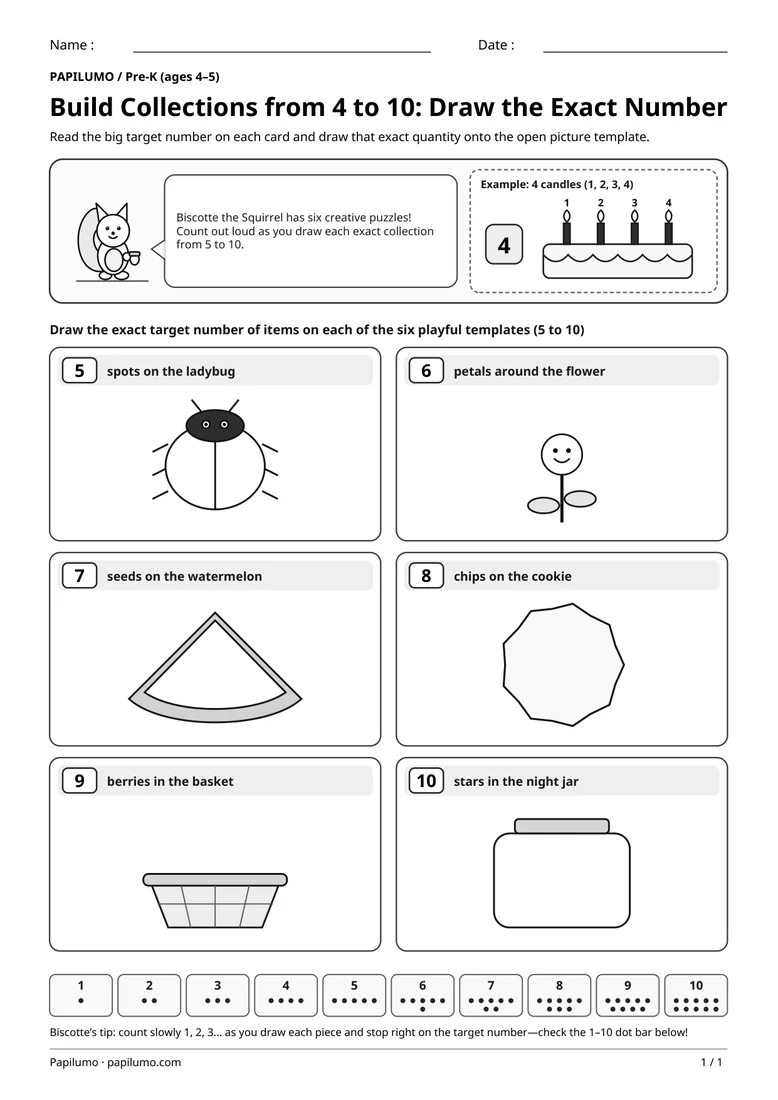
Once Plume’s starry perch is completely colored, turn the finished artwork into a quick math talk at the table: touch and count how many regions ended up each color to discover which numbers appear four times and which show up three times. That playful wrap-up connects numeral recognition smoothly with drawing matching sets up to ten in small-group math centers.