What this worksheet helps children practise
Tap the full ten frame and say ten first, then count on using the extra dots!
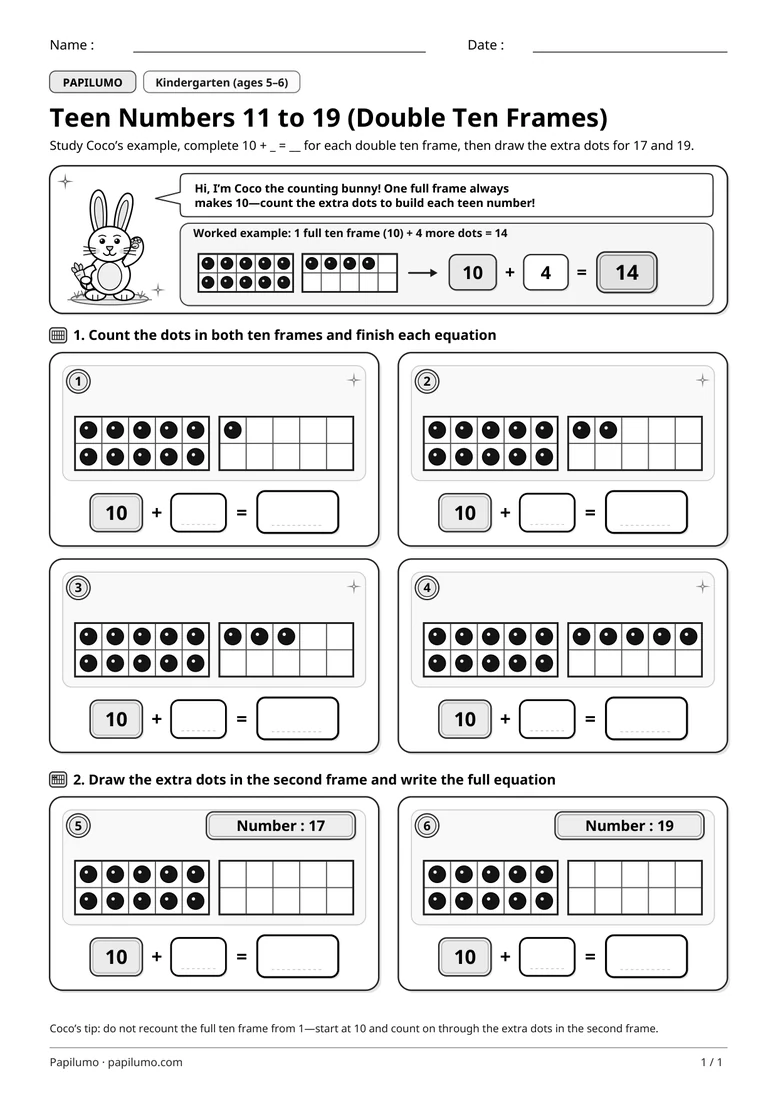
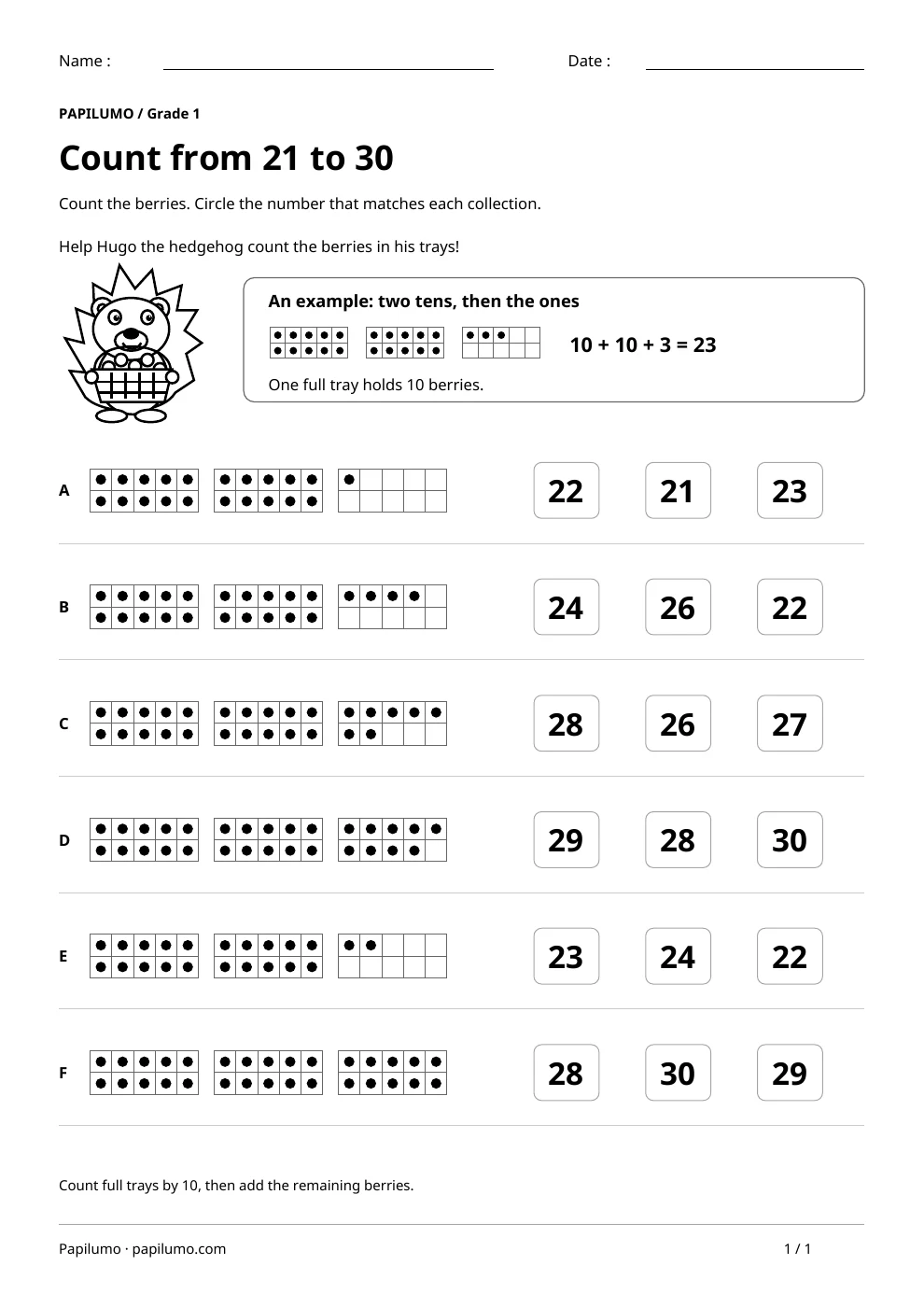
Understanding numbers 11 through 19 is an important milestone in Kindergarten because teen number names like eleven, twelve, and fifteen do not sound transparently like ten-plus-ones. Pairing a full ten frame with a partial second ten frame builds early place-value understanding visually long before formal tens-and-ones lessons begin. Instead of recounting every single dot from 1, pupils learn to subitize 10 right away, count on from 10, and link dot models directly to written equations like 10 + 5 = 15. For a related skill, use Counting 21–30 with Ten Frames: Count the berries. Circle the number that matches each collection.
Preparing a short session
Print the student worksheet at actual size (100%) on plain white letter or A4 paper without shrinking the margins, and hand your child a sharpened pencil and a clean eraser. Before solving the cards, examine Coco’s worked example together: count the ten dots inside the first frame once to confirm every single square is filled, then trace how four extra dots make 14. Keep the separate answer key PDF tucked neatly out of sight during independent practice, or set out twenty small round counters on the table.
A concrete example to get started
Inside the top banner right next to Coco the counting bunny, the first ten frame is completely filled with ten black dots arranged in two neat rows of five, while the second frame shows four dots across its top row. A crisp black arrow leads directly to the completed equation 10 + 4 = 14. Children see at a glance that the digit 1 in 14 stands for the entire full ten frame, and the digit 4 matches the four extra dots sitting beside it.
Supporting the activity
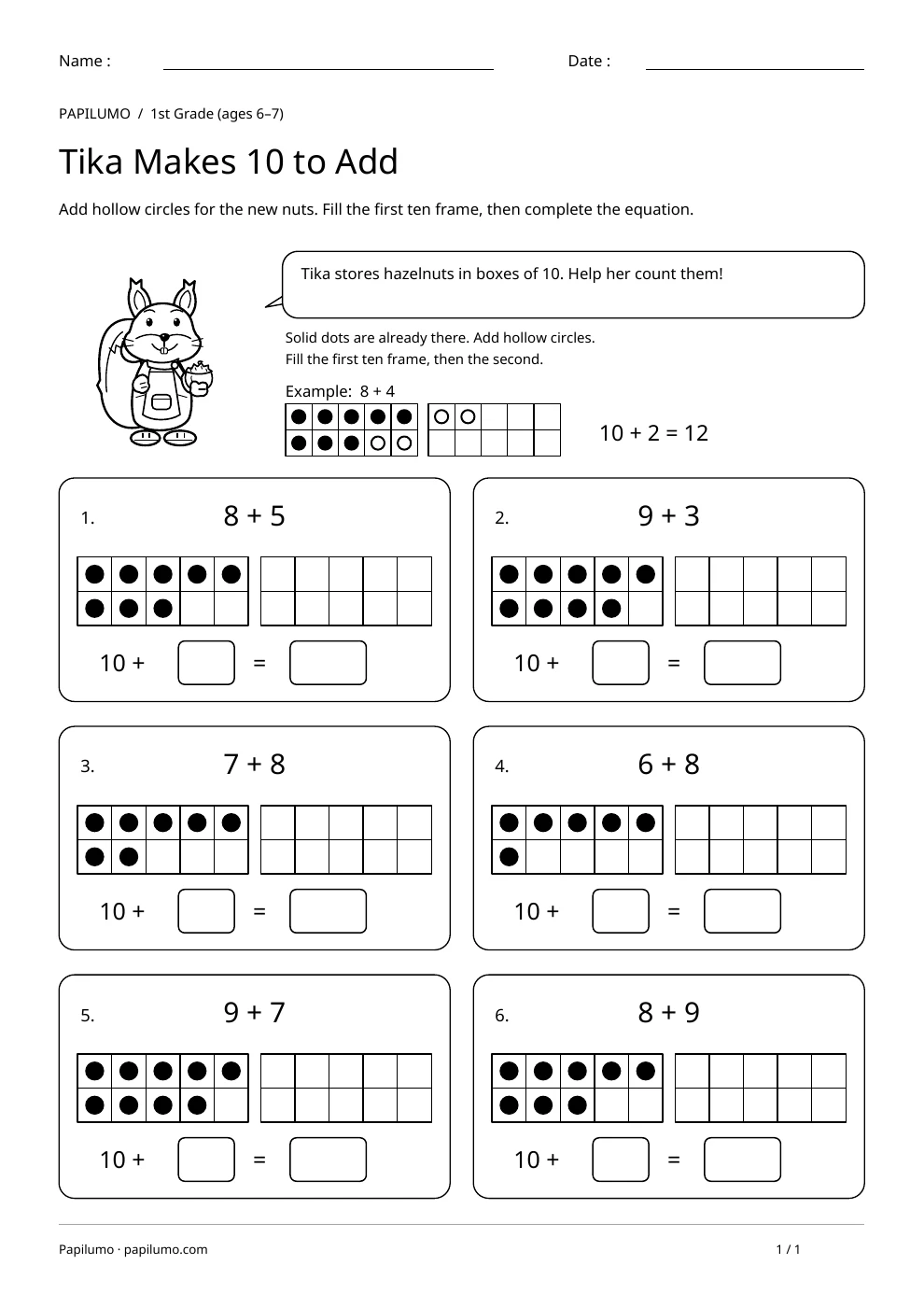
Section 1 presents four structured dot-reading cards covering 11, 12, 13, and 15: pupils keep the printed starting 10, count only the extra dots shown in the second frame, and fill both generous pencil boxes in 10 + [ ] = [ ]. Section 2 reverses the thinking with target numbers 17 and 19: learners check the clear number badge at the top of each card, draw 7 or 9 neat round dots inside the blank second ten frame, and write the complete addition equation underneath. To vary the practice, try Addition Within 20: Make 10 with Tika: Add hollow circles for the new nuts. Fill the first ten frame, then complete the equation.
What to notice and how to check
When reviewing the finished worksheet against the separate answer key PDF, check first that your child did not drop the leading ten when recording totals, such as writing 2 instead of 12, or reverse digits like writing 51 for 15. Next, verify closely on cards 17 and 19 that the drawn dots inside the second ten frame match the middle addend box exactly—7 dots for 17 and 9 dots for 19—while leaving the first frame’s ten dots completely unchanged. Ask your child to point to both frames and read every finished equation aloud.
Making the task easier
Cover the first frame with your hand while saying ten, then point one by one at the extra dots: eleven, twelve, thirteen.
Keep the learning aim, but reduce how much the child has to handle at once. Cover part of the page with another sheet and reveal one task at a time. Demonstrate a separate example, then leave a real opportunity to work something out. An answer reached with support is still a useful attempt; it does not yet show that the same task can be completed independently.
Taking the idea beyond the worksheet
On the last card for 19, how many empty squares are left in the second ten frame, and what number would fill both frames?
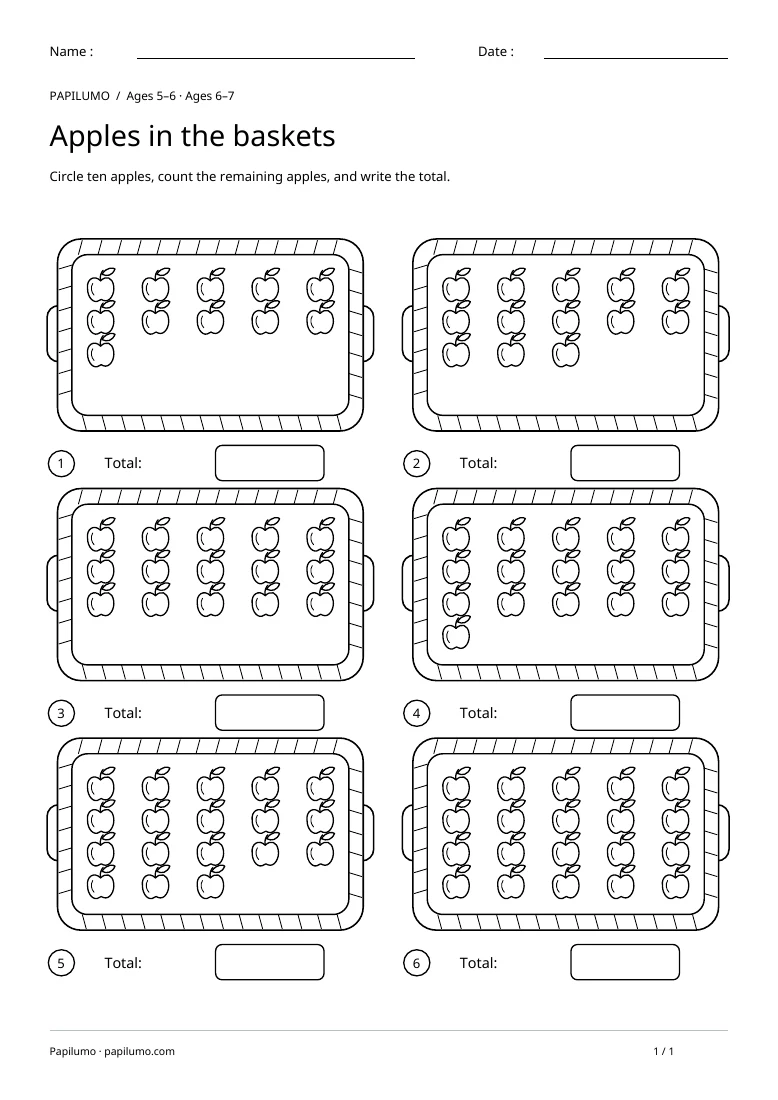
Use the follow-up to meet the same idea in a different setting. Offer it once the first task makes sense, without insisting that the whole page must be perfect. The child might explain a strategy, make an example or set a challenge for an adult. Return to the worksheet only when it helps connect the two situations. A short conversation or a practical activity can be enough to finish the session. To continue exploring, use Counting to 20 Worksheet: Apple Baskets: Circle ten apples, count the remaining apples, and write the total.
Downloading and printing the PDF
This free PDF contains one worksheet designed for A4 paper. Download the file using the button on this page and open it in your PDF reader. Choose actual size or a 100% scale, check the orientation in the print preview and turn off any browser headers or footers. The illustrations use vector lines, so their outlines stay sharp when printed. Check the margins on one copy before preparing several sheets for a group. The level shown on the page is a guide, rather than a requirement to complete the activity at a particular age.