How the Eye-to-Book Model Guides Little Crayon Hands
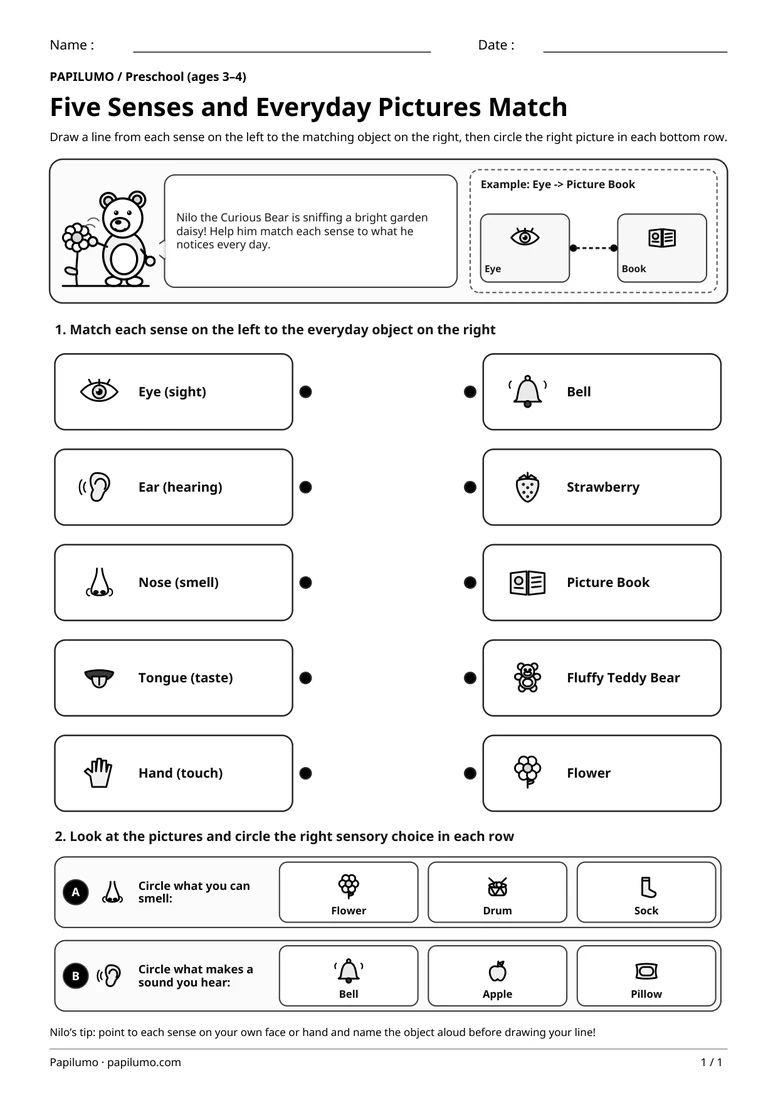
At a preschool small-group table or kitchen counter, three-year-olds often want to color right over the pictures instead of drawing clean connecting lines. Pointing first to Nilo sniffing his daisy and then tracing a pointer finger along the dashed line from the Eye card’s black dot to the open Picture Book’s dot shows young learners exactly where each pencil stroke begins and stops.
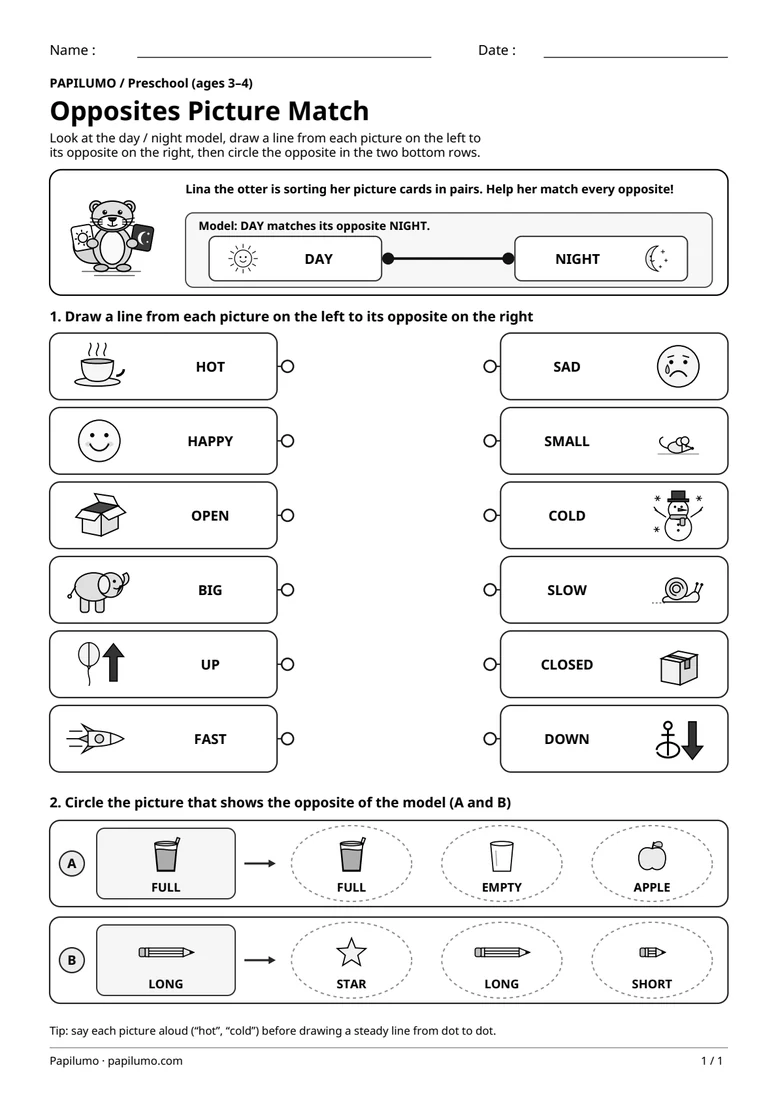
Have your child tap their own eye, ear, nose, mouth, and hand before picking up a thick crayon while resting their helper hand on the corner of the sheet. Children who already enjoy matching familiar opposite pictures during morning tubs settle quickly into that calm finger-first tracking across the open middle space.
Sorting Out Nose and Mouth Mix-Ups Around Snacks
Watch closely when preschoolers reach food, flowers, or cozy toys: they frequently swap the nose card and the mouth card—insisting they taste a flower or smell a crunchy snack—or simply draw straight across to whichever picture sits directly opposite! Jumping in with a quick physical check clears the confusion without taking over the crayon.
Ask your child to take a big pretend sniff with their nose, then pretend to chew with their mouth, parking one finger on the left sense card and the other on its partner picture to say the match aloud in a short sentence before drawing.
Slowing Down for the Bottom Circle-the-Picture Strips
Once all five dot-to-dot lines are finished, the bottom rows ask children to switch gears and circle the right picture in each strip. Because three- and four-year-olds love repeating the last motion they practiced, pause for five seconds so they don’t keep drawing connecting lines through the bottom choices.
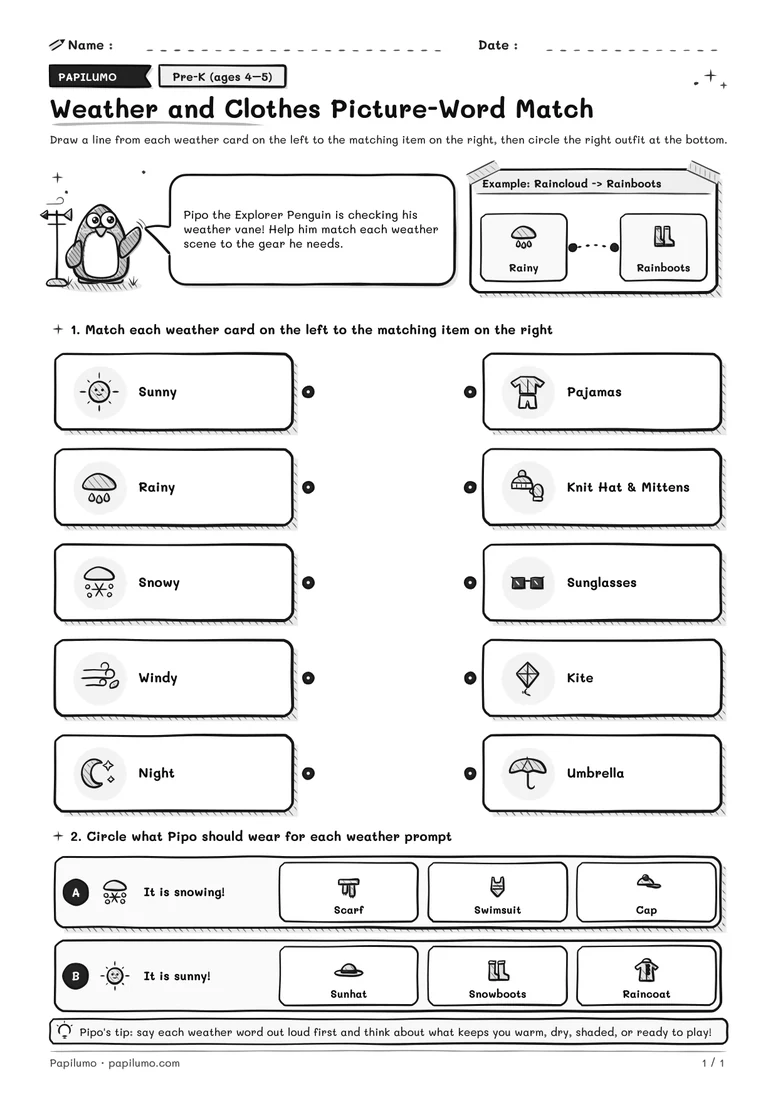
Naming every option in the strip before circling builds the same everyday vocabulary and careful visual scanning kids use when pairing weather icons with everyday clothes during circle-time calendar talk.
Quick Room Walk to Anchor Real Sensory Words
Wrap up away from the chair with a one-minute room hunt: touch one soft stuffed animal, name a snack from the kitchen to taste, and tap one toy that rings or clicks when shaken.
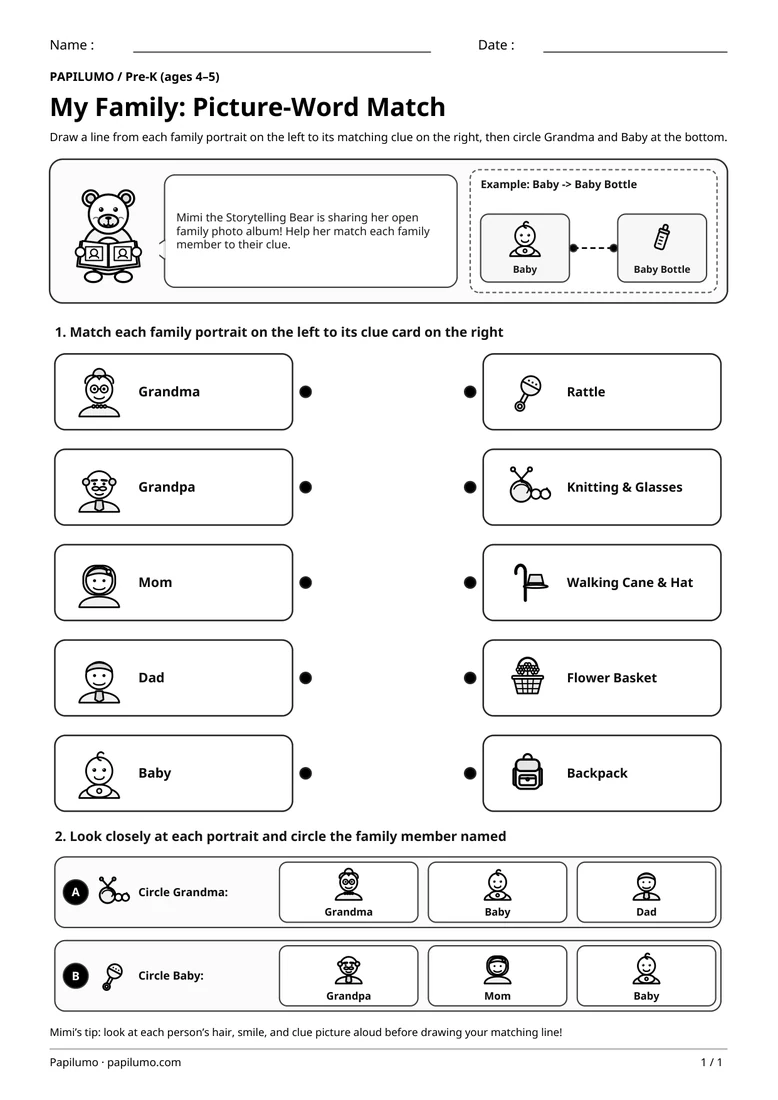
Connecting flat line drawings back to real textures, sounds, and flavors strengthens descriptive talk that also pays off when connecting family portraits to personal clues in upcoming Pre-K language lessons.