What this worksheet helps children practise
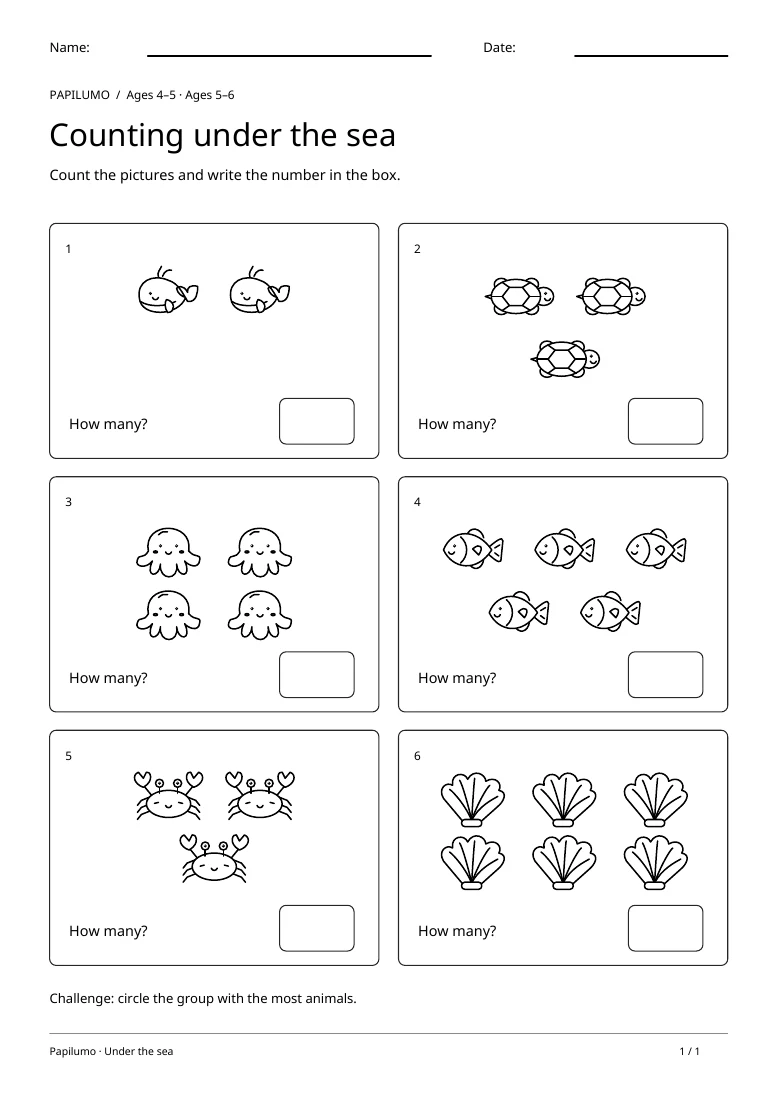
Touch each sea creature once as you count. A small pencil mark can help distinguish pictures already counted from those still to count.
Choose a clear route through each group, pointing to one animal at a time. When a second count gives a different answer, look for a skipped animal or one counted twice. Ask the child to say the total before writing it so that counting and numeral formation can be supported separately.
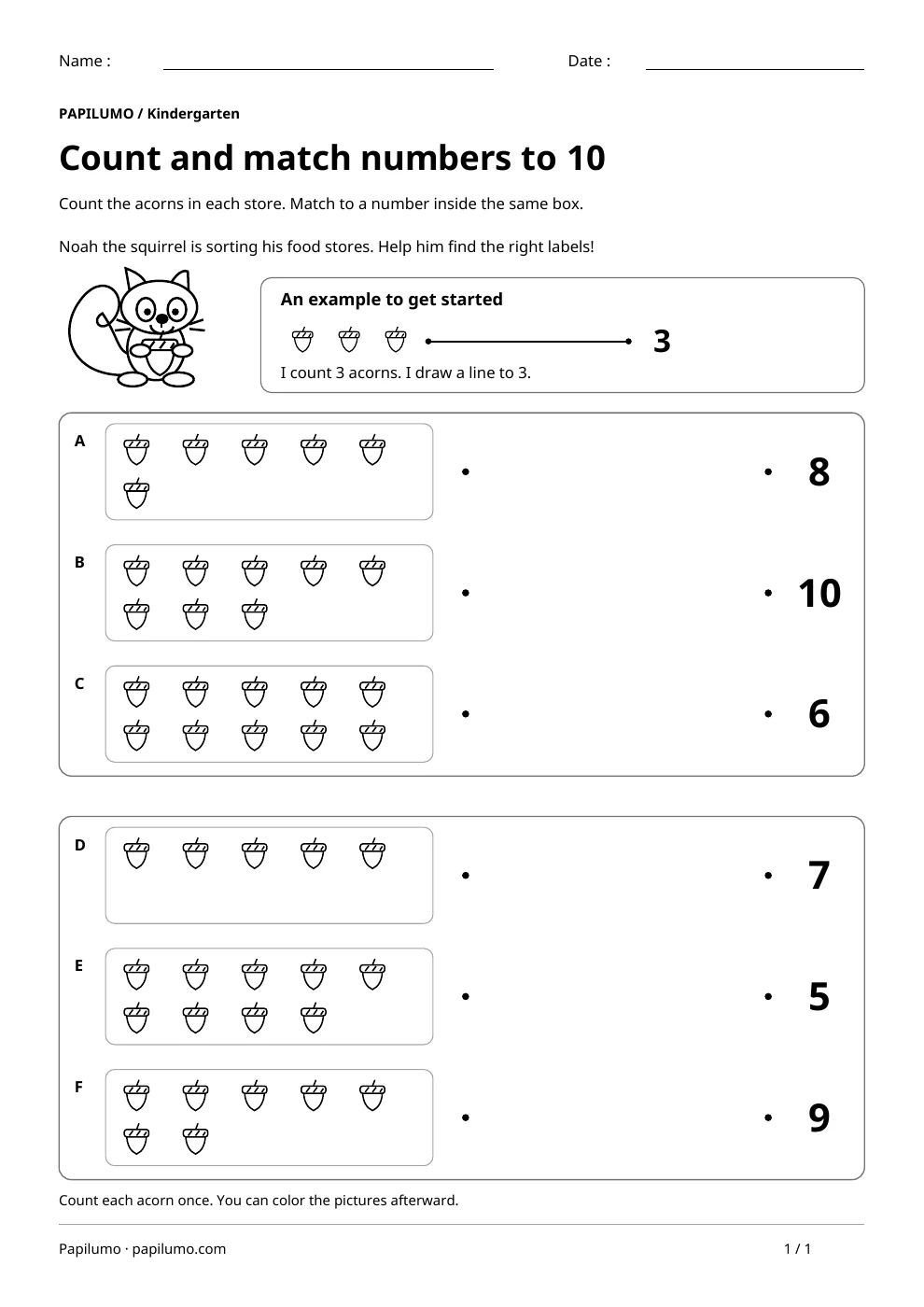
This worksheet explores the relationship between numbers, quantities and order. Saying a sequence of number names does not always mean a child can count a group of objects or recognise the matching numeral. They need to decide what to count, keep track of the items and connect the result to the response requested. Movable objects can make that relationship easier to see. The age or level label is a starting point for choosing a sheet. Pay particular attention to the quantities and representations the child already recognises without an adult carrying out the whole task for them. For a related skill, use Count and Match Numbers to 10: Count the acorns in each store. Match to a number inside the same box.
Preparing a short session
Put the page on a stable surface with a sharpened pencil and enough room for the child to move their hand. Look at the whole sheet together before asking for an answer. Point out the places for looking, drawing or writing. Read the instruction once, then invite the child to explain what they will do in their own words. This can reveal a misunderstanding before the first attempt. Choose a moment when there is time to think calmly, without making the worksheet into a race against the clock.
A concrete example to get started
On scrap paper, draw three fish with space between them. Ask the child to touch each fish once while saying one number, then say how many fish there are altogether. Draw the same three closer together: moving the pictures has not changed the quantity.
Supporting the activity
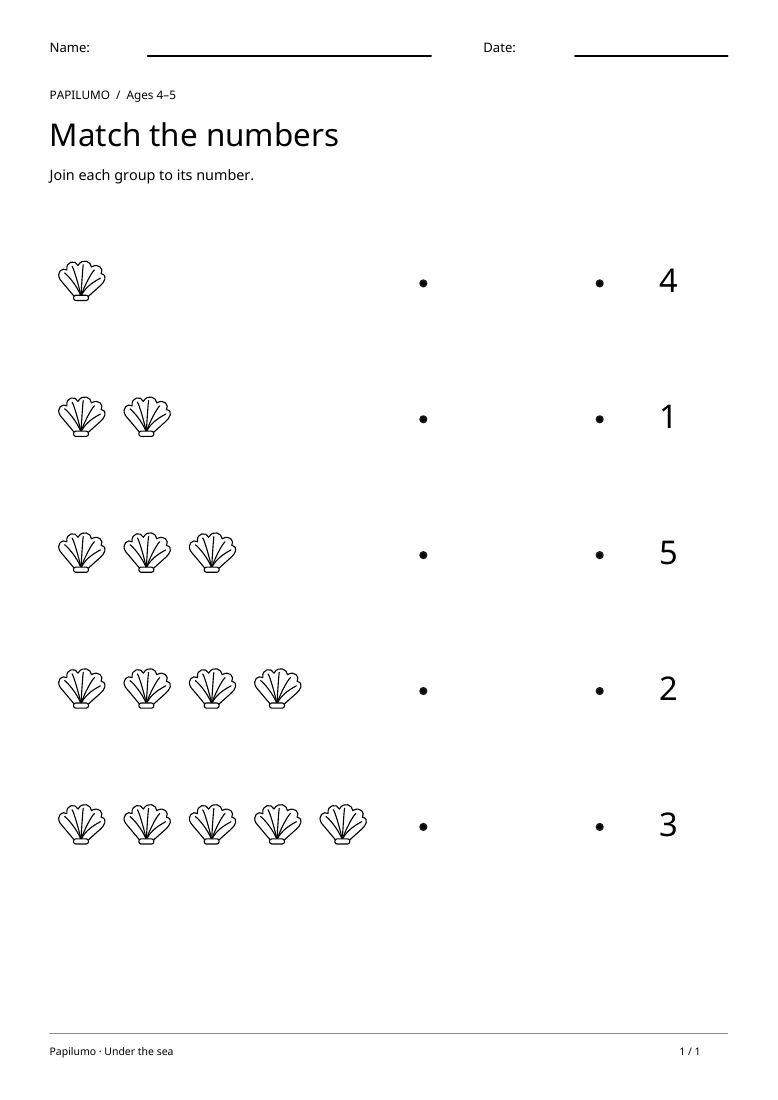
Invite the child to show what they are using before they start writing. When counting a group, moving a finger or making a small pencil mark can prevent counting an item twice. For a sequence, look for the reading direction and the numbers already supplied. If counters are used, leave them available while moving to the picture and ask what corresponds between the two representations. Do not demand an immediate mental answer when handling objects would help the child understand. Writing the numeral comes after the thinking: difficulty forming a digit should not hide the fact that the quantity was correctly recognised. To vary the practice, try Counting to 5 Worksheet: Match Groups and Numbers: Join each group to its number.
What to notice and how to check
Check an answer by returning to the group or the proposed order, rather than simply repeating the expected number. Ask how the child knows they have finished counting, or why a number belongs in that position. An answer that is one too high or too low may lead you to an object missed or counted twice. Reversed digits need a different discussion about how the numeral is written. If an answer sheet is provided, compare after an independent attempt and use the pictures to explain any disagreement. A checking strategy is more useful than memorising the order of answers on this particular page.
Making the task easier
Start with the first two groups and use counters.
Keep the learning aim, but reduce how much the child has to handle at once. Cover part of the page with another sheet and reveal one task at a time. Demonstrate a separate example, then leave a real opportunity to work something out. An answer reached with support is still a useful attempt; it does not yet show that the same task can be completed independently.
Taking the idea beyond the worksheet
Find the group with the most creatures.
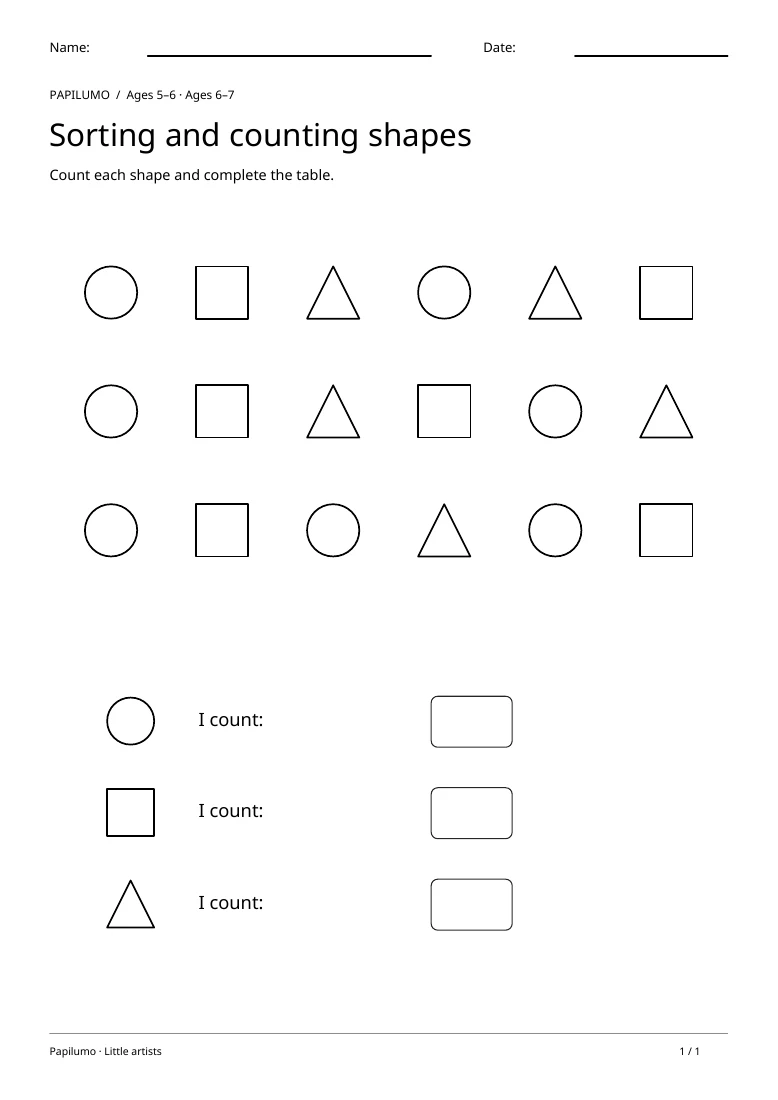
Use the follow-up to meet the same idea in a different setting. Offer it once the first task makes sense, without insisting that the whole page must be perfect. The child might explain a strategy, make an example or set a challenge for an adult. Return to the worksheet only when it helps connect the two situations. A short conversation or a practical activity can be enough to finish the session. To continue exploring, use Count and Sort Shapes Worksheet: Count each shape and complete the table.
Downloading and printing the PDF
This free PDF contains one worksheet designed for A4 paper. Download the file using the button on this page and open it in your PDF reader. Choose actual size or a 100% scale, check the orientation in the print preview and turn off any browser headers or footers. The illustrations use vector lines, so their outlines stay sharp when printed. Check the margins on one copy before preparing several sheets for a group. The level shown on the page is a guide, rather than a requirement to complete the activity at a particular age.