
What this worksheet helps children practise
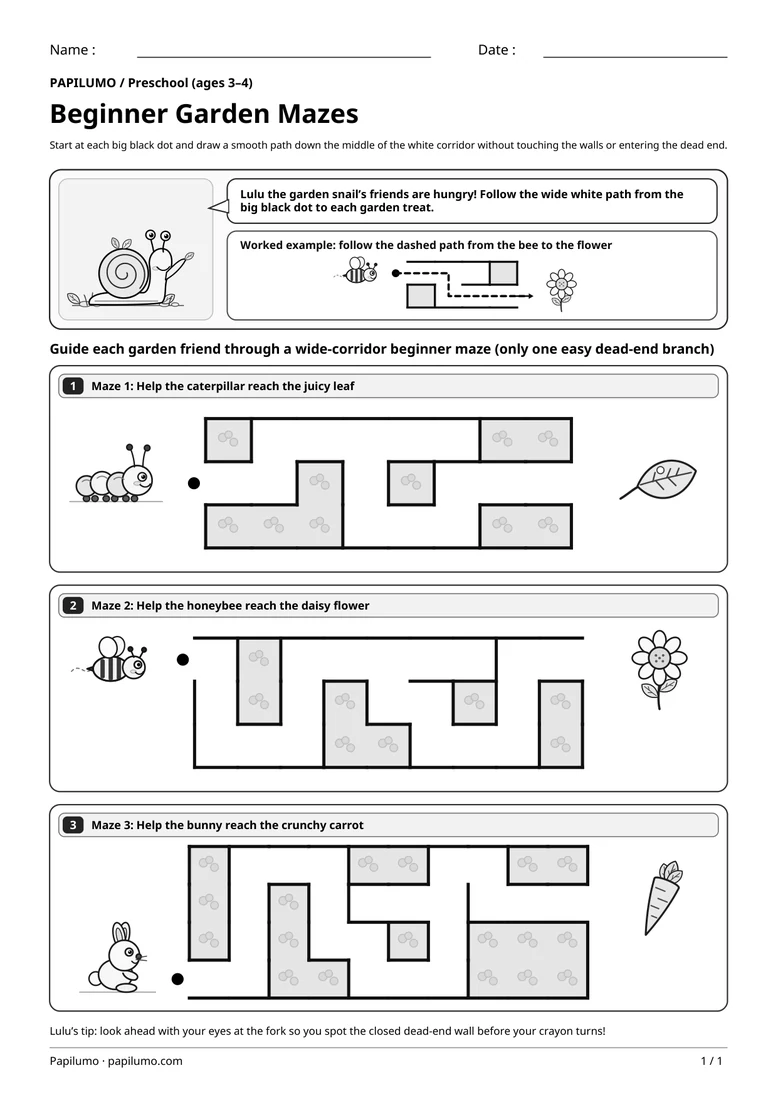
Look ahead at the fork, stay right in the middle of the white path, and avoid the closed dead end!
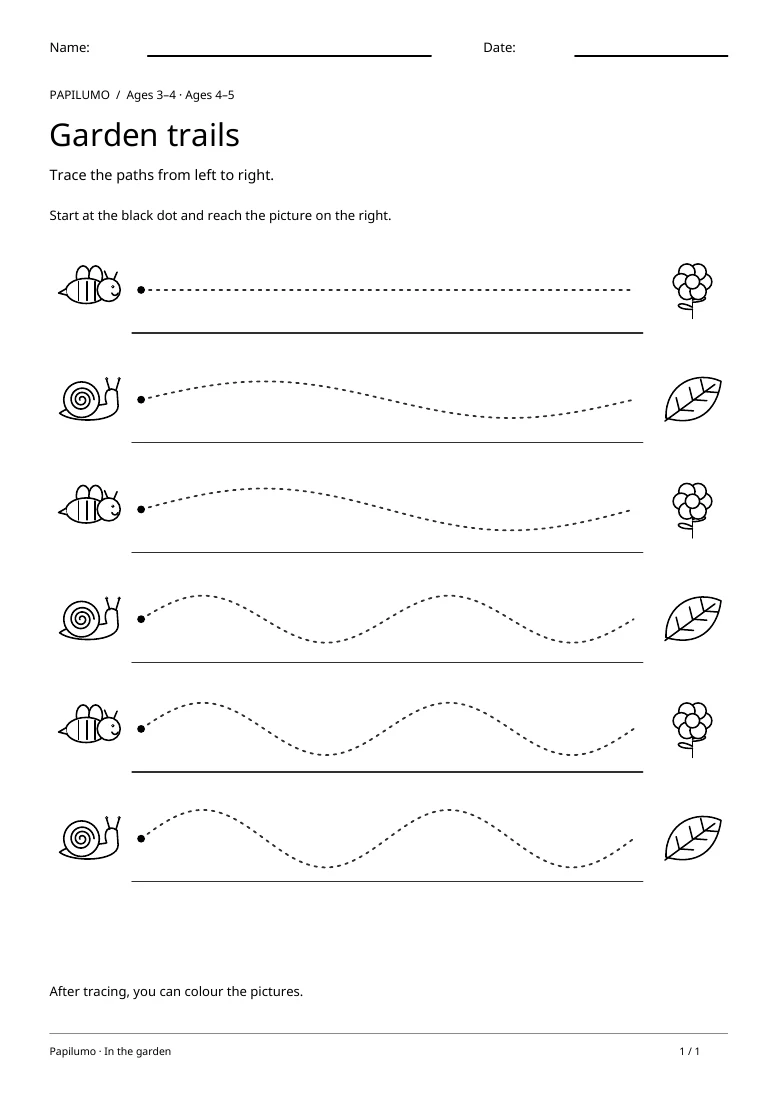
Solving wide-corridor beginner mazes in preschool builds visual scanning, early spatial planning, and steady fine-motor control between crisp visual boundaries. By keeping a thick crayon centered inside the open white corridor without crossing dark hedge walls, young learners strengthen eye-hand coordination, wrist stability, and smooth ninety-degree directional turns. Including just one gentle dead-end fork teaches children to look ahead with their eyes before moving their hand, encouraging calm problem-solving, early self-correction, and genuine pride in finishing cleanly without visual overwhelm or cramped lines. For a related skill, use Preschool Tracing Lines: Garden Paths: Trace the paths from left to right.
Preparing a short session
Print the student worksheet at actual size (100%) on plain white A4 paper and sit together at a bright, uncluttered table with a chunky triangular pencil, soft wax crayon, or thick washable marker. Keep the separate one-page answer key PDF neatly out of sight until all three mazes are finished. Before drawing, invite your child to rest one pointer finger on the bold black start circle and trace each wide corridor slowly by eye and finger, naming the caterpillar, leaf, honeybee, daisy flower, bunny, and crunchy carrot.
A concrete example to get started
Inside the framed top banner beside Lulu the garden snail seated cleanly on a leafy baseline, a pointing speech bubble introduces the story right above a worked mini bee-to-flower maze example. On the left, a tiny honeybee waits right beside a bold black start dot; a clear dashed solution line winds down the middle of the wide white corridor past one short closed branch straight to the blooming daisy flower. Young learners immediately grasp how to stay inside the corridor before tackling the main puzzles.
Supporting the activity
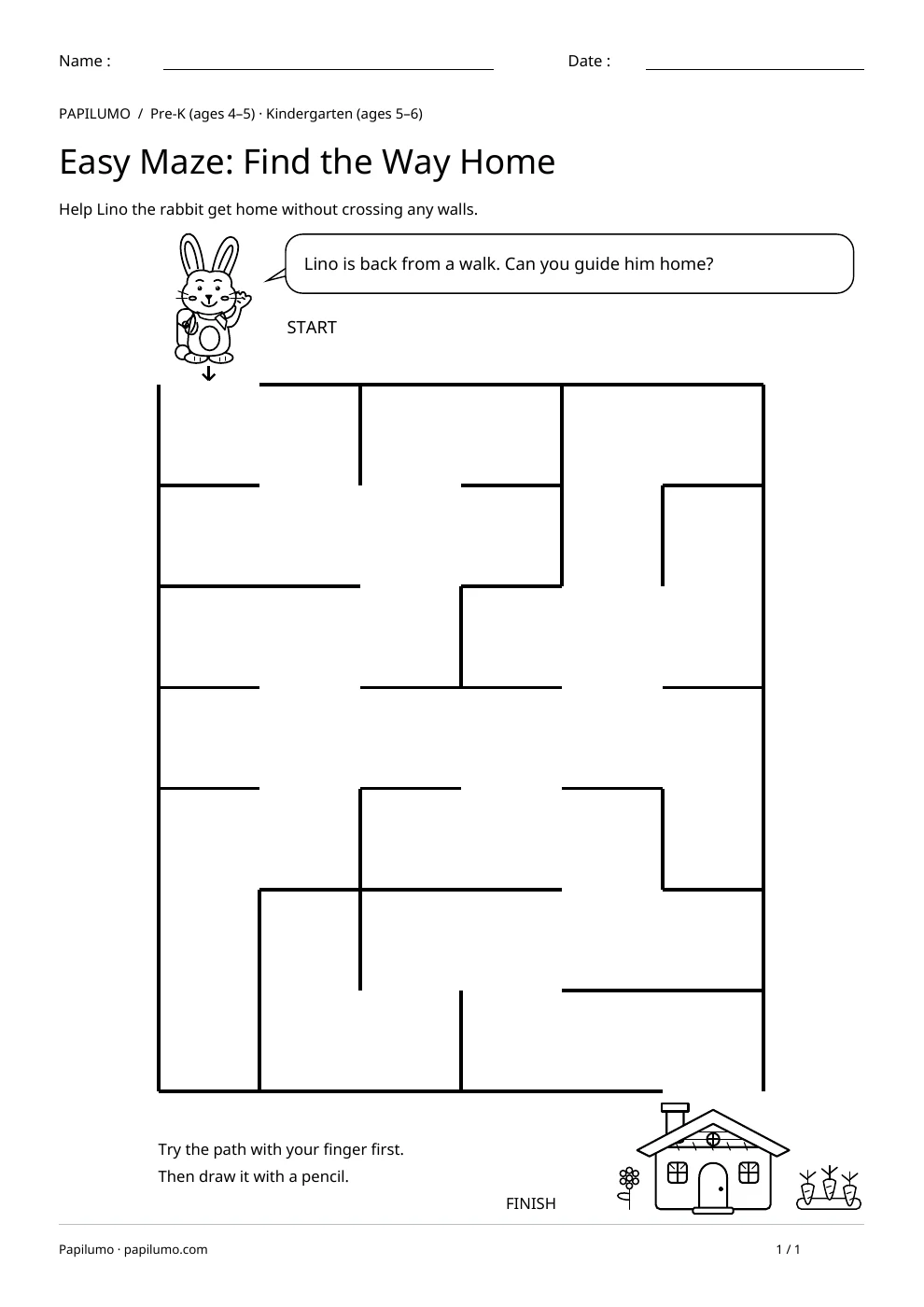
Below the banner, three large rounded cards guide preschool solvers through a gentle, confidence-building progression across the page. In Maze 1, the smiling caterpillar starts at the bold black circle and winds along extra-wide white corridors to a crisp juicy leaf while skipping one short upper dead-end branch. In Maze 2, the cheerful honeybee navigates easy turns toward a blooming daisy flower past one short central fork. In Maze 3, the fluffy bunny hops along a taller four-row garden path to reach a crunchy carrot. To vary the practice, try Easy Maze: Find the Way Home: Help Lino the rabbit get home without crossing any walls.
What to notice and how to check
When all three garden trails are drawn, place the separate bold-path answer key beside your child’s worksheet to celebrate careful observation and steady pencil control. Check together calmly that each line started right on the bold black circle, stayed cleanly inside the white corridors without crossing any dark hedge wall, avoided the single short dead-end branch, and arrived safely at the leaf, daisy flower, and carrot. If a crayon wandered into the fork, retrace the path by finger first and color the garden friends together.
Making the task easier
Trace each wide maze twice with your pointer finger from the black start dot to the goal before picking up a thick marker.
Keep the learning aim, but reduce how much the child has to handle at once. Cover part of the page with another sheet and reveal one task at a time. Demonstrate a separate example, then leave a real opportunity to work something out. An answer reached with support is still a useful attempt; it does not yet show that the same task can be completed independently.
Taking the idea beyond the worksheet
Color the smiling caterpillar, juicy leaf, honeybee, daisy flower, bunny, and crunchy carrot once all three paths are solved.
Use the follow-up to meet the same idea in a different setting. Offer it once the first task makes sense, without insisting that the whole page must be perfect. The child might explain a strategy, make an example or set a challenge for an adult. Return to the worksheet only when it helps connect the two situations. A short conversation or a practical activity can be enough to finish the session. To continue exploring, use Trace Snail Spirals and Arched Bridges with Lulu (Preschool): Start at each big black dot, follow the directional arrow, and smoothly trace all 3 snail spirals and 4 wide arched bridges.
Downloading and printing the PDF
This free PDF contains one worksheet designed for A4 paper. Download the file using the button on this page and open it in your PDF reader. Choose actual size or a 100% scale, check the orientation in the print preview and turn off any browser headers or footers. The illustrations use vector lines, so their outlines stay sharp when printed. Check the margins on one copy before preparing several sheets for a group. The level shown on the page is a guide, rather than a requirement to complete the activity at a particular age.